VesselConnect
  • Completed

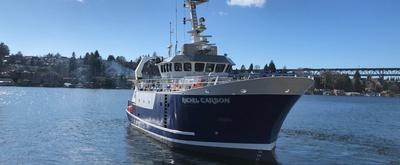
    Blue Heron · UMN

    Great Lakes Cyanos 2023 (2022) 3 of 3

    Josef Werne · UPT

    The Great Lakes hold about 20% of the freshwater on Earth and have been increasingly impacted by human activities in recent decades. Lake Erie suffers from large, annually recurring, toxic cyanobacterial blooms in summer, whereas Lake Superior experiences smaller, localized cyanobacterial blooms after storm events. Cyanobacterial blooms have harmful ecological, human health, and economic implications. These blooms are a global phenomenon, observed in lakes and oceans, and can lead to low oxygen conditions and the production of toxins, both of which can be harmful for ecosystems. Understanding how different types of cyanobacteria influence nutrient cycling remains a major knowledge gap. This project aims to provide a deeper understanding of the long-term state of the Great Lakes ecosystem. The research approach combines new and established methods. Project results and implications will be shared with local and regional water interests in partnership with the Pittsburgh Collaboratory for Water Research, Education, and Outreach, the Great Lakes Commission Harmful Algal Blooms Collaborative, and the Lake Erie Area Research Network. Education is a central part of this project and training opportunities target next generation of scientists, including postdoctoral, graduate, and undergraduate students. The students and postdoc will receive state-of-the-art training in the rapidly developing fields of biogeochemistry and geomicrobiology, while working with an interdisciplinary team of scientists.

    May 23 – May 26, 2023 · 3 d

    Western arm of Lake Superior, between Isle Royale and Apostle Islands

  • Completed

    PASSENGERS-2023-Summer

    Madeline Miller · MIT

    Our modeling and experimental research program aims to improve the capability of data-assimilative ocean models to predict acoustic propagation in dynamic oceanographic environments, while forming a better understanding of the true uncertainty attached to these forecasts. Our study includes real-time testing and comparison of several novel and diverse data assimilation and adaptive sampling techniques that minimize acoustic uncertainty. We will contrast starkly different ocean data- assimilation approaches – the use of coordinated teams of gliders and the most advanced algorithms on land vs. onboard algorithms paired with fresh data from sensors on the vehicle. Simultaneously we will collect a paired acoustic and oceanographic data set that will be ideally suited to evaluate and compare novel state estimation and machine learning approaches both on land and at sea for many years of future research.

    May 21 – Jun 16, 2023 · 26 d

    Atlantis II seamount

  • Completed

    SIO 60 SP23

    Drew Lucas · SIO

    Starting in the 2016-2017 academic year, Scripps Institution of Oceanography and UCSD began an undergraduate major in Oceanic and Atmospheric science. This interdisciplinary major is intended to prepare students for careers in government, environmental policy, management, and consulting, primary and secondary education, and academia. The curriculum combines rigorous classroom training based on mathematics, physics, chemistry, and data analysis with hands-on experience using cutting edge data collection techniques for the ocean and atmosphere. SIO 60, co-taught annually by SIO/UCSD Assistant Professors Drew Lucas and Kate Ricke, is the required introductory course for the O & A major. SIO 60 covers basic concepts in oceanic and atmospheric dynamics with instruction and hands-on activities, with an aim towards future academic, government, and industry scientists as well as professionals in maritime and environmental science fields.

    May 20 – May 21, 2023 · 1 d

    Nine mile Bank

  • Completed

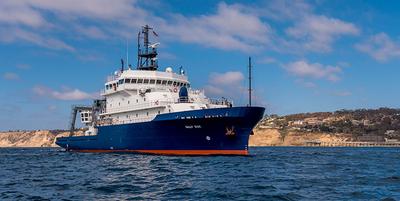
    Sally Ride · SIO

    RIPPLE 2

    Benjamin Van Mooy · WHOI

    The Production and Fate of Fats in the Upper Ocean Phytoplankton, microscopic photosynthetic organisms in the ocean, produce a type of fat called triaclyglycerols (TAGs). A recent discovery in the North Pacific Ocean showed that a significant percentage of primary production from phytoplankton is devoted to producing TAGs. This suggests that TAGs may serve as a source of energy for phytoplankton at night, when they are unable to generate energy from photosynthesis. Phytoplankton are the base of the food web in the ocean. Therefore, it is important to understand how they create and store energy. This project will investigate the role of fats in the ocean. Specifically, this research will look at: 1) factors that affect the production and use of TAGs by phytoplankton and 2) how TAGs contribute to the global carbon cycle. This project will support the training and education of graduate students. This project will also provide resources for mentoring high school students, support summer research experiences for high school and undergraduate students, and offer field trips for 7th grade students.

    May 18 – May 25, 2023 · 7 d

    Oregon Coast - Two 3-day Langrangian stations in location chosen based on satellite data.

  • Completed

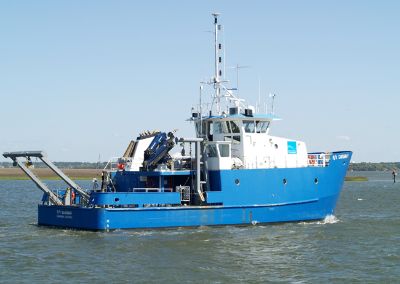
    Savannah · SkIO

    SEFIS

    Nathan Bacheler · NOAA

    SEFIS is a fishery-independent research group that surveys reef fish using traps and video from Cape Hatteras, NC, to St. Lucie Inlet, FL, from 15-115 m deep.

    May 16 – May 25, 2023 · 9 d

    Southeast US Atlantic continental shelf between NC and the east coast of FL.

  • Completed

    TFO Seamounts: ocean physics

    Matthew Alford · SIO

    Our program will measure physical oceanographic and acoustic quantities near the Atlantis II seamounts in order to better understand i) mixed-layer dynamics; ii) turbulence and vertical motions due to tidal and mean flows past the seamounts and iii) ambient noise and acoustic propagation. We will measure the oceanographic quantities from the ship with our Fast CTD and epsilometer winched profilers, and by deploying several profiling moorings. Dr. Hodgkiss will simultaneously deploy his acoustic source and billboard receive array.

    May 14 – Jun 6, 2023 · 23 d

    North Atlantic

  • Completed

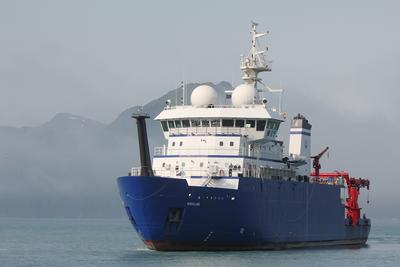
    Sikuliaq · UAF

    OOI-Papa 2023

    Deidra Emrich · WHOI

    This is the ninth cruise (eighth turnaround) for the Global Station Papa Array of the National Science Foundation’s Ocean Observatories Initiative (OOI; http://www.oceanobservatories.org). The Station Papa Array includes a network of moorings and gliders to monitor waters in the data sparse high latitudes of the Gulf of Alaska. The moorings and the gliders give the array the capability to address the role of the mesoscale flow field in ocean dynamics

    May 13 – May 28, 2023 · 14 d

    Station Papa. Gulf of Alaska

    Sails with 1 other project

  • Completed

    Sikuliaq · UAF

    Waves at Papa YR2

    Jim Thomson · UW

    A combined observational and forecast modeling study will address the coupling between ocean surface waves and rain. The observations will extend an existing time series at Ocean Weather Station Papa (OWS-P) and complement those observations with more detailed measurements using drifting buoys. The observations will be used to improve parameterizations in spectral wind-wave models, as well as fundamental understanding of surface turbulence in the presence of rain and the related changes to air-sea fluxes. The intellectual merit of this research is addressing a knowledge gap in the suppression of ocean surface waves by rain and the associated changes in surface roughness and surface turbulence. The work will address this gap through long-term field observations at OWS-P, combined with a short-term process study using deployments of opportunity in the same region. The results will improve understanding of air-sea interactions for coupled climate and forecast models. In particular, this work will enable existing spectral wind-wave forecast models (e.g., WAVEWATCH III, SWAN, etc) to account for the effect of rain on wave generation and dissipation. The broader impacts of this work are in the continuation of a time series of surface waves at a key reference site, as well as improvements to wave forecasting and bulk formulae for air-sea interactions. Other impacts include undergraduate education, through paid internships each summer (funded directly by the project) and participation in the NSF Research Experiences for Undergraduate program (funded separately). Outreach will be conducted through an updated web site and short videos produced for an existing Applied Physics Lab YouTube channel, as well as booths at public events like Discovery Days (over 10,000 attendees). The project will test the following hypotheses: 1. Rain suppresses ocean surface waves, especially the short waves in the `tail' of the spectrum. 2. The suppression, together with a reduction in wind input to waves, leads to a reduction in wave breaking. 3. The reduction in wave breaking reduces both the surface roughness (with implications for drag coefficients) and the surface turbulence (with implications for fluxes). 4. Rain may increase the surface turbulence through a direct injection of turbulence by raindrops, especially in low to moderate winds, competing with the indirect effect of the surface turbulence damping through a reduction in wave breaking.

    May 13 – May 28, 2023 · 14 d

    Station Papa. Gulf of Alaska

    Sails with 1 other project

  • Completed

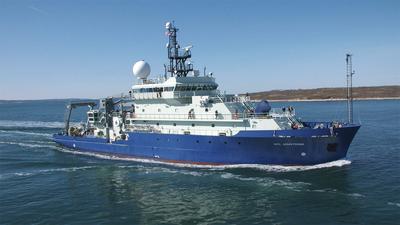
    Endeavor · URI

    ONR-NESM

    Jim Miller · URI

    As part of the ONR-sponsored New England Seamount Experiment, eight Ocean Bottom Recorders (OBXs) deployed by John Kemp of WHOI need to be recovered via acoustic releases, data downloaded, batteries charged and redeployed on the Atlantis II Seamount. These OBXs record seismic and acoustic signals from electronic sources deployed by SIO and WHOI as well as noise from ships of opportunity passing by. These acoustic and seismic signals are generated by acoustic tomography sources deployed by SIO as well as WHOI. These signals interact with the intervening ocean structure including the Gulf Stream as well as the seafloor and slope of the Atlantis II Seamounts.

    May 13 – Jun 5, 2023 · 23 d

    Atlantis II Seamount

  • Completed

    Pelican · LUMCON

    unleak

    Marshall Wayne Bowles · LUMCON

    Coastal marine sediments are thought to be a substantial source of methane to the overlying water, with the potential for escape through the shallow water column to the atmosphere. Such effluxes are reduced by the oxidation of methane by methanotrophic microorganisms in both aerobic and anaerobic conditions. In marine sediments the primary electron acceptors for methane oxidation are oxygen and sulfate, respectively. Much of the focus on methane oxidation has been on anaerobic methane oxidation due to the great abundance of sulfate in sea- and pore-water and the co-location of the electron acceptor (sulfate) and electron donor (methane). As a result, comparatively little attention has been given to situations wherein anaerobic methane oxidation is overwhelmed and 1) aerobic methane oxidation must account for significant methane oxidation and 2) methane escapes from sediment into the water column. We will address this topic through a combination of in situ flux and chemical gradient analysis, geochemistry, microbial rate analysis, and reactive transport modeling.

    May 13 – May 22, 2023 · 10 d

    Gulf of Mexico

  • Completed

    Sally Ride · SIO

    PNW Foram Ecology 4 of 4

    Jennifer Fehrenbacher · OSU

    The project will improve the utility of temperate and high-latitude planktic foraminifera in paleoclimate research and quantify the effects of modern climate change on foraminifera assemblages in the Northeast Pacific Ocean. The main objectives are to expand our knowledge of the ecology and environmental controls on the geochemistry of temperate and higher-latitude foraminifera species, quantify their response to modern changes in oceanographic conditions (specifically marine heat waves), and constrain foraminiferal geochemical signatures as they sink to the seafloor. This will be achieved through a significant field-based and laboratory effort that includes newly collected plankton tows, short-duration ship-based culture experiments, assemblage data from archived plankton tow samples, and the deployment of two moored sediment traps. The proposed multi-pronged sampling strategy will provide critical samples needed to understand the biogeochemistry and ecology of foraminifera in this important ocean margin region, increase their utility in understanding past oceanographic conditions, and lay the groundwork for understanding how high-latitude species will respond to future climate change. Highly controlled culture experiments will quantify trace element incorporation dynamics and mechanisms responsible for intrashell trace element variability in temperate to polar species. The results of these experiments will offer important information that can be used to interpret the geochemistry of fossil foraminifera in temperate to high-latitude regions, broaden our understanding of the controls on trace element incorporation in high-latitude and temperate foraminifera species, and improve their utility in paleoceanographic reconstructions. Sediment trap, plankton tow, and cultured specimens will be analyzed for their trace element and isotopic composition. Live captured specimens will be analyzed to determine their genotype and microbiome. Foraminifera and sediment trap samples not used by the PIs in this project will be archived at the OSU Marine Geological Repository for future studies by the scientific community.

    May 12 – May 15, 2023 · 4 d

    Recover and redeploy sediment traps near the NH line. Sample water column between NH 45 and NH 150

  • Completed

    BATS 2023 - BATS Bloom 2

    Nicholas R. Bates · BIOS

    Long-term observations over several decades are a powerful tool for investigating ocean physics, biology, and chemistry, and the response of the oceans to environmental change. The Bermuda Atlantic Time-Series Study, known as BATS, has been running continuously since 1988. The research goals of the BATS program are: (1) to improve our understanding of the time-varying components of the ocean carbon cycle and the cycles of related nutrient elements such as nitrogen, phosphorus, and silicon; and, (2) to identify the relevant physical, chemical and ecosystem properties responsible for this variability. In addition, the BATS program has strong and diverse broader impacts, contributing to the field of ocean sciences by providing high quality ocean observations and data for seagoing scientists and modelers, and a framework through which researchers can conceive and test hypotheses. This award will support the operations of the BATS program for five more years. The primary BATS research themes are as follows: (1) Quantify the role of ocean-atmosphere coupling and climate variability on air-sea exchange of CO2, and carbon export to the ocean interior; (2) Document trends and the controls on the interannual to decadal scale variability in carbon and nutrient cycles to their coupling in the surface and deep ocean via the Redfield Ratio paradigm; (3) Quantify the response of planktonic community structure and function, and impact on biogeochemical cycles to variability in surface fluxes and dynamical processes; (4) Facilitate development, calibration and validation of next generation oceanographic sensors, tools and technologies; and, (5) Generate a dataset that can be utilized by empiricists, modelers and students. This research integrates ocean physics, chemistry and biology into a framework for understanding oceanic processes and ocean change in the North Atlantic subtropical gyre. The existing 29 years of BATS data provide robust constraints on seasonal and interannual variability, the response of the Sargasso Sea ecosystem to natural climate variability, and signal detection of potential ocean changes. This project would extend the BATS program through years 31-35 to address a series of ten interlinked questions through integrated research approaches and a multitude of collaborative efforts. In addition to the themes above, and embedded into the ten questions and approaches, the BATS team will focus on, for example, coupling of particle production and biogeochemistry; revisiting the complexities of the biological carbon pump; oxygen decline; and changes in the hydrography, physics, ocean carbon cycle and biogeochemistry of the Sargasso Sea. The highest quality data observation and collection will be maintained and used to address these questions. Importantly, a wide range of collaborations at the BATS site, spanning the physical and biogeochemical disciplines, will aid these broad goals. Strong links to community stakeholders, and close collaboration (including methods intercomparisons and personnel exchanges) with the Hawaii Ocean Time-series are proposed. This work will extend the research findings of the project into educational and training opportunities within and beyond the oceanographic community, including training and mentorship of both undergraduate and graduate students.

    May 11 – May 15, 2023 · 4 d

    Atlantic

    Sails with 1 other project

  • Completed

    Hydro S - 2023 7of24

    Nicholas R. Bates · BIOS

    One of the longest open-ocean hydrographic stations in the world is maintained at the Hydrostation S site (formerly known as the Panulirus site) located ~25 km southeast of Bermuda in the North Atlantic Ocean. This program of repeat biweekly hydrographic observations began in 1954 (by Hank Stommel) and now, in its seventh decade, has proved to be the catalyst for numerous studies of ocean physics, biological processes and biogeochemistry. Hydrostation S continues to be recognized as one of the most important sustained ocean time–series. The renewal of the Hydrostation S program is proposed herein, extending this invaluable time–series of ocean hydrography to almost 70 years. The upper ocean warming trend has strengthened (about +1.4° C since the 1970's; ~+0.8°C in last decade) with significant salinification (+0.16). Deeper waters such as the Labrador Sea Water has cooled by a few tenths of a degree and freshened with a marked decadal oscillation. The signature of deoxygenation has been observed at Hydrostation S in the upper ocean (about 4 µmoles kg -1 decade -1 decrease in dissolved oxygen) as well as the oxygen minimum zone (~2.5 µmoles kg -1 decade -1 ). Hydrostation S also supports the longest global ocean CO 2 and acidification time-series (from 1983 to present) The major objective of the proposal is to continue Hydrostation S into the eighth decade with numerous questions related to warming and cooling, salinification and freshening, deoxygenation and insights on biogeochemical changes over time. This program constitutes frequent water column sampling of temperature, salinity, and dissolved oxygen (and indirectly, sampling of important ocean carbon time–series) of the North Atlantic subtropical gyre at the Hydrostation S site. Such work is complementary to other sustained observations such as the Bermuda Atlantic Time–series Study (BATS) and Ocean Flux Program (OFP). We propose to carry out a similar sampling format that has been followed for the past 68 years. As for the past ten years, we would continue to conduct two CTD profiles to better capture the deep–water variability while maintaining all the previous discrete depths. The first CTD cast will profile to full ocean depth (3,300–3,500 m) while the second CTD cast will profile to 500 m (to allow for instrumentation not rated for full ocean depth such as a PAR sensor). One indirect objective will be to continue to collaboratively evaluate a BIOS-based glider program with Hydrostation S data as critically important ground truthing data. The existing glider program has challenging issue, and the aim of this effort is to use robust and highly accurate Hydrostation S data to test the capability of emerging technologies over the next five to ten years.

    May 11 – May 15, 2023 · 4 d

    Atlantic

    Sails with 1 other project

  • Completed

    Ocean 201 Course - 2023

    Richard Keil · UW

    UW Oceanography Dept. Ocean 201 Student Cruise for Spring 2023.

    May 10 – May 11, 2023 · 1 d

    Puget Sound

  • Completed

    Cape Fear slide

    Anne Becel · LDEO

    SF Ocean Sciences, Marine Geology & Geophysics (PD 17-1620). The Marine Geology and Geophysics Core Program supports research on all aspects of the geology and geophysics of the present ocean basins and margins, as well as those of the Great Lakes.

    May 9 – Jun 10, 2023 · 32 d

    US, offshore NC Cape Fear and Cape Lookout landslides area, Eastern North American passive margin, slope and continental rise, Carolina Trough, Offshore North Carolina

  • Completed

    Savannah · SkIO

    INST

    John Bichy · SkIO

    Ship time dedicated to facilitate experiential learning for UGA and USG graduate and undergraduate students.

    May 9, 2023 · 1 d

    South Atlantic Bight - USA

  • Completed

    Sally Ride · SIO

    SR23 Alameda to Newport Transit

    Hannah Delapp · SIO

    May 7 – May 9, 2023 · 2 d

    USWC

  • Completed

    SIO176

    Fiammetta Straneo · SIO

    This request is for a one day cruise on the R/V Sproul as part of an undergraduate course, SIO 176 Observational Physical Oceanography, Scripps-UCSD, that is offered within the undergraduate major in Oceanic and Atmospheric Science. The focus of SIO 176 is on how to collect and use physical oceanographic data to answer questions. During the course, students are exposed to the most common instruments and platforms used to collect physical oceanographic data through lectures, hands on exercises with instruments and visits to SIO labs. The course started in 2019 and, in its first iteration, it also included the building of an open source CTD and a day on the Sproul to both test the home-built CTDs as well as engage in using standard oceanographic equipment (Rosette, CTD, ADCP, drifter). The one day cruise is built into the course as a means of applying several of the concepts and techniques learned in class including fieldwork planning, sensor calibration, field measurements, data processing and analysis. The class of approximately 15 students will be taking turns in running the CTD, the ADCP, the winches and mounting several other instruments they will have worked with in class. After the cruise, the students will have to compile a field report that contains a basic analysis of the experiment carried out.

    May 7, 2023 · 1 d

    Mouth of San Diego Bay

  • Completed

    Pelican · LUMCON

    Murphy WS Buoy 2023 SV

    Jacob Fredrickson · Fugro GEOS Inc

    Topside service and maintenance for a Fugro Wavescan Buoy. Buoys measure wind, waves, and currents. Data is transmitted to erddap and distributed.

    May 7 – May 10, 2023 · 3 d

    GoM

    Sails with 1 other project

  • Completed

    SIO145- Student Cruise 1

    Liz Hetherington · SIO

    This cruise is an integral part of SIO145 (Field Methods in Biological Oceanography) at Scripps Institution of Oceanography. The student cruise will offer junior and senior undergraduates in Marine Biology a rare hands- on opportunity to work at sea, which is an integral part of SIO 145, a lab course. Students will gain a better understanding of how to use oceanographic sampling equipment and conduct oceanographic field research. In addition, cruises on the Sproul will provide students with an opportunity to collect data and samples that are needed to develop quarter-long lab projects. At sea, students will be introduced to common oceanographic sampling equipment (CTD, bongo tow, Isaacs-Kidd Midwater Trawl).

    May 6 – May 7, 2023 · 1 d

    San Diego Trough

  • Completed

    Blue Heron · UMN

    UMN cruise 2023

    Richard Ricketts · UMN

    These cruises utilize funding provided by the University of Minnesota. Chief Scientists will be completing seed research cruises or using their ship time to take graduate and undergraduate students on the research vessel Blue Heron.

    May 4, 2023 · 1 d

    Western Lake Superior

  • Completed

    Atlantis · WHOI

    Nitrifier enzymes

    Makoto Saito · WHOI

    Though scarce and largely insoluble, trace metals are key components of sophisticated enzymes (protein molecules that speed up biochemical reactions) involved in biogeochemical cycles in the dark ocean (below 1000m). For example, metalloenzymes are involved in nearly every reaction in the nitrogen cycle. Yet, despite direct connections between trace metal and nitrogen cycles, the relationship between trace metal distributions and biological nitrogen cycling processes in the dark ocean have rarely been explored, likely due to the technical challenges associated with their study. Availability of the autonomous underwater vehicle (AUV) Clio, a sampling platform capable of collecting high-resolution vertical profile samples for biochemical and microbial measurements by large volume filtration of microbial particulate material, has overcome this challenge. Thus, this research project plans an interdisciplinary chemistry, biology, and engineering effort to test the hypothesis that certain chemical reactions, such as nitrite oxidation, could become limited by metal availability within the upper mesopelagic and that trace metal demands for nitrite-oxidizing bacteria may be increased under low oxygen conditions. Broader impacts of this study include the continued development and application of the Clio Biogeochemical AUV as a community resource by developing and testing its high-resolution and adaptive sampling capabilities. In addition, metaproteomic data will be deposited into the recently launched Ocean Protein Portal to allow oceanographers and the metals in biology community to examine the distribution of proteins and metalloenzymes in the ocean. Undergraduate students will be supported by this project at all three institutions, with an effort to recruit minority students. The proposed research will also be synergistic with the goals of early community-building efforts for a potential global scale microbial biogeochemistry program modeled after the success of the GEOTRACES program, provisionally called "Biogeoscapes: Ocean metabolism and nutrient cycles on a changing planet". The proposed research project will test the following three hypotheses: (1) the microbial metalloenzyme distribution of the mesopelagic is spatially dynamic in response to environmental gradients in oxygen and trace metals, (2) nitrite oxidation in the Eastern Tropical Pacific Ocean can be limited by iron availability in the upper mesopelagic through an inability to complete biosynthesis of the microbial protein nitrite oxidoreductase, and (3) nitrite-oxidizing bacteria increase their metalloenzyme requirements at low oxygen, impacting the distribution of both dissolved and particulate metals within oxygen minimum zones. One of the challenges to characterizing the biogeochemistry of the mesopelagic ocean is an inability to effectively sample it. As a sampling platform, we will use the novel biogeochemical AUV Clio that enables high-resolution vertical profile samples for biochemical and microbial measurements by large volume filtration of microbial particulate material on a research expedition in the Eastern Tropical Pacific Ocean. Specific research activities will be orchestrated to test the hypotheses. Hypothesis 1 will be explored by comparison of hydrographic, microbial distributions, dissolved and particulate metal data, and metaproteomic results with profile samples collected by Clio. Hypothesis 2 will be tested by incubation experiments using 15NO2- oxidation rates on Clio-collected incubation samples. Hypothesis 3 will be tested by dividing targeted nitrite oxidoreductase protein copies by qPCR (quantitative polymerase chain reaction)-based nitrite oxidizing bacteria abundance (NOB) to determine if cellular copy number varies with oxygen distributions, and by metalloproteomic analyses of NOB cultures. The demonstration of trace metal limitation of remineralization processes, not just primary production, would transform our understanding of the role of metals in biogeochemical cycling and provide new ways with which to interpret sectional data of dissolved and particulate trace metal distributions in the ocean. The idea that oxygen may play a previously underappreciated role in controlling trace metals due not just to metals' physical chemistry, but also from changing biological demand, will improve our ability to predict trace metal distributions in the face of decreasing ocean oxygen content.

    May 2 – Jun 9, 2023 · 38 d

    Eastern Tropical Pacific Ocean

  • Completed

    Pelican · LUMCON

    Microbial DO respir - 2022 1of2

    Cameron Thrash · USC

    Decreasing marine dissolved oxygen (DO) is a widespread and growing global problem. Among the chief causes for coastal losses of DO are anthropogenic nutrient inputs that lead to seasonal hypoxia- DO concentrations below 2 mg/L. Microorganisms are the primary agents of oxygen removal, and although we have a basic mechanistic understanding of how nutrient enrichment combines with stratification to stimulate microbial metabolism and oxygen drawdown, we still do not know which microorganisms are ultimately responsible for oxygen consumption leading to, and during, coastal hypoxia in any particular region. Nor do we know the extent to which each hypoxic system arises from universal microbial mechanisms or whether there may be unique microorganisms and metabolic pathways involved in each locale. Hypoxic regions are increasing in number and size around the globe, amplifying the need to better understand the microbial processes responsible for oxygen consumption. In response, the project pursues an integrated research and education effort to study the microbial mechanisms of oxygen respiration in two coastal zones where DO depletion occurs: the northern Gulf of Mexico ?dead zone?, and the Southern California Bight. This work identifies the microorganism actively consuming oxygen in these systems, what fuels them, and whether/how those taxa respond to environmental changes. The investigators are generating microbial DO consumption rate, genetic, and taxonomic data critical to better constraining respiration models focused on water column DO depletion. In doing so, hundreds of undergraduate and students and dozens of high school STEM teachers contribute valuable data by participating in modern marine microbiological research. The project also improves integration of authentic research experiences into college and high-school classrooms in the context of a problem of global relevance. Regions of low DO take multiple forms, from vast open ocean oxygen minimum zones (OMZs) which hover in the upper water column, to shallower coastal zones of bottom water hypoxia fueled by close proximity to fluvial inputs of human supplied nutrients. Microbial respiration is primarily responsible for the ultimate consumption of DO, and therefore understanding the microorganisms that inhabit these systems and their metabolic capabilities is critical for improving our ability to predict the timing, extent, and severity of DO depletion, and how these factors relate to environmental change. While there has been substantial research into the microbiology of OMZs, we know comparatively little about the microbial dynamics, and in particular, the microorganisms responsible for oxygen consumption, in coastal hypoxia. This integrated research and education effort is framed by the following objectives: 1. Determine the microorganisms and metabolic processes responsible for actively respiring water column DO prior to, and during, hypoxia. 2. Quantify microbial respiration rates for communities and representative water column species in both the planktonic and particle-associated fractions. 3. Integrate authentic microbiology research on a globally relevant topic into undergraduate and high school classrooms. The work uses a combination of advanced cultivation-independent and pure culture measurements to discriminate between oxygen consumption by planktonic and particle-associated microbial fractions, as well as by communities at the surface and those in bottom waters, in two different systems of coastal DO depletion (the northern Gulf of Mexico hypoxic zone and the Southern California coastal shelf). Direct assessment of actively respiring taxa are connected with their metabolic potential, gene expression, and respiration rates. This project is determining, for the first time, the taxa actively consuming oxygen in these systems. The results also provide size fractionated respiration rates and bacterial growth efficiency (BGE) with depth across multiple sites and seasons, and importantly, also yield cell-specific respiration rates and BGE for active taxa within these systems. This data will constrain variable respiration across differing environmental conditions. The investigators are experimentally testing how alterations in environmental variables affect these respiration rates and BGEs, leading to greater predictive insight for the range of effects climate forcing will have on DO consumption. This information also facilitates comparisons between multiple marine systems to identify whether common or distinct organisms and metabolic processes are operating to remove DO.

    May 2 – May 7, 2023 · 5 d

    East GOM
  • Completed

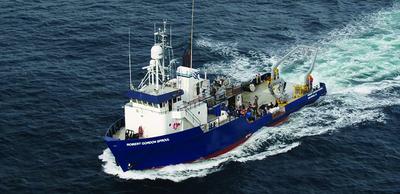
    CSP Student Cruise

    Mark Merrifield · SIO

    We request one day of ship time on the R/V Sproul to provide student instruction at sea for students in the Masters of Advanced Studies Climate Science and Policy (MAS CSP) Program. CSP seeks to train the next generation of leaders in climate change mitigation and adaptation. The one-year program provides a comprehensive overview of the scientific basis for climate change, including a detailed description of the ocean's role in the climate system. A one-day cruise in April/May 2023 would provide an invaluable opportunity to learn firsthand how oceanographic measurements are made, and to connect concepts learned in the classroom with the fieldwork that drives scientific advances. A cruise is proposed in local waters to demonstrate how hydrographic measurements are made. The CTD casts will include a PAR, fluorometer, and O2 sensor. Trawls will be conducted using a small-mesh plankton net for phytoplankton and other protists, a large-mesh net for zooplankton, and an otter trawl for an assortment of organisms. CSP students receive training in the basics of physical, chemical, geological, and biological oceanography during an intensive summer program and two quarters of coursework. In the Spring quarter, they will be focusing on Capstone research projects that bring together science and policy with practical applications. They all will be enrolled in the CSP Capstone course during Spring quarter. Relevant to that course are activities that enhance their classroom experience and that bring together the broad range of topics covered in this ambitious one-year program. A training cruise as part of the CSP Capstone and professional development during Spring quarter would be an amazing, and impactful, culmination to their time at Scripps Institution of Oceanography.

    Apr 29 – Apr 30, 2023 · 1 d

    San Diego, CA

  • Completed

    ARCTERX

    Craig Lee · UW

    The South China Sea and the Philippine Sea are understood to be among of the most energetic regional seas in the global ocean. The combination of the Kuroshio Current, the monsoons, typhoons, strong tides, and the dramatic topography of the region lead to a rich physical forcing environment. Numerous ONR DRI studies have documented the physical oceanography of internal waves, typhoons, and currents characterizing the region (ASIAEX, NLIWI, IWISE, ITOP, OKMC, FLEAT). The region has long been documented to have enhanced levels of eddy kinetic energy; a topic not previously addressed by these studies. A distributed system observational program will investigate sub-mesoscale processes in the S. China Sea/Philippine Sea region of the First and Second Island Arcs. The focus will be on the turbulent eddy exchange throughout this region, and on the class of oceanographic variability that is poorly constrained in models including eddies, rings, vortices and filaments, and their interactions with smaller-scale phenomena. Work will focus on in-situ sampling with a heavy emphasis on autonomous instrument platforms, which have the ability to follow features of interest over weeks to months over vast regions.

    Apr 29 – Jun 11, 2023 · 44 d

    South China Sea and Philippine Sea

  • Completed

    TGEOS 445 - Spring 2023

    Robert Kamphaus · UW

    UW Tacoma Field Course - TGEOS 445 Estuarine Field Studies - Spring Quarter 2023. Students learn about Puget Sound and how to do oceanographic field work by sampling water properties using a CTD (temperature, salinity, density, dissolved oxygen, fluorescence, and transmissivity) and collecting discrete samples and analyzing them for chlorophyll, dissolved oxygen and nutrients, as well as phytoplankton. In addition, we periodically collect van veen sediment samples, horizontal plastics surface net tows and an occasional vertical zooplankton net tow (if ship facilities allow). All students rotate and learn all methods and write up field reports weekly as a research team. The final project consists of building a course website providing on overview with data and interpretation for all areas the team studied. Each pair of students are responsible for summarizing what we found in a particular area of Puget Sound.

    Apr 28 – Apr 30, 2023 · 1 d

    Puget Sound

NewerPage 40 of 55Older