RIPPLE 2
Completed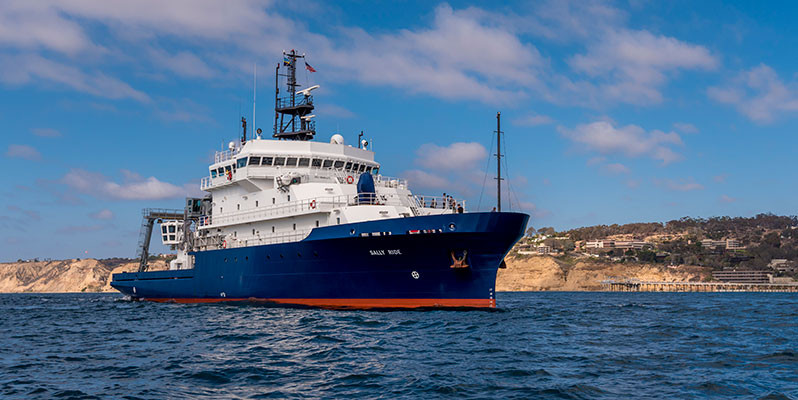
Operating area: Oregon Coast - Two 3-day Langrangian stations in location chosen based on satellite data.
Route: Newport (Oregon) - United States → Newport (Oregon) - United States
Scripps Institution of Oceanography
Project aboard
The Production and Fate of Fats in the Upper Ocean Phytoplankton, microscopic photosynthetic organisms in the ocean, produce a type of fat called triaclyglycerols (TAGs). A recent discovery in the North Pacific Ocean showed that a significant percentage of primary production from phytoplankton is devoted to producing TAGs. This suggests that TAGs may serve as a source of energy for phytoplankton at night, when they are unable to generate energy from photosynthesis. Phytoplankton are the base of the food web in the ocean. Therefore, it is important to understand how they create and store energy. This project will investigate the role of fats in the ocean. Specifically, this research will look at: 1) factors that affect the production and use of TAGs by phytoplankton and 2) how TAGs contribute to the global carbon cycle. This project will support the training and education of graduate students. This project will also provide resources for mentoring high school students, support summer research experiences for high school and undergraduate students, and offer field trips for 7th grade students.
People aboard
- Benjamin Van Mooy · Chief scientist
- Benjamin Van Mooy · Principal investigator
Party size: 10
Estimated vacant berths: 16
Equipment
Pooled / portable
- CTD
Schedule data from UNOLS Marine Facilities Planning · operator cruise code SR2310 Van Mooy · MFP reference 21/285 · synced Sep 24, 2026