VesselConnect
  • Completed

    Savannah · SkIO

    SEFIS

    Nathan Bacheler · NOAA

    SEFIS is a fishery-independent research group that surveys reef fish using traps and video from Cape Hatteras, NC, to St. Lucie Inlet, FL, from 15-115 m deep.

    May 13 – May 22, 2026 · 9 d

    Southeast US Atlantic continental shelf between NC and the east coast of FL.

  • Completed

    US GO-SHIP P04E

    Lynne D. Talley · SIO

    the most important and basic climate system components are the heat, freshwater, and carbon content and transport of the oceans, which directly interact with other essential components of the climate system in the atmosphere and cryosphere. In turn the associated variability and trends in the ocean's carbon content, carbonate saturation state, oxygen, and nutrients impact its internal biological environment, with notable large-scale regional changes. This joint study of the ocean carbon cycle and circulation is critical to identify critical areas where changes in ocean circulation could have serious consequences for future anthropogenic carbon uptake. Global warming-induced changes in the ocean's transport of heat and freshwater, which could affect the circulation, are being followed through these long-term measurements. Results to date have shown that the abyssal ocean is warming, taking up to 30% of the excess heat in the entire Earth system, leading to changes in circulation patterns and ventilation rates in the upper ocean. The uptake of anthropogenic carbon from the atmosphere to the ocean has been mapped and shows that the oceans are acidifying. Oxygen concentrations are declining in the ocean thermocline, and tropical oxygen minimum zones are expanding. The project is based on the fundamental concept that data collected belong to the community and need to be made quickly and freely available to the community at large through a recognized international data center. The project will continue to promote training and learning for graduate students, postdoctoral scientists, and new scientists in sea-going work. Outreach activities will continue as opportunities arise. The systematic and global re-occupation of select ocean hydrographic sections conducted for the past decade (2003-2014) will be extended into the 2015-2020 period with the continued objective of quantifying changes in the full-depth ocean. The project is in support of the U.S. CLIVAR (CLImate Variability and predictability) and the Carbon Science Programs, and is a component of a global observing system for the physical climate and carbon system. This long-standing project continues to contribute to the following overlapping scientific objectives: Data for Model Calibration, Validation and Model Based Synthesis; Carbon System Studies; Heat and Freshwater Storage and Flux Studies; Deep and Shallow Water Mass and Ventilation Studies; and Calibration of Autonomous Sensors. By integrating the scientific needs of the carbon, tracer and hydrographic communities, major scientific synergies and cost savings will continue to be achieved. In addition to efficiency, the coordinated approach produces scientific advances that exceed those of having individual programs. An average of two sections will be conducted every year, sometime collaboratively with international partner. The measurements made on each section include hydrography (full-depth vertical profiles of salinity, temperature, oxygen, nutrients, currents), Underway surface temperature, salinity, partial pressure of carbon dioxide (pCO2), air-sea fluxes, bathymetry, navigation), carbon system (dissolved inorganic carbon, pCO2. Total Alkalinity, pH, dissolved organic carbon and nitrogen), and transient tracers. This project will collect the data and perform the quality control measures routinely carried out by providers of reference-quality data. Post-cruise data updates, distribution, and archive will continue to be managed by groups with separate funding. This ongoing project is integrated with a larger international effort to monitor the ocean's response to climate change.

    May 10 – Jul 5, 2026 · 55 d

    North Pacific --see below for details.
  • Completed

    PB&Jb-3

    Kurt Polzin · WHOI

    This cruise will deploy a moored sensor network with the goal of understanding the coupling between internal waves and bottom boundary layers over steep and rough topography. The sensor network will be deployed in the Brazil Basin to quantify near boundary flow distortions due to finite amplitude topography, near boundary internal wave breaking, and momentum and buoyancy fluxes in both turbulent and internal wavebands (i.e. drag and mixing). Extant data obtained as part of a Tracer Release Experiment in the same domain and data from the Global Drifter Program will be used to create a regional statistical characterization of the oceanic internal wavefield in the Sub-Tropical South Atlantic. This characterization will be compared to a hierarchy of five models: an operational forecast model (HYCOM), O(1-3) km horizontal resolution ROMS-CROCO, nonhydrostatic ROMS-CROCO ’mountain scale’ simulations with 50 m resolution and 1:1 grid aspect ratio, realistic Large Eddy Simulations (LES), and a quasi-analytic spectral representation of the internal wave energy spectrum. The proposed work is synergistic: the field characterization represents ground truth, the quasi-analytic model is constrained by those highly resolved data and can be modified to critique how a numerical model’s truncation of topographic variability impacts the mid-water column internal wavefield, the global models assist assessment of non-local generation and propagation not represented in the quasi-analytic model, quantification of nonlinear wave-wave interactions in the ’mountain scale’ simulations provides insight into theoretical treatments. Observed data and LES permit investigation of interactions between boundary layer dynamics, wave generation and the forward cascade to turbulence.

    May 9 – Jun 10, 2026 · 31 d

    Brazil Basin, 20S, 18W

  • Completed

    SIO176

    Sophia Merrifield · SIO

    SIO 176 is an undergraduate elective course within the newly established Oceanic and Atmospheric Science major at Scripps Institution of Oceanography, UCSD. This interdisciplinary program integrates rigorous training in mathematics, physics, and chemistry with courses in oceanography, climate, and atmospheric science, offering students practical experience in both data collection and analysis. The focus of SIO 176 is to teach students how to collect and use physical oceanographic data to address scientific questions. Throughout the course, students gain exposure to the most commonly used instruments and platforms for collecting oceanographic data through lectures, hands-on exercises, and visits to SIO laboratories. This proposal requests one day of ship time on the R/V Sproul for an SIO 176 student cruise during Winter or Spring Quarter 2026. The cruise will provide students with a valuable opportunity to experience how measurements are collected aboard a research vessel and to test and deploy sensors they have either built or programmed.

    May 9 – May 10, 2026 · 1 d

    Point Loma Outfall

  • Completed

    SIOC 218/Del Mar

    Uwe Send · SIO

    Two days of ship time are requested on R/V Sproul in late April and late May 2026 as part of the formal class sequence SIOC 223/218B “Proposal writing and experiment design” and “ At-sea course for time-series and mooring techniques, ” similar to classes held successfully in earlier years. The sequence provides hands-on experience to SIO graduate students in writing proposals and designing experiments, planning a research cruise, designing a mooring observation system, operating instruments at sea, and calibrating and analyzing obtained time-series and other data. A scientific report with results analyzed by students, and/or an outreach article about this field-focused at-sea course is expected to be published. We request two separate (24-hour) days of ship time on R/V Sproul, one in April and one in May 2026 for the mooring operations. All cruises depart San Diego Nimitz Marine Facility (MARFAC) tentatively at 07:00. Transit to the Del Mar site takes three hours each way. Recent cruises have also included CTD calibration cast(s) at a deeper site west of Point Loma.

    May 6 – May 7, 2026 · 1 d

    San Diego

  • Completed

    Savannah · SkIO

    CORMP

    Christopher LaClair · UNCW

    Replacement and recovery of Meteorological and Oceanographic data buoys.

    May 6 – May 9, 2026 · 3 d

    Atlantic Ocean, nearshore South Carolina

  • Completed

    Pelican · LUMCON

    MuST Puerto Rico UXO survey

    Nicolas Michel-Hart · UW-APL

    We are requesting R/V Pelican time for operating MuST, a buried object scanning sonar towbody for UXO surveys in operational environments specified by Environmental Security Technology Certification Program (ESTCP) and Naval Facilities Engineering Systems Command/United States Army Corps of Engineers. The baseline MuST system comprises of a low-frequency, high-grazing angle, high-bandwidth acoustics system (EdgeTech Buried Object Scanning System — eBOSS), a high-frequency, mid-to-low-grazing angle side scan sonar (EdgeTech 2205), and a high-frequency Multibeam sonar (RESON T50). The system contains a FOCUS-3 towbody manufactured by MacArtney Underwater Technology with three sonar systems mounted on the FOCUS-3, as well as a shipboard handling system and shipboard data acquisition with analysis hardware and software. Broadband sonars operating in the kHz to 10’s of kHz regime have shown promise in detecting/classifying buried (and proud) mine-like objects at performance levels and area coverage rates superior to other modalities. Previous SERDP and ESTCP research efforts indicate that the same may be true for munitions but demonstration of the performance in an operational context has not been carried out. This project seeks to address this deficiency by further demonstrating the capabilities of a surface ship/towbody solution that minimizes the in-water, at-risk hardware. (Anticipated Project Completion - 2026)

    May 5 – May 30, 2026 · 25 d

    Culebra, Puerto Rico and Panama City, FL

  • Completed

    ICONIC - 3 of 5

    Kristen Buck · OSU

    Our joint NSF-NERC collaborative research project will integrate field observations from the Bermuda Atlantic Time-series Study (BATS) and Cape Verde Ocean Observatory (CVOO) study regions with targeted experimental studies and a state-of-the-art ocean biogeochemical model to constrain the processes that modulate interactions of iron with dissolved and particulate organic matter, and advance our ability to model the global iron cycle and the vertical export of iron and carbon in the upper ocean. We will collect seasonally resolved water column (upper 3,500 m) datasets from BATS during five cruises, shared with the monthly BATS program, spanning a full annual cycle. In late spring (cruise 3 of 5), we will augment the work at BATS with additional water column sampling along the way to, and at, the Cape Verde Ocean Observatory in the eastern North Atlantic, which provides a natural laboratory for contrasting iron speciation and subsurface oxygen conditions with the BATS region.

    May 5 – May 10, 2026 · 5 d

    North Atlantic near Bermuda

    Sails with 2 other projects

  • Completed

    BATS 2026 - 7of12

    Nicholas R. Bates · BIOS

    Long-term observations over several decades are a powerful tool for investigating ocean physics, biology, and chemistry, and the response of the oceans to environmental change. The Bermuda Atlantic Time-Series Study, known as BATS, has been running continuously since 1988. The research goals of the BATS program are: (1) to improve our understanding of the time-varying components of the ocean carbon cycle and the cycles of related nutrient elements such as nitrogen, phosphorus, and silicon; and, (2) to identify the relevant physical, chemical and ecosystem properties responsible for this variability. In addition, the BATS program has strong and diverse broader impacts, contributing to the field of ocean sciences by providing high quality ocean observations and data for seagoing scientists and modelers, and a framework through which researchers can conceive and test hypotheses. This award will support operations of the BATS program for five more years. This research integrates ocean physics, chemistry and biology into a framework for understanding oceanic processes and ocean change in the North Atlantic subtropical gyre. The existing years of BATS data provide robust constraints on seasonal and interannual variability, the response of the Sargasso Sea ecosystem to natural climate variability, and signal detection of potential ocean changes.

    May 5 – May 10, 2026 · 5 d

    North Atlantic near Bermuda

    Sails with 2 other projects

  • Completed

    Hydro S - 2026 14of24

    Nicholas R. Bates · BIOS

    One of the longest open-ocean hydrographic stations in the world is maintained at the Hydrostation S site (formerly known as the Panulirus site) located ~25 km southeast of Bermuda in the North Atlantic Ocean. This program of repeat biweekly hydrographic observations began in 1954 (by Hank Stommel) and now, in its seventh decade, has proved to be the catalyst for numerous studies of ocean physics, biological processes and biogeochemistry. Hydrostation S continues to be recognized as one of the most important sustained ocean time–series. The renewal of the Hydrostation S program is proposed herein, extending this invaluable time–series of ocean hydrography to almost 70 years. The upper ocean warming trend has strengthened (about +1.4° C since the 1970's; ~+0.8°C in last decade) with significant salinification (+0.16). Deeper waters such as the Labrador Sea Water has cooled by a few tenths of a degree and freshened with a marked decadal oscillation. The signature of deoxygenation has been observed at Hydrostation S in the upper ocean (about 4 µmoles kg -1 decade -1 decrease in dissolved oxygen) as well as the oxygen minimum zone (~2.5 µmoles kg -1 decade -1 ). Hydrostation S also supports the longest global ocean CO 2 and acidification time-series (from 1983 to present)

    May 5 – May 10, 2026 · 5 d

    North Atlantic near Bermuda

    Sails with 2 other projects

  • Completed

    Ocean 201 Course - 2026

    Hilairy Hartnett · UW

    UW Oceanography Dept. Ocean 201 Student Cruise for May 2026.

    May 4 – May 8, 2026 · 3 d

    Puget Sound

  • Completed

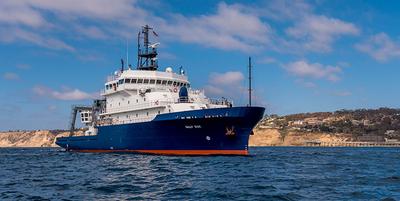
    Sally Ride · SIO

    NGA-LTER Spr2026

    Russ Hopcroft · UAF

    The NGA is a highly resilient ecosystem, due to the intense levels of environmental variability experienced by the biological community. We define resilience as recovery of key emergent properties (a diatom-dominated spring bloom; hot spots of high summer production; high biomass of large, lipid-rich copepods; high rates of particle export to depth; efficient transfer of production to upper trophic levels) following disturbance. These properties arise from the interplay of physical and chemical properties together with the genetic repertoire of the ecosystem’s component species, and in turn are key to the maintenance of high productivity at upper trophic levels, including commercially harvested groundfish (e.g. black cod, pollock, rockfish), seabirds, and marine mammals. Our approach to evaluating resilience includes: Examining the recovery (or lack thereof) of emergent properties following disturbance (e.g., marine heatwaves); Distinguishing food web pathways that are more versus less sensitive to disturbance; Tying observations of lower trophic level responses to their consequences for higher trophic levels under different (in time and space) conditions; Examining the occurrence and consequences of strategies, such as nutritional plasticity and species redundancy, thought to promote resilience. Assessing the availability of various iron and macronutrient sources

    May 3 – May 19, 2026 · 16 d

    Northern Coastal Gulf of Alaska

  • Completed

    Biomechanics cruise

    Jennifer Taylor · SIO

    The primary educational goal of the cruise is to recover and observe deep-sea animals from midwater and continental margin environments. This cruise provides a unique opportunity for students to observe and handle animals common in these extreme environments, and explore how animal form (materials and structure) is adapted to variable water conditions and ecologies (e.g., pelagic, benthic, mobile, sessile). Additionally, animals will be brought back to SIO so that students can conduct mechanical testing on the biomaterials as part of the course. Specifically, groups of students will use an Instron mechanical testing device (available in the Taylor lab) to examine the mechanical properties of different animal tissues, illustrating how materials are characterized and how they support multiple animal functions by resisting various types of loading. The study of deep-sea animal materials will complement the study of intertidal animal materials, helping students understand the link between animal form, function, and environment. This cruise will have the additional goals of introducing students to oceanographic research, demonstrating the different types of instrumentation used to study deep-sea organisms, including the Isaacs kid mid-water trawl and otter trawl, and providing at-sea experience for the diverse students who take this course.

    May 2 – May 3, 2026 · 1 d

    Offshore san diego

  • Completed

    Zc_eDNA

    Douglas Nowacek · Duke

    We have an ONR project using eDNA to compare the prey fields of goose-beaked whales (Ziphius cavirostris). We are comparing eDNA between and among three different populations of Ziphius: western Atlantic, Azores, and Ligurian Sea

    May 1 – May 7, 2026 · 6 d

    Continental shelf break area due east of Cape Hatteras, NC. Location is ~40 nm east of Cape Hatteras at the shelf break and just seaward of it by ~10 nm.

  • Completed

    S-Cycling in ODZs-Global

    Morgan Raven · UCSB

    Investigation of particulate organic sulfur, its formation within O2-deficient zones, and its impacts on sedimentary organic carbon preservation. We will collect sinking particles (with custom-built float-tethered arrays), suspended particles (with McLane pumps), and sediments (multicores) from three regions of the Mexican shelf and slope. Hydrographic data will be collected across a one-degree grid and complemented with multibeam data for regional context. The cruise would ideally be timed for maximum primary productivity in late spring to early (Northern Hemisphere) summer. Additionally, a short cruise from Washington to Clayoquot Sound, shortly prior to the main cruise, will permit testing of newly commissioned equipment and student training. On that cruise, we will deploy and recover the float-tethered trap arrays and conduct multicoring.

    May 1 – Jun 14, 2026 · 44 d

    Mexican EEZ

  • Completed

    SIO 145 Choy

    Anela Choy · SIO

    SIO 145 (Field Methods inBiological Oceanography) is a 6-credit lab course for SIO Marine Biology undergraduates. These day cruises aboard R/V Sproul will offer students a hands-on opportunity to work at sea and gain abetter understanding of how to use oceanographic sampling equipment and conduct oceanographic field research. In addition, cruises on the Sproul will provide students with an opportunity to collect data and samples that are needed to develop quarter-long lab projects. The goals of the cruise are to (1) demonstrate the different types of instrumentation used to study biological oceanography, including a CTD, Isaacs-Kidd Midwater Trawl, and plankton tows, (2) generate hydrographic data illustrating the oceanographic conditions of our sampling location(s) (e.g., thermocline, oxygen minimum zone), (3) visualize and recover zooplankton and micronekton characteristic of the southern California Current Ecosystem, (4) examine zooplankton and micronekton community composition, and (5) provide at-sea experience to students along with detailed explanations of ship operations and facilities. Work will be conducted in and around the San Diego Trough.

    Apr 29 – Apr 30, 2026 · 1 d

    San Diego Trough

  • Completed

    Pelican · LUMCON

    MD RTMM SV Deployment 2026

    Eric Aronchick · WHOI

    Redeploy compound mooring with 3 m surface buoy that was planned for recovery earlier in April 2026.

    Apr 29 – May 1, 2026 · 2 d

    US GoM, Approx. 120 nm S of Cocodrie, LA

  • Completed

    BATS 2026 - BATS Bloom 3

    Nicholas R. Bates · BIOS

    Long-term observations over several decades are a powerful tool for investigating ocean physics, biology, and chemistry, and the response of the oceans to environmental change. The Bermuda Atlantic Time-Series Study, known as BATS, has been running continuously since 1988. The research goals of the BATS program are: (1) to improve our understanding of the time-varying components of the ocean carbon cycle and the cycles of related nutrient elements such as nitrogen, phosphorus, and silicon; and, (2) to identify the relevant physical, chemical and ecosystem properties responsible for this variability. In addition, the BATS program has strong and diverse broader impacts, contributing to the field of ocean sciences by providing high quality ocean observations and data for seagoing scientists and modelers, and a framework through which researchers can conceive and test hypotheses. This award will support operations of the BATS program for five more years. This research integrates ocean physics, chemistry and biology into a framework for understanding oceanic processes and ocean change in the North Atlantic subtropical gyre. The existing years of BATS data provide robust constraints on seasonal and interannual variability, the response of the Sargasso Sea ecosystem to natural climate variability, and signal detection of potential ocean changes.

    Apr 26 – Apr 30, 2026 · 4 d

    Atlantic

    Sails with 2 other projects

  • Completed

    Hydro S - 2026 8of24

    Nicholas R. Bates · BIOS

    One of the longest open-ocean hydrographic stations in the world is maintained at the Hydrostation S site (formerly known as the Panulirus site) located ~25 km southeast of Bermuda in the North Atlantic Ocean. This program of repeat biweekly hydrographic observations began in 1954 (by Hank Stommel) and now, in its seventh decade, has proved to be the catalyst for numerous studies of ocean physics, biological processes and biogeochemistry. Hydrostation S continues to be recognized as one of the most important sustained ocean time–series. The renewal of the Hydrostation S program is proposed herein, extending this invaluable time–series of ocean hydrography to almost 70 years. The upper ocean warming trend has strengthened (about +1.4° C since the 1970's; ~+0.8°C in last decade) with significant salinification (+0.16). Deeper waters such as the Labrador Sea Water has cooled by a few tenths of a degree and freshened with a marked decadal oscillation. The signature of deoxygenation has been observed at Hydrostation S in the upper ocean (about 4 µmoles kg -1 decade -1 decrease in dissolved oxygen) as well as the oxygen minimum zone (~2.5 µmoles kg -1 decade -1 ). Hydrostation S also supports the longest global ocean CO 2 and acidification time-series (from 1983 to present)

    Apr 26 – Apr 30, 2026 · 4 d

    Atlantic

    Sails with 2 other projects

  • Completed

    BATS2026-1-of4

    Mark Stephens · FIU

    Coupled atmosphere-ocean general circulation models have long predicted that rising temperatures will result in enhanced stratification within the upper ocean, suppressing nutrient fluxes into the euphotic zone and negatively impacting primary and export production rates. However, fluxes of nutrients and carbon are controlled by complex linkages between physical mixing and biological processes. Our proposed study using Be-7 as a tracer of upper ocean mixing and transport processes in the Sargasso Sea will result in improved model parameterization of mixing and transport processes, and examine interdecadal variability of nutrient fluxes and oxygen utilization rates. To accomplish these goals, we will take part on eight cruises to the Bermuda Atlantic Times Series (BATS) site and other nearby locations during the period May 2026 to November 2027. Profiles from the upper water column will be obtained using in situ pumps that filter seawater through filters coated with iron hydroxide to absorb Be-7. Dissolved oxygen and nutrient concentrations, which are routinely collected by the times series personnel, will be modeled using diffusive mixing rates determined from Be-7 distributions, resulting in estimates of oxygen utilization and nutrient transport rates. Data collected in a similar study in 2007-08 will be provide for an interdecadal comparison.

    Apr 26 – Apr 30, 2026 · 4 d

    Atlantic

    Sails with 2 other projects

  • Completed

    OOI-Pioneer Spring 2026

    Deidra Emrich · WHOI

    Major infrastructure deployment and servicing cruise for the Pioneer Array of the National Science Foundation’s Ocean Observatories Initiative (OOI). The Pioneer Array includes a network of moorings and autonomous robotic vehicles to monitor waters of the continental shelf and slope NE of Cape Hatteras, NC and the shelf break front where nutrients and other properties are exchanged between the coast and the deep ocean. Data from the Pioneer Array will provide new insights into coastal ocean processes such as shelf/slope nutrient exchange, air-sea property exchange, carbon cycling, and ocean acidification that are important to the Mid-Atlantic Bight shelf, and to continental shelf ecosystems around the world. For further information, see http://www.oceanobservatories.org.

    Apr 25 – May 12, 2026 · 17 d

    Mid-Atlantic Bight NE of Cape Hatteras, NC

  • Completed

    NES-LTER-2026-2of4

    Heidi Sosik · WHOI

    NES-LTER cross-shelf transect cruises are conducted between Martha’s Vineyard and the continental shelf break directly south. The overarching goal of the NES-LTER is to understand and predict how planktonic food webs change through space and time in response to changes in the physical environment, and how those changes impact ecosystem productivity, including of higher trophic levels. Observations and models are focused on processes and mechanisms that structure pelagic food webs, trophic transformations, and productivity, as well as the key interactions and feedbacks that modulate relationships among them. NES-LTER transect process cruises are focused on characterizing cross-shelf distributions of physical properties, nutrients, production rates, and plankton. Approximately 11 stations will be occupied in waters depths typically less than 200 m, but up to ~1600 m. Operations will include underway sampling of biological and chemical properties with science-provided instruments, CTD/rosette casts, net tows, on-deck incubations, and deployment of a towed vehicle.

    Apr 22 – Apr 27, 2026 · 5 d

    New England Shelf

  • Completed

    Sally Ride · SIO

    GNSS-A AK/CAS 2026 Deployment

    Mark Zumberge · SIO

    We request ship time to use a planned transit in order to deploy two wave gliders as part of a sea floor geodesy experiment. Under NSF grant 2232638, "Collaborative Research: Near-Trench Community Geodetic Experiment", we deploy wave glider autonomous vehicles with GNSS-Acoustic interrogation packages. Current experimental areas include subduction zones offshore Cascadia and Alaska. We note that the R/V Sally Ride transit (SR 2607) from Alameda, California to Seward, Alaska will come very close to our desired deployment locations, which are listed in the survey plan. Relatively small course deviations will permit valuable scientific observations to be made at minimal incremental costs and time. We will recover the wave gliders some 60-90 days later with other marine assessments. No consequential impact is expected on the loading or unloading time, during the normal course of logistics for the transit cruise.

    Apr 21 – Apr 30, 2026 · 8 d

    East Pacific Ocean

    Sails with 2 other projects

  • Completed

    Sally Ride · SIO

    STEMSEAS

    Sharon Cooper · LDEO

    STEMSEAS aims to provide ship-based, exploratory experiences for undergraduate students during transits of the ARF ships. We sail ~3 scientist leaders with ~12 students in a cohort to learn as much as possible about the different areas of science and technology possible through our ARF ships. We welcome collaborations with any and all others who may be sailing on the transit.

    Apr 21 – Apr 30, 2026 · 8 d

    East Pacific Ocean

    Sails with 2 other projects

  • Completed

    Blue Heron · UMN

    Met Buoy Work

    Richard Ricketts · UMN

    Cruises to deploy and recovery meteorological buoys

    Apr 21, 2026 · 1 d

    Western Lake Superior

  • Completed

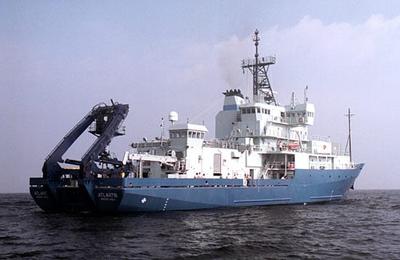
    Atlantis · WHOI

    Pioneer-Adjacent CPIES rescue

    Magdalena Andres · WHOI

    Through this project we have (1) deployed two current- and pressure-sensor-equipped inverted echo sounders (CPIESs), each equipped with four Popup Data Shuttles (PDSs), on the 1000-m isobath just northeast of Cape Hatteras, North Carolina and (2) established a data pathway to share the batches of CPIES observations broadly with the research community and other stakeholders as soon as they are available after download via satellite. The data records provided by the CPIESs are supporting stand-alone science to study physical oceanographic processes on the southern Mid Atlantic Bight (MAB) continental slope over a range of temporal scales and are also complementing the shelf-focused observations from the neighboring Ocean Observatories Initiative (OOI) Coastal Pioneer Array. The CPIESs, which are bottom landers, provide invaluable in situ measurements on the slope—a location that is difficult to observe with water column moorings, due to the intermittent presence of the strong Gulf Stream jet and potential conflict with fishing gear (e.g., from pelagic longlines or nets). In turn, observations from the Pioneer Array are providing information about the regional water masses that give spatial context for the CPIESs’ time series measurements.

    Apr 21 – Apr 28, 2026 · 7 d

    Cape Hatteras, NC

  • Completed

    Vent snail adaptation

    Roxanne Beinart Beinart · URI

    Hydrothermal vents are dominated by invertebrates that obligately rely on the chemosynthesis of their bacterial symbionts for nutrition in the otherwise food-limited deep-sea. Though they require their symbionts for survival, most symbiotic vent animals transmit their symbionts horizontally through the environment. In these systems, where aposymbiotic larvae disperse between geographically distant and environmentally variable island-like vent fields, the acquisition of a locally adapted symbiont strain after settlement is thought to be important to host fitness in a wide variety of conditions. However, despite its significance for understanding the ecology of the dominant fauna at vent ecosystems, local adaptation in chemosynthetic symbionts is still poorly addressed. To fill this gap, I propose to evaluate local adaptation in the bacterial symbionts associated with a foundation snail genus, Alviniconcha , at deep-sea hydrothermal vents in the western Pacific. First, using population genomics methods, we will assess the effects of adaptive and neutral processes by investigating symbiont populations across varying geochemical habitat conditions and geographic scales from meters to 1000s of kilometers. This will allow me to identify strain-level genomic variation that may contribute to local adaptation. Next, we will directly test for local adaptation using use high-pressure physiological experiments to compare chemosynthetic performance, a proxy for fitness, among snails with differing symbiont strains in simulated native and foreign conditions. These experiments will investigate adaptive phenotypes, while also linking them to symbiont genomic traits at the strain-level. Altogether, this work will test the hypothesis that the horizontally transmitted, chemosynthetic symbionts of hydrothermal vent animals can be locally adapted.

    Apr 18 – May 18, 2026 · 29 d

    Lau Basin

    Sails with 3 other projects

  • Completed

    EE Wellhead

    Andrew Redd · EE

    Endurance Energy is developing offshore geothermal power. During the April deployment, Endurance Energy will deploy prototype wellhead equipment to a hydrothermal vent system.

    Apr 18 – May 18, 2026 · 29 d

    Lau Basin

    Sails with 3 other projects

  • Completed

    Vent Recovery After Burial 1

    Shawn Arellano · WWU

    On January 15, 2022, the Hunga Volcano in the Kingdom of Tonga erupted, sending a plume of volcanic ash into the atmosphere and submarine density currents deep into the surrounding ocean. In April 2022, we visited six deep-sea hydrothermal vent fields along the Eastern Lau Spreading Center-Valu Fa Ridge in the Lau back-arc basin. There, we unexpectedly discovered a blanket of ash from the eruption up to 1.5 m thick covering four hydrothermal vent fields. Our initial research revealed a gradient of disturbance impacts, from complete burial to no apparent impacts. We will investigate the ecosystem changes that follow that catastrophic volcanic disturbance. Our study will examine regional and local factors that could limit recolonization by 1) modeling larval dispersal, 2) examining the local supply of larvae and impacts to reproductive sources at the sites, and 3) characterizing post-disturbance habitat changes, including substratum availability and ash weathering effects like increased low-density particulates and alterations to the energy available for chemosynthesis. We will also analyze succession of species and functional traits across the disturbance gradient through a post-disturbance colonization study as well as a time-series analysis of photomosaics and habitat maps over a pre- and post-disturbance period spanning nearly 20 years.

    Apr 18 – May 18, 2026 · 29 d

    Lau Basin

    Sails with 3 other projects

  • Completed

    SIO188_Spring2026

    Dahiana Arcila · SIO

    This cruise-based research project is designed as an immersive, hands-on learning experience for students enrolled in the combined undergraduate and graduate course Biology of Fishes (SIO 188/294). The course explores the global diversity of fishes, with a particular emphasis on the rich benthic and pelagic communities found off southern California. For many participants, this cruise will represent their first opportunity to engage in sea-going scientific research and to experience firsthand the challenges and rewards of field-based data collection. Through direct participation in specimen sampling, identification, and documentation, students will gain a deeper understanding of fish diversity, anatomy, ecology, and the processes that shape marine biodiversity.

    Apr 18 – Apr 20, 2026 · 1 d

    San Diego - United States

  • Completed

    Pelican · LUMCON

    Silicon-Microbe 2025

    Jeffrey Krause · DISL

    We will be conducting sediment coring and hydrocast surveys, and running experiments using radioisotope on the Louisiana Shelf in early fall 2024 and spring 2025.

    Apr 18 – Apr 27, 2026 · 9 d

    Gulf of Mexico Louisiana Shelf: inshore of the 50 m isobath and the western side of the Mississippi River delta to ~75 nautical miles west. Diameter ~100nm.

NewerPage 6 of 55Older