VesselConnect

Hugh R. Sharp

UNOLS · University of Delaware

Hugh R. Sharp placeholder

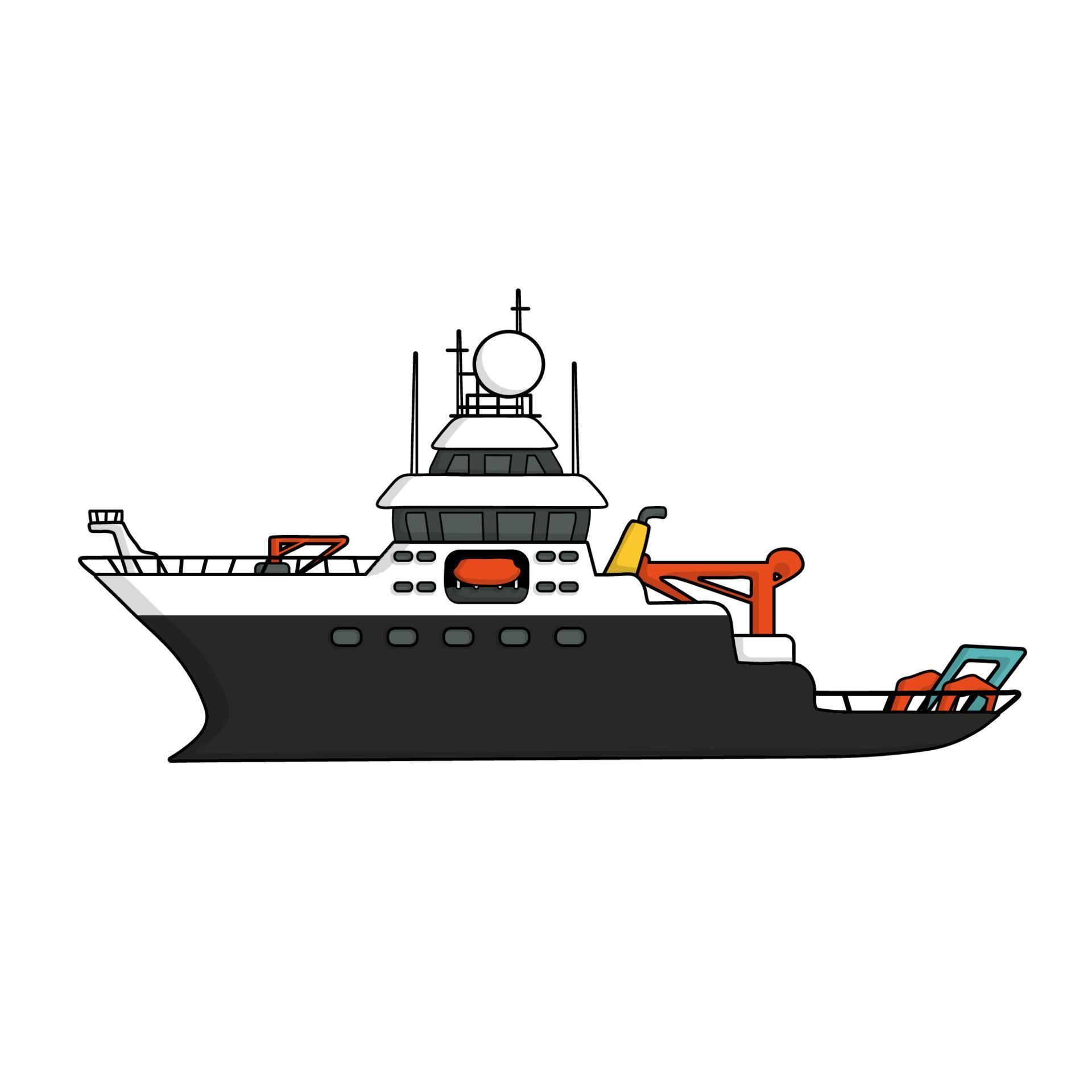
We don't have an image of this vessel yet, but we will soon!

USA
Loading map…

Mar 2026 – Sep 2026 · 28 port calls · 55 at-sea periods

Operating area: Mid-Atlantic/Coastal

14

Research bunks

44.5 m

Length

10 kn

Cruise speed

18

Endurance

3500 nm

Range

256

Gross tons

7

Crew

Projects

12+ past · 4 upcoming

Completed

BOLD MAB 2025

Bradley Penta · NRL

We will deploy profiling packages, scientific echosounders, plankton nets, and will collect water from the CTD rosette Niskin bottles for on-deck incubation, and analysis both on board and for shipping back to our labs. Profiling and sampling will occur around-the-clock, but with emphasis on dawn and dusk.

Sep 7 – Sep 12, 2025 · 5 d

Mid Atlantic Bight offshore of Delaware Bay

Completed

NU 160-element coherent hydrophone array

Purnima Makris · NEU

The Passive Ocean Acoustic Waveguide Remote Sensing (POAWRS) technology is a transformative approach for ocean sensing, since it is capable of monitoring sound sources over instantaneous wide areas spanning 100 km or more in diameter. Ocean sound sources detected by POAWRS include biology such as sounds from marine mammals, fish and crustaceans; geophysical processes such as hurricanes and submarine volcanoes; and man-made activities such as ships and other ocean vehicles, seismic earthquake plate tectonic studies, offshore piling, wind farms, and hydrocarbon prospecting. The instantaneous continental-shelf scale environmental monitoring capability and temporal-spatial dynamics of sound sources revealed by POAWRS makes it an important technology that could become an indispensable tool in field operations, such as large-scale marine ecological studies, fisheries stock assessments and management, compliance-based ocean enviromental and marine mammal monitoring, as well as in studies of the effects of man-made sound on marine ecosystems. The Passive Ocean Acoustic Waveguide Remote Sensing (POAWRS) technology, comprising of a large-aperture coherent hydrophone array hardware and real-time array data processing and analysis software, provides automatic signal detection, classification and localization, enabling ocean discoveries to be made right at sea, with real-time feedback that allow the data collection procedure to be adapted and optimized on-the-fly. A towed large-aperture 160-element coherent hydrophone array system implementing the POAWRS approach was previously developed inhouse at Northeastern University. The objectives of the current proposal are to conduct (i) mechanical upgrades to the array subapertures, (ii) develop, enhance and optimize POAWRS real-time processing and analysis software for array data sampled at high frequencies of 100 kHz per element, including computational and archival hardware, and (iii) sea tests to verify system upgrades and overall system operational readiness to support future ocean scientific research and studies.

Sep 17 – Sep 25, 2025 · 8 d

US Northeast coast, deep ocean south of Rhode Island, Great South Channel and the Gulf of Maine.
Completed

Methane Oxidation II

John D. Kessler · Rochester

The goal of this project is to first identify and then quantify the variables exerting the most influence on the kinetics of aerobic methane oxidation (MOx). This will be accomplished through systemic investigations of MOx in the laboratory and in the field (Great Lakes and US Atlantic Margin) and how it is influenced by changes in physical and chemical variables. While rates of MOx are measured relatively routinely by several research groups with this analytical expertise, the inter-laboratory comparability of results remains poor. This largely prohibits the integration and upscaling of these measurements for the regional and global quantification of the magnitude of this CH4 sink. Despite this considerable shortcoming, local studies have proven extremely valuable at displaying the variable potential for MOx to be a microbial biofilter with the ability to diminish oceanic emissions of this greenhouse gas to the atmosphere. The results of the investigations proposed here will lead to a fundamental understanding of the dominant physical and chemical controls on MOx kinetics, enabling protocols to be developed for greater inter-laboratory comparability of future measurements of MOx. In addition, the fundamental understanding uncovered here will aid in the regional and global extrapolation of MOx rates so that the influences exerted on seawater chemistry and atmospheric greenhouse gas budgets can be more precisely constrained.

Oct 9 – Oct 13, 2025 · 4 d

Any coastal US waters at a latitude approximately that of Delaware or Chesapeake Bays, not influenced by river plumes.

Completed

NES-LTER-2026-2of4

Heidi Sosik · WHOI

NES-LTER cross-shelf transect cruises are conducted between Martha’s Vineyard and the continental shelf break directly south. The overarching goal of the NES-LTER is to understand and predict how planktonic food webs change through space and time in response to changes in the physical environment, and how those changes impact ecosystem productivity, including of higher trophic levels. Observations and models are focused on processes and mechanisms that structure pelagic food webs, trophic transformations, and productivity, as well as the key interactions and feedbacks that modulate relationships among them. NES-LTER transect process cruises are focused on characterizing cross-shelf distributions of physical properties, nutrients, production rates, and plankton. Approximately 11 stations will be occupied in waters depths typically less than 200 m, but up to ~1600 m. Operations will include underway sampling of biological and chemical properties with science-provided instruments, CTD/rosette casts, net tows, on-deck incubations, and deployment of a towed vehicle.

Apr 22 – Apr 27, 2026 · 5 d

New England Shelf

Completed

Zc_eDNA

Douglas Nowacek · Duke

We have an ONR project using eDNA to compare the prey fields of goose-beaked whales (Ziphius cavirostris). We are comparing eDNA between and among three different populations of Ziphius: western Atlantic, Azores, and Ligurian Sea

May 1 – May 7, 2026 · 6 d

Continental shelf break area due east of Cape Hatteras, NC. Location is ~40 nm east of Cape Hatteras at the shelf break and just seaward of it by ~10 nm.

Completed

Oligohaline Dispersion

Robert Chant · Rutgers

We have two moorings that need to be recovered in the Delaware River. One is near the Delaware Memorial Bridge and the second near the Commodor Barry Bridge. The moorings have no surface signature and we would like to use the R/V Sharp's multibeam to image the moorings and its dynamic positioning to guide their recoverty via trawling or divers. The moorings have ~200 feet of line that runs from the frame to an anchor (75 lb doormoor) that provides a target to grab with a grappling hook. However, one of the moorings is entangled in a debris field (based on an earlier attempt to retrieve it), and we might need to send divers down to retrieve it.

May 14 – May 16, 2026 · 1 d

Delaware River near Delaware Memorial Bridge

Completed

CAMO - 2026 Sharp Maping and recovery with USNA and UD

Chris Martens · UNC

The project will test key hypotheses about deep-sea methane dynamics including determining if there are significant lags in microbial responses after exposure to elevated methane concentrations, determining the relationships of AMOR to methane and DIN concentrations and investigating the response times and magnitude of methanotrophs to spatial and temporal variability in methane concentration. Successful collection of in situ AMOR and associated microbial community data will prove important for modeling ocean methane dynamics over a range of oceanographic conditions including seep-enriched bottom waters and accidental hydrocarbon releases. This will be used to Map the Primary T1 site of Delaware near Washington Canyon and recovery the final Lander. Will be working together with The US Naval Academy and University of Delaware.

May 30 – Jun 5, 2026 · 6 d

GC185

Completed

Osmolyte cycling mid-Atlantic

Winifred Johnson · UNCW

Each year, half of all marine primary production (25 Pg C) is remineralized by microorganisms. Both identity and abundances of the molecules and microbes involved regulate this flux. Organic osmolytes likely comprise a significant, but unconstrained, component of this carbon flux. Osmolytes regulate osmotic pressure and thus accumulate at millimolar concentrations inside the cell. Given their high intracellular concentrations, upon their release to the microbial loop osmolytes are valuable carbon substrates as well as sources of nitrogen and sulfur. In fact, a few osmolytes have been shown to fulfill up to 4-38% of bacterial carbon demand, which could translate to a significant carbon flux. The goal of our proposed work is to produce a quantitative budget of osmolyte fate in the context of the labile carbon cycle by developing a greater mechanistic understanding of the biological and environmental controls of osmolyte composition and concentrations. We will do this through culture and field experiments where production, drawdown, and assimilation of organic osmolytes will be measured and linked to transcriptional activity of the microbial producers and consumers. Our field component aims to collect osmolyte standing stock concentrations, rates, and associated microbial molecular information along a coastal to open ocean gradient extending from the Mid-Atlantic Bight out past the Gulf Stream to oligotrophic waters. This region is typified by heightened primary productivity in the in-shore region, with coastal seasonal blooms that occur annually. Based on a preliminary analysis of surface biogeochemical conditions satellite, we propose a cruise track to take place in mid-summer (July) that will transit a strong productivity and nitrogen gradient from productive coastal waters, and eastward through the Gulf Stream and into stratified open ocean waters of the North Atlantic. The intersection of biogeochemical regimes will allow us to assess the impact of changes in community composition and nitrogen availability on in situ osmolyte cycling. We will pair quantitative metabolomic and stable isotope methods with quantitative metatranscriptomics to produce a budget of standing stock concentrations of osmolytes, bounded by the activity of microbial transcription.

Jul 9 – Jul 21, 2026 · 12 d

mid-Atlantic Bight

Completed

EAGER: RadPlastics-GoM

Erin Black · Rochester

The aim of this project is to investigate how the fate of marine microplastics (MPs) could be impacting ocean tracer systems now and with future additions of plastic to the marine environment. Plastics are ubiquitous in the marine environment but estimates of their contribution to the total suspended mass present throughout the water column are sparse. Furthermore, because of their relative resistance to degradation and buoyancy compared to bulk particulates in the oceans, plastics have the potential to act as a persistent transport mechanism for adsorbed constituents and plastics-associated tracers (e.g., radioisotopes) that could be carried from areas of high concentration (e.g., coastal zones) to lower concentration regions (e.g., gyres). Key particle-reactive radioisotope tracers (e.g., isotopes of Th, Be, Pb, etc.) provide ‘rates and dates’ for chemical oceanography studies, but currently no data on how these specific chemical constituents have been and could be impacted by the abundance of suspended plastics. This project sets out to fill these gaps in our understanding and address the following hypotheses: (H0) there is little or no predicted impact of MPs on radioisotope distributions in the marine environment due to low partition coefficients (K d s) for MPs with respect to typical marine particles and/or low amounts of plastics, (H1) MPs have the potential for some impact on radioisotope distributions due to K d s ≥ those of typical marine particles, and (H2) MPs have the largest potential for impacting radioisotope distributions due to K d s ≥ those of typical marine particles and observations of cross location or depth gradients suggesting ‘inherited’ tracer signals can be transported via plastics. To achieve these scientific goals, laboratory experiments and coastal sediment sampling will be followed by two proposed cruise campaigns in the North Atlantic. The first cruise is a short, 3 station transect through the Gulf of Maine to acquire potential coastal shelf to offshore gradients in plastics and radioisotopes. The second cruise will be a two-day BATS add on to obtain open ocean gyre estimates. On both campaigns, high-volume McLane pumping will be utilized at 5 depths <1000 m to collect size-fractionated particulate radioisotope activities, plastics counts, and suspended particulate matter estimates.

Jul 29 – Aug 1, 2026 · 3 d

Gulf of Maine and adjacent waters

Completed

Photooxidation DOM- Carboxylic acids

Hussain Abdulla · TAMU

Photochemical reactions are affected not only by the DOM reactants but also by key inorganic species (such as carbonate, halogen radicals, nitrate, and nitrite). Therefore we propose to investigate DOM photochemistry in two different aquatic systems with differing salinities and nitrate and nitrite levels, but similar concentration ranges of dissolved organic carbon and chromophoric dissolved organic matter, and similar pH ranges. Using these two transects from highly allochthonous to autochthonous DOM, which cover a wide range of DOM quantity and quality, we propose to study the photochemical transformations of DOM carboxyl groups. We will investigate how the phototransformations of these carboxyl groups vary along the two environmental-effect axes of salinity and DOM source.

Aug 4 – Aug 12, 2026 · 8 d

Gulf of Main

Completed

NES-LTER-2026-3of4

Heidi Sosik · WHOI

NES-LTER cross-shelf transect cruises are conducted between Martha’s Vineyard and the continental shelf break directly south. The overarching goal of the NES-LTER is to understand and predict how planktonic food webs change through space and time in response to changes in the physical environment, and how those changes impact ecosystem productivity, including of higher trophic levels. Observations and models are focused on processes and mechanisms that structure pelagic food webs, trophic transformations, and productivity, as well as the key interactions and feedbacks that modulate relationships among them. NES-LTER transect process cruises are focused on characterizing cross-shelf distributions of physical properties, nutrients, production rates, and plankton. Approximately 11 stations will be occupied in waters depths typically less than 200 m, but up to ~1600 m. Operations will include underway sampling of biological and chemical properties with science-provided instruments, CTD/rosette casts, net tows, on-deck incubations, and deployment of a towed vehicle.

Aug 14 – Aug 19, 2026 · 5 d

New England Shelf

Completed

NICO 1

Jeff Book · NRL

Take field measurements and conduct numerical experiments to determine the relative roles of wind shear inputs, coastally trapped waves, vertical energy fluxes, frictional decay, and nonlinear processes in the spin-up, energy transfer, and decay of near-inertial oscillations near a coastline. A better understanding of the roles of these dynamical terms will inform techniques for assimilation of high-frequency currents and lead to improved coastal predictions.

Aug 26 – Aug 31, 2026 · 5 d

NE US East Coast

Scheduled

NICO 2

Jeff Book · NRL

Take field measurements and conduct numerical experiments to determine the relative roles of wind shear inputs, coastally trapped waves, vertical energy fluxes, frictional decay, and nonlinear processes in the spin-up, energy transfer, and decay of near-inertial oscillations near a coastline. A better understanding of the roles of these dynamical terms will inform techniques for assimilation of high-frequency currents and lead to improved coastal predictions.

Nov 13 – Nov 18, 2026 · 5 d

NE US East Coast

Scheduled

NES-LTER-2027-2of4

Heidi Sosik · WHOI

NES-LTER cross-shelf transect cruises are conducted between Martha’s Vineyard and the continental shelf break directly south. The overarching goal of the NES-LTER is to understand and predict how planktonic food webs change through space and time in response to changes in the physical environment, and how those changes impact ecosystem productivity, including of higher trophic levels. Observations and models are focused on processes and mechanisms that structure pelagic food webs, trophic transformations, and productivity, as well as the key interactions and feedbacks that modulate relationships among them. NES-LTER transect process cruises are focused on characterizing cross-shelf distributions of physical properties, nutrients, production rates, and plankton. Approximately 11 stations will be occupied in waters depths typically less than 200 m, but up to ~1600 m. Operations will include underway sampling of biological and chemical properties with science-provided instruments, CTD/rosette casts, net tows, on-deck incubations, and deployment of a towed vehicle.

Apr 20 – Apr 25, 2027 · 5 d

New England Shelf

Scheduled

Assessment of beaked whale foraging

Heather Bracken-Grisson · FIU

New technologies, like eDNA, offer a powerful tool to improve tactical readiness in the maritime domain with situational awareness of marine species distribution and abundance to inform immediate tactical decisions and operational readiness over large scales. In particular, the combination of scalable, large-volume and adaptive sampling uniquely provide technological advantages for finding targets in the vast deep ocean, including marine species that significantly overlap in both space and time with ongoing Naval activities, as well as rare biological and particulate signals of interest. Here, our objective is to characterize marine species distributions using new eDNA approaches, cutting-edge autonomous sampling technology, adaptive sampling, and acoustic sensing analyses to better inform and support tactical and operational forecasting. Towards these ends, we propose to use a large-volume autonomous eDNA sampler with in situ filtration mounted on to a CTD rosette to conduct large-volume vertical profiling and adaptive sampling. We will also deploy a calibrated broadband, multifrequency scientific echosounder system to detect the sound scattering layers at relevant depths. The synthesis of eDNA with acoustic signals and adaptive sampling will contribute to a better understanding of marine species distribution as well as acoustic scattering and attenuation (bio-alpha) on acoustic propagation in the underwater environment.

May 15 – May 24, 2027 · 9 d

Northwestern Atlantic, Mid Atlantic Bight

Scheduled

NES-LTER-2027-3of4

Heidi Sosik · WHOI

NES-LTER cross-shelf transect cruises are conducted between Martha’s Vineyard and the continental shelf break directly south. The overarching goal of the NES-LTER is to understand and predict how planktonic food webs change through space and time in response to changes in the physical environment, and how those changes impact ecosystem productivity, including of higher trophic levels. Observations and models are focused on processes and mechanisms that structure pelagic food webs, trophic transformations, and productivity, as well as the key interactions and feedbacks that modulate relationships among them. NES-LTER transect process cruises are focused on characterizing cross-shelf distributions of physical properties, nutrients, production rates, and plankton. Approximately 11 stations will be occupied in waters depths typically less than 200 m, but up to ~1600 m. Operations will include underway sampling of biological and chemical properties with science-provided instruments, CTD/rosette casts, net tows, on-deck incubations, and deployment of a towed vehicle.

Jul 20 – Jul 25, 2027 · 5 d

New England Shelf


Are you the operator of this vessel?