VesselConnect
  • Completed

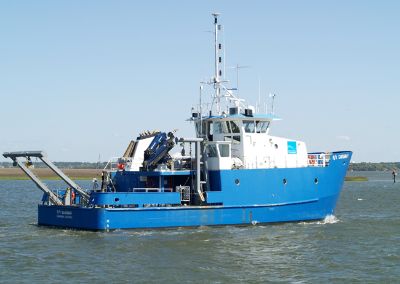
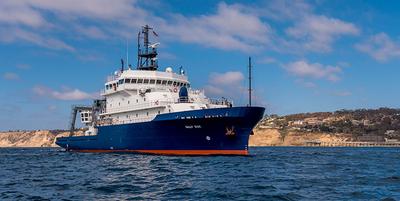
    Sally Ride · SIO

    OSU Student Cruise

    Miguel Goni · OSU

    As in previous years, OSU's Student Oceanographic Cruise is an integral part of the course-series “OC 295 – Introduction to Field Oceanography - Land” and “OC 296 – Introduction to Field Oceanography – Sea”, which are required for the undergraduate Ocean Science major. The OC 295/OC 296 course series is designed to introduce students to shipboard oceanography, including participation in a multiday oceanographic research cruise aboard a state-of-the art oceanographic research vessel. The cruise objectives included training students on a variety of oceanographic shipboard procedures and equipment, such as the use of CTD-rosette for hydrographic observations and water sampling, acoustic instrumentation for determination of currents and sub-surface features, several types of nets for recover plankton samples, as well as sediment sampling using multi-core gravity coring equipment. The cruise also allowed the students to be introduced to oceanographic operations (e.g., deployment and recovery of equipment), onboard sample and data handling, general navigation, ship safety and life at sea. Because of the size of the 2024 class, we expect to have two legs to the cruise. At this point we have flexibility on the embarkation/disembarkation ports and on the ship as long as it can accommodate 22-24 individuals as part of the science crew for each leg. Where we do not flexibility is on the dates, which need to coincide with OSU's spring break. Here is a draft of the schedule I have put together for the OSU Student Cruise: 3/21/2025 Friday MOB Day/Leg 1 Students travel to ship 3/22/2025 Saturday Leg 1 - Science day 3/23/2025 Sunday Leg 1 - Science day 3/24/2025 Monday Leg 1- Science day 3/25/2025 Tuesday Leg 1 - Science day 3/26/2025 Wednesday DEMOB Leg 1 students disembark; MOB Leg2 Students travel to ship 3/27/2025 Thursday Leg 2 - Science day 3/28/2025 Friday Leg 2 - Science day 3/29/2025 Saturday Leg 2 - Science day 3/30/2025 Sunday Leg 2 - Science day 3/31/2025 Monday DEMOB Leg 2 student disembark ship

    Mar 22 – Mar 30, 2025 · 8 d

    Southern California (alternate would be Newport, Oregon)
  • Completed

    US GO-SHIP I09N

    Lynne D. Talley · SIO

    The most important and basic climate system components are the heat, freshwater, and carbon content and transport of the oceans, which directly interact with other essential components of the climate system in the atmosphere and cryosphere. In turn the associated variability and trends in the ocean's carbon content, carbonate saturation state, oxygen, and nutrients impact its internal biological environment, with notable large-scale regional changes. This joint study of the ocean carbon cycle and circulation is critical to identify critical areas where changes in ocean circulation could have serious consequences for future anthropogenic carbon uptake. Global warming-induced changes in the ocean's transport of heat and freshwater, which could affect the circulation, are being followed through these long-term measurements. Results to date have shown that the abyssal ocean is warming, taking up to 30% of the excess heat in the entire Earth system, leading to changes in circulation patterns and ventilation rates in the upper ocean. The uptake of anthropogenic carbon from the atmosphere to the ocean has been mapped and shows that the oceans are acidifying. Oxygen concentrations are declining in the ocean thermocline, and tropical oxygen minimum zones are expanding. The project is based on the fundamental concept that data collected belong to the community and need to be made quickly and freely available to the community at large through a recognized international data center. The project will continue to promote training and learning for graduate students, postdoctoral scientists, and new scientists in sea-going work. Outreach activities will continue as opportunities arise. The systematic and global re-occupation of select ocean hydrographic sections conducted for the past decade (2003-2014) will be extended into the 2015-2020 period with the continued objective of quantifying changes in the full-depth ocean. The project is in support of the U.S. CLIVAR (CLImate Variability and predictability) and the Carbon Science Programs, and is a component of a global observing system for the physical climate and carbon system. This long-standing project continues to contribute to the following overlapping scientific objectives: Data for Model Calibration, Validation and Model Based Synthesis; Carbon System Studies; Heat and Freshwater Storage and Flux Studies; Deep and Shallow Water Mass and Ventilation Studies; and Calibration of Autonomous Sensors. By integrating the scientific needs of the carbon, tracer and hydrographic communities, major scientific synergies and cost savings will continue to be achieved. In addition to efficiency, the coordinated approach produces scientific advances that exceed those of having individual programs. An average of two sections will be conducted every year, sometime collaboratively with international partner. The measurements made on each section include hydrography (full-depth vertical profiles of salinity, temperature, oxygen, nutrients, currents), Underway surface temperature, salinity, partial pressure of carbon dioxide (pCO2), air-sea fluxes, bathymetry, navigation), carbon system (dissolved inorganic carbon, pCO2. Total Alkalinity, pH, dissolved organic carbon and nitrogen), and transient tracers. This project will collect the data and perform the quality control measures routinely carried out by providers of reference-quality data. Post-cruise data updates, distribution, and archive will continue to be managed by groups with separate funding. This ongoing project is integrated with a larger international effort to monitor the ocean's response to climate change.

    Mar 21 – Apr 27, 2025 · 37 d

    E Indian Ocean This is the I09N cruise. This can begin or end at the end of the I08S line near 30S and 95E. It can then end or begin in the northern Bay of Bengal.

  • Completed

    Fe-ISE Pumped Profiles

    Maxwell Fenton · UC

    This project serves to test a new technique that combines the use of a novel seawater iron sensing system with continuously pumped vertical depth profiles. A trace metal clean seawater flow-through system will pump water at depth up to a shipboard analytical system employing our iron ion-selective electrode (Fe-ISE). The objectives of this project are to generate the first vertical profiles of in-situ iron availability as measured by our sensor, and interpret these data in the context of other iron measurements and oceanographic parameters, while assessing the depth limits and pumping efficiencies for the profiles themselves. A series of profiles will be conducted over the course of several days. We have chosen a location that will offer notable features in parameters of interest in the upper 100 m of the water column, such that even shallow profiles will provide valuable data. The San Pedro Ocean Time-series, or SPOT, is an optimal site in this regard.

    Mar 20 – Mar 23, 2025 · 3 d

    Southern California Bight (San Pedro Ocean Time-series)

  • Completed

    MABSWOT CPIES Rescue

    Magdalena Andres · WHOI

    The purpose of this cruise is to recover two current and pressure sensor equipped inverted echo sounders (CPIESs) that were deployed on the continental slope in and near the Gulf Stream east of Cape Hatteras. These instruments were part of an array of in situ instruments deployed within a swath that was sampled twice per day by the new surface water and ocean topography (SWOT) satellite during its 90-day calibration/validation period. Six CPIESs were deployed in January 2023. Four of these were recovered in June 2024 and the remaining two need be recovered before their auto-release dates (May 17 & 20, 2025 for P3 and P6, respectively).

    Mar 17 – Mar 23, 2025 · 6 d

    Sails with 2 other projects

  • Completed

    OTZ

    Andone Lavery · WHOI

    Recovery of OTZ moorings during the Armstrong transit cruise AR86-07 from Port Everglades, FL to WHOI Departing March 17 th and arriving WHOI March 23 rd

    Mar 17 – Mar 23, 2025 · 6 d

    Sails with 2 other projects

  • Completed

    Chain Cruise 2

    Jessica Warren · UDel

    An interdisciplinary field program to study the structure, composition, and seismicity of the Chain Transform Fault. An ocean bottom seismometer array was deployed in Nov 2025 to record microseismicity on the fault. These OBS were scheduled for recovery in Oct/Nov 2025, but are now being recovered in Mar 2025, 8 months ahead of schedule due to the OBS recall by NSF.

    Mar 16 – Mar 29, 2025 · 13 d

    Equatorial Atlantic at 1.5S and 15W.

  • Completed

    TPADS

    Jennifer MacKinnon · SIO

    Accurate forecast models of upper ocean temperature and sound speed profiles, air-sea heat exchange, and rates of sea ice melt all share in common a need for accurate prediction and parameterization of turbulent fluxes through the top ∼ 10-50 meters of the ocean. Such fluxes play a gate-keeping role in regulating air-sea heat fluxes at low latitudes (and hence the oceans role in MISO, MJO, and other coupled phenomena), fluxes to/from sea ice at high latitudes, and fluxes through most of the water column in the shallow coastal ocean. The phenomenology of upper ocean turbulence includes a combination of wind-driven mixing, Langmuir turbulence, sub-mesoscale re-stratification (especially in regions of strong lateral fronts), diurnal cycling from solar heating, and turbulence from breaking internal and surface waves. This is in contrast to most regional or global models, which parameterize upper ocean turbulent heat fluxes using one- dimensional mixing schemes. Improved understanding and parameterization requires better observations of the true three-dimensional nature of upper ocean instabilities. Our group has been developing a novel towed phased array doppler sonar system (TPADS), for imaging three-dimensional volumes of upper ocean currents. Here we request ship time to test ongoing technical developments to this system.

    Mar 12 – Mar 14, 2025 · 1 d

    Offshore of San Diego

  • Completed

    Atlantis · WHOI

    Costa Rica GNSS-A 2023

    Mark Zumberge · SIO

    One of the challenges in subduction zone hazard assessment is understanding whether a large or great earthquake will be accompanied by a catastrophic tsunami. While subduction zones routinely produce large and great earthquakes, not all of these earthquakes produce significant tsunamis. Measurements of shallow, up-dip slip-deficit near the trench can provide critical information on this question but are hampered by the difficulty and cost of obtaining accurate seafloor geodetic data. This proposal describes a collaborative international effort to deploy state-of the art sea floor geodesy equipment offshore Central America, in two transects sampling adjacent segments of the subduction zone. The two segments contrast in key geological and geophysical characteristics, facilitating hypothesis testing.

    Mar 11 – Mar 27, 2025 · 16 d

    Offshore Costa Rica and Nicaragua

  • Completed

    Sikuliaq · UAF

    HOT3 25

    angelicque white · UH

    Systematic long-term (greater than a few decades in length) time-series observations of aquatic and terrestrial environments have led to a more comprehensive understanding of the natural ecosystem variability and have enabled an assessment of human impacts on ecosystem dynamics. Because of their ability to store and transport large amounts of heat and to absorb carbon dioxide from the atmosphere, the world's oceans play a critical role in modulating environmental conditions for the sustained well-being of both land-based and marine organisms including humans. Despite their recognized scientific and societal importance, long-term records of key ocean processes are rare. In 1988, the Hawaii Ocean Time-series (HOT) program, near Hawaii was established. For over three decades, teams of scientists based at the University of Hawaii have made critical measurements of the 'state of our sea.' These long-term observations have established a baseline against which future states can be compared. The ship-based HOT program complements other diverse ocean observation programs including remote-sensing via satellites, moored buoys, profiling floats, and autonomous underwater vehicles. All HOT program data are publicly available and are frequently used by researchers and policy makers around the world.

    Mar 10 – Mar 15, 2025 · 5 d

    Station ALOHA (22.75N, 158W)

  • Completed

    C-COMP 1 of 2

    Elizabeth B. Kujawinski · WHOI

    Functions carried out by microscopic inhabitants of the surface ocean affect every aspect of life on our planet, regardless of distance from the coast. Ocean phytoplankton are responsible for half of the photosynthesis on Earth, the first step in a complex system that annually withdraws 50 billion metric tons of carbon from the atmosphere to sustain their growth. Of this, 25 billion metric tons participate in a rapid cycle in which biologically reactive material is released into seawater and converted back into carbon dioxide by marine bacteria within hours to days. The chemical-microbe network at the heart of this fast cycle remains poorly constrained; consequently, its primary currencies and controls remain elusive; its sensitivities to changing ocean conditions are unknown; and its responses to future climate scenarios are not predictable. The Center for Chemical Currencies of a Microbial Planet (C-CoMP) integrates research, education and knowledge transfer activities to develop a mechanistic understanding of surface ocean carbon flux within the context of a changing ocean and through increased participation in ocean sciences. C-CoMP supports science teams that merge biology, chemistry, modeling, and informatics to close long-standing knowledge gaps in the identities and dynamics of organic molecules that serve as the currencies of elemental transfer between the ocean and atmosphere. C-CoMP fosters education, outreach, and knowledge transfer activities that engage students of all ages, broaden participation in the next generation of ocean scientists, and extend novel open-science approaches into complementary academic and industrial communities. The Center framework is critical to this mission, uniquely facilitating an open exchange of experimental and computational science, methodological and conceptual challenges, and collaborations that establish integrated science and education partnerships. With expanded participation in ocean science research and ocean literacy across the US society, the next generation of ocean scientists will better reflect the diverse US population. Climate-carbon feedbacks on the marine carbon reservoir are major uncertainties for future climate projections, and the trajectory and rate of ocean changes depend directly on microbial responses to temperature increases, ocean acidification, and other perturbations driven by climate change. C-CoMP research closes an urgent knowledge gap in the mechanisms driving carbon flow between ocean and atmosphere, with global implications for predictive climate models. The Center supports interdisciplinary science teams following open and reproducible science practices to address: (1) the chemical currencies of surface ocean carbon flux; (2) the structure and regulation of the chemical-microbe network that mediates this flux; and (3) sensitivity of the network and its feedbacks on climate. C-CoMP leverages emerging tools and technologies to tackle critical challenges in these themes, in synergy with existing ocean programs and consistent with NSF’s Big Ideas. C-CoMP education and outreach activities seek to overcome barriers to ocean literacy and diversify participation in ocean research. The Center is developing (1) initiatives to expand ocean literacy in K-12 and the broader public, (2) ocean sciences undergraduate curricula and research opportunities that provide multiple entry points into research experiences, (3) post-baccalaureate programs to transition undergraduates into graduate education and careers in ocean science, and (4) interdisciplinary graduate student and postdoctoral programs that prepare the next generation of ocean scientists. The C-CoMP team includes education faculty who evaluate the impacts of education and outreach activities and export successful STEM initiatives to the education community. C-CoMP is revolutionizing the technologies for studying chemical transformations in microbial systems to build understanding of the outsized impact of microbes on elemental cycles. Open science, cross-disciplinary collaborations, community engagement, and inclusive practices foster strategic advances in critical science problems and STEM initiatives. C-CoMP science, education, and knowledge-transfer themes are efficiently addressed through a sustained network of scientists addressing critical research challenges while broadening the workforce that will tackle multi-disciplinary problems with academic, industrial and policy partners.

    Mar 9 – Mar 21, 2025 · 12 d

    Atlantic ocean, Transect between Bermuda and Woods Hole

  • Completed

    Savannah · SkIO

    Cross-Shelf Plumes April 2024

    Diane Fribance · CCU

    A study of the dynamics of a coastal buoyant plume, fed by a riverine discharge, that crosses a wide continental shelf at an oblique angle and with minimal lateral spreading. This type of plume delivers coastal low-salinity water offshore, possibly all the way to the shelf-break, where it can be entrained by major oceanic currents (e.g., the Gulf Stream on the US east coast). The plume’s formation is the result of tidally-modulated estuarine outflow and a balance between upwelling wind and buoyancy forcing, something not uncommon in a variety of environments around the globe, and yet it deviates from the traditional plume types commonly referred to in the literature. We hypothesize that under such wind/buoyancy conditions the tidal pulses of brackish water produce individual tidal sub-plumes, which are subsequently advected offshore by Ekman drift without being dispersed or mixed by excessive wind-induced shear stresses. The freshwater discharge is assumed to be sufficiently high so that geostrophic adjustment can occur within the tidal pulse of buoyant water. Under this scenario, the width of the resulting plume is simply the scale of the individual tidal sub-plume, while its total length is a sum of multiple tidal sub-plumes, roughly aligned with the surface wind-driven currents. The result of this process is a filament-like plume with an unusually high length-to-width aspect ratio, which breaks away from coastal trapping and protrudes far offshore. A number of field experiments will resolve mixing, wind and other forcings near the sea surface to develop an accurate description of the conditions favoring the development and persistence of these dynamics.

    Mar 8 – Mar 15, 2025 · 7 d

    Mouth of Winyah Bay, SC, off Georgetown in Long Bay

  • Completed

    Sally Ride · SIO

    CCE-LTER IV - mooring 2

    Katherine Barbeau · SIO

    The California Current Ecosystem (CCE) Long-Term Ecological Research (LTER) site is a coastal upwelling biome and the site of a 73-year (ongoing) spatially-resolved ocean timeseries (CalCOFI) that has demonstrated physical forcing on multiple spatiotemporal scales with concomitant impacts on ocean biota. The CCE is part of the larger LTER Network, founded in 1980 by the National Science Foundation. CCE-LTER studies are making excellent progress towards diagnosing mechanisms of ecosystem change in a major upwelling ecosystem and developing a quantitative framework for forecasting future changes. Our field site is in the CA Current upwelling regime, centered around Point Conception, within the CalCOFI time series station plan. The CCE LTER field program includes several different elements: experimental process cruises, time series cruises (ship time augmented on existing CalCOFI cruises) and mooring servicing cruises to maintain the deep water CCE1 and CCE2 moorings. The science carried out on these field expeditions is highly interdisciplinary, involving elements of biological, chemical, and physical oceanography.

    Mar 8 – Mar 15, 2025 · 7 d

    Southern California

  • Completed

    Pelican · LUMCON

    Tiber Metocean Campaign - SV

    Eric Aronchick · WHOI

    Four metocean moorings were deployed in August 2024 in the western GoM to monitor and record subsea and near-bed current profiles.

    Mar 6 – Mar 9, 2025 · 3 d

    US GoM, Approx. 200 nm SW Cocodrie, LA

  • Completed

    BATS 2025 - BATS Bloom 1

    Nicholas R. Bates · BIOS

    Long-term observations over several decades are a powerful tool for investigating ocean physics, biology, and chemistry, and the response of the oceans to environmental change. The Bermuda Atlantic Time-Series Study, known as BATS, has been running continuously since 1988. The research goals of the BATS program are: (1) to improve our understanding of the time-varying components of the ocean carbon cycle and the cycles of related nutrient elements such as nitrogen, phosphorus, and silicon; and, (2) to identify the relevant physical, chemical and ecosystem properties responsible for this variability. In addition, the BATS program has strong and diverse broader impacts, contributing to the field of ocean sciences by providing high quality ocean observations and data for seagoing scientists and modelers, and a framework through which researchers can conceive and test hypotheses. This award will support the operations of the BATS program for five more years. The primary BATS research themes are as follows: (1) Quantify the role of ocean-atmosphere coupling and climate variability on air-sea exchange of CO2, and carbon export to the ocean interior; (2) Document trends and the controls on the interannual to decadal scale variability in carbon and nutrient cycles to their coupling in the surface and deep ocean via the Redfield Ratio paradigm; (3) Quantify the response of planktonic community structure and function, and impact on biogeochemical cycles to variability in surface fluxes and dynamical processes; (4) Facilitate development, calibration and validation of next generation oceanographic sensors, tools and technologies; and, (5) Generate a dataset that can be utilized by empiricists, modelers and students. This research integrates ocean physics, chemistry and biology into a framework for understanding oceanic processes and ocean change in the North Atlantic subtropical gyre. The existing 29 years of BATS data provide robust constraints on seasonal and interannual variability, the response of the Sargasso Sea ecosystem to natural climate variability, and signal detection of potential ocean changes. This project would extend the BATS program through years 31-35 to address a series of ten interlinked questions through integrated research approaches and a multitude of collaborative efforts. In addition to the themes above, and embedded into the ten questions and approaches, the BATS team will focus on, for example, coupling of particle production and biogeochemistry; revisiting the complexities of the biological carbon pump; oxygen decline; and changes in the hydrography, physics, ocean carbon cycle and biogeochemistry of the Sargasso Sea. The highest quality data observation and collection will be maintained and used to address these questions. Importantly, a wide range of collaborations at the BATS site, spanning the physical and biogeochemical disciplines, will aid these broad goals. Strong links to community stakeholders, and close collaboration (including methods intercomparisons and personnel exchanges) with the Hawaii Ocean Time-series are proposed. This work will extend the research findings of the project into educational and training opportunities within and beyond the oceanographic community, including training and mentorship of both undergraduate and graduate students.

    Mar 3 – Mar 6, 2025 · 3 d

    Atlantic

    Sails with 1 other project

  • Completed

    Hydro S - 2025 7of24

    Nicholas R. Bates · BIOS

    One of the longest open-ocean hydrographic stations in the world is maintained at the Hydrostation S site (formerly known as the Panulirus site) located ~25 km southeast of Bermuda in the North Atlantic Ocean. This program of repeat biweekly hydrographic observations began in 1954 (by Hank Stommel) and now, in its seventh decade, has proved to be the catalyst for numerous studies of ocean physics, biological processes and biogeochemistry. Hydrostation S continues to be recognized as one of the most important sustained ocean time–series. The renewal of the Hydrostation S program is proposed herein, extending this invaluable time–series of ocean hydrography to almost 70 years. The upper ocean warming trend has strengthened (about +1.4° C since the 1970's; ~+0.8°C in last decade) with significant salinification (+0.16). Deeper waters such as the Labrador Sea Water has cooled by a few tenths of a degree and freshened with a marked decadal oscillation. The signature of deoxygenation has been observed at Hydrostation S in the upper ocean (about 4 µmoles kg -1 decade -1 decrease in dissolved oxygen) as well as the oxygen minimum zone (~2.5 µmoles kg -1 decade -1 ). Hydrostation S also supports the longest global ocean CO 2 and acidification time-series (from 1983 to present) The major objective of the proposal is to continue Hydrostation S into the eighth decade with numerous questions related to warming and cooling, salinification and freshening, deoxygenation and insights on biogeochemical changes over time. This program constitutes frequent water column sampling of temperature, salinity, and dissolved oxygen (and indirectly, sampling of important ocean carbon time–series) of the North Atlantic subtropical gyre at the Hydrostation S site. Such work is complementary to other sustained observations such as the Bermuda Atlantic Time–series Study (BATS) and Ocean Flux Program (OFP). We propose to carry out a similar sampling format that has been followed for the past 68 years. As for the past ten years, we would continue to conduct two CTD profiles to better capture the deep–water variability while maintaining all the previous discrete depths. The first CTD cast will profile to full ocean depth (3,300–3,500 m) while the second CTD cast will profile to 500 m (to allow for instrumentation not rated for full ocean depth such as a PAR sensor). One indirect objective will be to continue to collaboratively evaluate a BIOS-based glider program with Hydrostation S data as critically important ground truthing data. The existing glider program has challenging issue, and the aim of this effort is to use robust and highly accurate Hydrostation S data to test the capability of emerging technologies over the next five to ten years.

    Mar 3 – Mar 6, 2025 · 3 d

    Atlantic

    Sails with 1 other project

  • Completed

    Savannah · SkIO

    Education Cruise

    Martial Taillefert · GaTech

    This educational cruise is part of an undergraduate capstone course in Earth and Atmospheric Science at Georgia Tech. Each student has their own research project to investigate the effect of the development of the coast on marine environments, including the coastal zone and the continental shelf.

    Mar 1 – Mar 2, 2025 · 1 d

    NA-06

  • Completed

    Transit Cruise

    Robert Kamphaus · UW

    Feb 26 – Mar 11, 2025 · 13 d

  • Completed

    RAPID-MOCHA 2025

    William Johns · UMIAMI

    The project will continue the US contribution to the RAPID-MOCHA oceanographic mooring array at 26.5N in the Atlantic Ocean for an additional 42 months, bringing the length of data record to 22.3 years. This time series monitors the Atlantic meridional overturning circulation (AMOC) and meridional heat transport in the Atlantic Ocean. The RAPID-MOCHA array has yielded results that have changed widely held views about the deep ocean circulation and movement of heat across the ocean basin. Continued monitoring of the ocean structure and currents will allow oceanographers to better determine the relevant dynamics that control heat transport and to improve representations of the ocean role in climate models. The AMOC is known to be an important component of the climate system and it is believed that better understanding of the ocean dynamics that control the AMOC and its associated heat transport will lead to better fundamental understanding of the Earth's climate system and improved climate prediction. The 18-month extension of the RAPID-MOCHA will allow for longer term planning and reconsideration of the mooring array configurations.

    Feb 25 – Mar 14, 2025 · 17 d

    NA9, Bahamas

  • Completed

    Atlantis · WHOI

    NDSF Engineering

    Anna Michel · UNOLS

    Feb 24 – Mar 4, 2025 · 8 d

    Off Southern California

  • Completed

    GA-ZRay-05

    Ferrell Paul · GA

    This project will be conducted to support 5 days of testing of the ZRay vehicle. The vehicle will be run through a variety of speed and depth profiles while using the Sproul as the launch and recovery ship.

    Feb 24 – Feb 27, 2025 · 2 d

    12 miles west of San Diego: 32d 41m N, 117d 29m W

  • Completed

    UMiami Student Cruises 2025 - 2 of 5

    Jim Happell · UMIAMI

    Feb 23, 2025 · 1 d

    Off Miami

  • Completed

    Pelican · LUMCON

    Shell Stones/Murphy WS Feb25

    Jacob Fredrickson · Fugro GEOS Inc

    Mooring recovery, service, and redeployment for a Fugro Wavescan Buoy. Redeployment at site 1 of a buoy that broke free of its mooring; release from mooring and redeployment at site 2 of a buoy that pulled its anchor weight out of location. Buoys measure wind, waves, and currents. Data is transmitted to erddap and distributed.

    Feb 22 – Feb 28, 2025 · 5 d

    GoM

  • Completed

    UMiami Student Cruises 2025 - 1 of 5

    Jim Happell · UMIAMI

    Feb 22, 2025 · 1 d

    Off Miami

  • Completed

    Sally Ride · SIO

    Santa Lucia Biodiversity Expedition

    Grace Cawley · UC

    The Santa Lucia Escarpment Cruise aims to investigate the ecological and oceanographic processes driving high marine biodiversity in the Santa Lucia Escarpment, a proposed National Marine Sanctuary. Ten Scripps Institution of Oceanography students, led by Chief Scientist Grace Cawley, will embark on the R/V Sally Ride to collect physical, chemical, and biological samples. The research focuses on understanding bottom-up processes, including upwelling and nutrient dynamics, which support rich marine life from phytoplankton to top predators like seabirds and marine mammals. This study will provide crucial baseline data on primary productivity, zooplankton diversity, and predator-prey interactions, informing conservation efforts and the potential impacts of future developments, such as offshore wind energy installations. During the 11-day cruise, the team will conduct detailed surveys across nine stations, deploying various instruments and sampling methods. Key activities include continuous bow chain transects to measure high-resolution temperature structures, CTD casts to profile water masses and collect water samples for nutrient and chlorophyll analysis, and multiple zooplankton net tows. Additionally, visual and acoustic surveys of marine mammals and seabirds will be performed. This comprehensive approach will help elucidate the complex interactions within the Santa Lucia Escarpment ecosystem and enhance our understanding of its role within the CCE.

    Feb 20 – Mar 3, 2025 · 10 d

    Santa Lucia Escarpment

  • Completed

    DOC CRM 2024 2 of 2

    Dennis Hansell · UMIAMI

    Dissolved organic carbon (DOC) in the world ocean is part of the global carbon cycle that interacts with the planetary climatic system through its connection with atmospheric carbon dioxide. Keeping track of this DOC requires the cooperative effort of many marine laboratories worldwide. Making sure that all of these laboratories are making accurate DOC measurements requires that each one have access to a standardized sample of seawater for which the DOC concentration is set by international consensus. This award will fund the University of Miami to continue a consensus reference material (CRM) program that was first developed in 1998 in support of consistent, high quality measurements of dissolved organic carbon by the international ocean chemistry community. With continuation of this work, the US and international communities will create with confidence consistent measurements of a major marine carbon reservoir, thereby advancing society’s ability to assess changes in the marine carbon cycle and the role of the ocean in climate change. With continued strong international efforts to investigate the marine carbon cycle, the existing CRM program provides the necessary benchmark for globally comparable marine DOC measurements. Water from the deep Florida Strait (~42 mol/kg DOC) will be collected, ampoulated, and distributed to the US and international community. Since program launch, ~228,000 vials of reference waters have been distributed to ~240 US and international laboratories in 45 nations, currently at a rate of ~27,000 vials/year. With renewal of the reference material program for an eigth 3-year period of support, distribution of deep ocean water containing biologically refractory dissolved organic carbon and low carbon reference water will continue to aid the analytical work of the DOM community.

    Feb 20 – Feb 21, 2025 · 1 d

    Florida Strait east of Key Biscayne, Florida

  • Completed

    Transit Cruise

    Kerry Strom · UNOLS

    Feb 16 – Feb 20, 2025 · 4 d

NewerPage 19 of 55Older