VesselConnect
  • Completed

    AMOR - 2025 PELICAN 1 of 2

    Chris Martens · UNC

    The project will test key hypotheses about deep-sea methane dynamics including determining if there are significant lags in microbial responses after exposure to elevated methane concentrations, determining the relationships of AMOR to methane and DIN concentrations and investigating the response times and magnitude of methanotrophs to spatial and temporal variability in methane concentration. Successful collection of in situ AMOR and associated microbial community data will prove important for modeling ocean methane dynamics over a range of oceanographic conditions including seep-enriched bottom waters and accidental hydrocarbon releases.

    Jul 7 – Aug 7, 2025 · 30 d

    GC185

  • Completed

    WOAC-2025-Summer

    Jan Newton · UW

    Oceans, estuaries and coastal habitats are changing quickly, driven by both natural processes and human activities. The Washington Ocean Acidification Center (WOAC) was established by the state legislature to advance research and monitoring of ocean acidification and its biological effects in Washington waters. One facet of that research is the WOAC cruises. We go out three times a year, April, July, and September, to monitor ocean acidification and its affect on biology. These cruises are part of a long term time Ocean Acidification time series.

    Jul 7 – Jul 12, 2025 · 4 d

    Puget Sound

  • Completed

    Endeavor · URI

    SnoCam

    Margaret Estapa · Maine

    Tools to measure the quantity and composition of gravitationally sinking biological organic matter, via the “biological carbon pump” (BCP) are of increasing importance. Decades of work have established the utility and also the potential methodological deficiencies of sediment traps for the collection of this sinking organic matter. Sediment traps that minimize hydrodynamic biases during particle collection, and underwater imaging devices that can resolve time-dependent fluxes and identify sources of sinking material, are some of the most powerful tools available for direct collection and characterization of BCP fluxes. However, such devices at present are expensive to develop and maintain, and typically operated only by their originating laboratories. Furthermore, few studies have tested the sediment trap platform hydrodynamic effects on sinking particle imagers. The proposed project would build upon work of each of the proposing PIs to develop sediment trapping and particle sensing tools that utilize openly shared software, and hardware designs that are based upon commercially-available components. The first objective of this project is to develop and test a sediment trap controller that would simplify the construction and deployment of neutrally-buoyant sediment traps (NBSTs) based upon commercially-available profiling floats, thus broadening the potential user base of such traps, which are minimally impacted by hydrodynamic effects. The second objective is to integrate with the trap controller a low-cost, upward-looking in situ camera to image sinking particles. Characterizing this camera’s performance under a variety of platform hydrodynamic conditions, and developing software for onboard data reduction, will lay the groundwork for its use to quantify sinking carbon fluxes aboard autonomous platforms. Finally, recognizing that the lower mesopelagic zone (defined here as 500-1000 m) is critical to observations of biological carbon sequestration over long timescales, the third project objective is to optimize these tools for use at these typically-undersampled depths.

    Jul 7 – Jul 13, 2025 · 6 d

    New England slope

  • Completed

    Virus Export-Northwest Atlantic (NWA)

    Kay Bidle · Rutgers

    A convergent team of experts in biology, chemistry, physics, engineering, mathematics, and computational modeling examine how dynamic and coupled phytoplankton-pathogen-particle-predator linkages coalesce to explain the observed high spatial variability in the efficiency of the export of particulate organic carbon (POC) to the deep ocean. They elucidate and quantify the linkages between viruses and ballast minerals to increase understanding of carbon cycling in the oceanic biological carbon pump and the impact of viruses within it. By providing knowledge than can be used to improve the parameterization of carbon export in Earth system models, the project will help reduce uncertainty in regional marine biogeochemical projections, potentially improving marine ecosystem and fisheries management on timescales from seasons to decades. The project includes activities that provide teaching resources and hands-on training to educators within a ‘Tools of Science’ program that provides a simple and succinct way to communicate the process of scientific research to students in a way that is useful to teachers. The project couples laboratory-based experiments on model host-virus-grazer systems with extensive field based observational and manipulative studies on natural populations of diatoms and coccolithophores, the two phytoplankton groups that account for most of the estimated particulate organic matter flux to the deep ocean. Experiments and measurements integrate diagnostic biological and chemical controls on infection and particle coagulation theory with microscale physics and grazing to quantify links to each hypothesized export mechanism under field-relevant turbulent conditions. Cutting-edge engineering and analytical tools are used to diagnose and track infection dynamics while characterizing and quantifying particle aggregation and disaggregation, mineral dissolution, sinking dynamics, grazing rates, and fecal pellet production at unprecedented resolution and under well-defined, microscale physical regimes. Field campaigns elucidate the relative efficiency of hypothesized mechanisms in stimulating POC export in natural blooms, while providing bulk and size-resolved estimates of POC flux.

    Jul 7 – Aug 9, 2025 · 33 d

    NW Atlantic

  • Completed

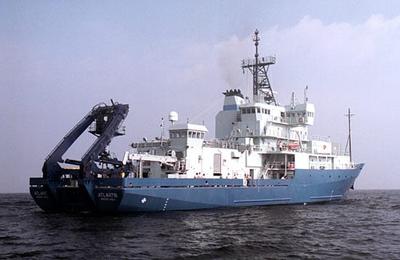
    Atlantis · WHOI

    Alaska IWR 2025 Summer

    Magdalena Andres · WHOI

    As part of the National Ocean Partnership Program (NOPP) Global Internal Wave (NGIW) study, Internal Wave Resolving (IWR) Arrays are being deployed to collect high-frequency in situ measurements that can resolve the energy flux associated with internal waves propagating through the deep ocean by combining high vertical- resolution moorings to resolve the waves’ modal structure with an antenna of vertically- integrated measures of variability to resolve the speed and direction of beam propagation. The IWR Arrays are re-deployable to multiple locations and this cruise aims to deploy an array in the deep ocean off the Alaskan slope. The IWR Array comprises nine current and pressure-sensor equipped inverted echo sounders (CPIESs) surrounding a densely instrumented, full-depth mooring. The CPIES antenna will allow for the detection and separation of low-mode internal waves propagating from multiple directions, while the mooring will measure velocity and vertical displacement signals of five or more vertical modes. By working in partnership will numerical modelers, the array will allow for skill-testing and direct comparison with the global internal-tide resolving models that serve as inputs to regional models of the coastal ocean.

    Jul 5 – Jul 18, 2025 · 13 d

    Alaska

  • Completed

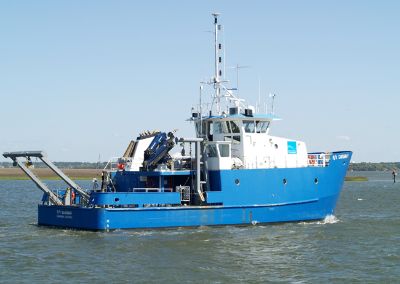
    Savannah · SkIO

    Benthic Iron Flux

    Martial Taillefert · GaTech

    This project will measure the benthic flux of iron and its distribution at three sites along the western Atlantic margin to test the main hypothesis that a benthic flux of iron exists even in non-upwelling margins and that this flux is controlled by the input of organic carbon to the seafloor. The project will also test the hypothesis that the benthic flux in these margins is mainly due to the shear stress on the seabed by local currents. Finally, the project will test the hypothesis that the distribution of iron chemical species, and their fate depends on the carbon input flux to the sediment.

    Jul 2 – Jul 30, 2025 · 28 d

    Cape Lookout Bight to MAB

  • Completed

    WBTS - FLS 27N - 2025 1of 6

    Ryan Smith · AOML

    Researchers from NOAA's Atlantic Oceanographic and Meteorological Laboratory (AOML) in Miami, FL, conduct regular bimonthly hydrographic surveys at 27N in the Florida Straits to monitor the transport and water-mass properties of the Florida Current. The Florida Current is part of the Gulf Stream system, which is the upper limb of the western boundary current system in the North Atlantic Ocean. These cruises are a part of the laboratory’s long-running Western Boundary Time Series (WBTS) project and directly measure the Florida Current at nine locations across the Straits of Florida at 27N, between Jupiter, Florida, and the Little Bahama Bank in the Bahamas. WBTS 27N hydrographic sections, conducted bimonthly throughout the year, are critical to improving our understanding of the North Atlantic Subtropical Gyre circulation and the Atlantic Meridional Overturning Circulation (AMOC). Importantly, data collected during these cruises and others are also used to calibrate the 27N submarine cable system which publicly provides daily transport estimates of the Florida Current . The AMOC is a significant factor in climate change, oceanic carbon sequestration, and sustainable fisheries.

    Jul 2 – Jul 3, 2025 · 2 d

    Straits of Florida

  • Completed

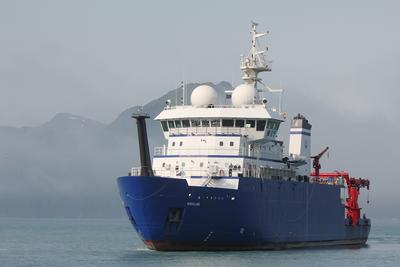
    Sikuliaq · UAF

    NGA-LTER Sum2025

    Russ Hopcroft · UAF

    The NGA is a highly resilient ecosystem, due to the intense levels of environmental variability experienced by the biological community. We define resilience as recovery of key emergent properties (a diatom-dominated spring bloom; hot spots of high summer production; high biomass of large, lipid-rich copepods; high rates of particle export to depth; efficient transfer of production to upper trophic levels) following disturbance. These properties arise from the interplay of physical and chemical properties together with the genetic repertoire of the ecosystem’s component species, and in turn are key to the maintenance of high productivity at upper trophic levels, including commercially harvested groundfish (e.g. black cod, pollock, rockfish), seabirds, and marine mammals. Our approach to evaluating resilience includes: Examining the recovery (or lack thereof) of emergent properties following disturbance (e.g., marine heatwaves); Distinguishing food web pathways that are more versus less sensitive to disturbance; Tying observations of lower trophic level responses to their consequences for higher trophic levels under different (in time and space) conditions; Examining the occurrence and consequences of strategies, such as nutritional plasticity and species redundancy, thought to promote resilience. Assessing the availability of various iron and macronutrient sources

    Jun 26 – Jul 20, 2025 · 24 d

    Northern Coastal Gulf of Alaska

  • Completed

    USNA - 2025

    Joseph Smith · USNA

    ONR-USNA Summer 2025 Research Cruise with WHOI and U-Del

    Jun 26 – Jul 1, 2025 · 4 d

    Chesapeake Bay and Redbird Reef

  • Completed

    Nitrous oxide cycling

    Annie Bourbonnais · SC

    We propose to advance quantitative understanding of the microbiological and biogeochemical controls of ODZ N 2 O cycling using both stable isotopic data at natural abundance and 15 N-label rate measurements using in situ incubation technologies in the Bay of Bengal. Genomic and metatranscriptomic data will be used to reveal the key players and the corresponding metabolic pathways of N 2 O cycling along O 2 and productivity gradients. The combination of these approaches will decipher the relative contribution of the sources of N 2 O and their controls. We will participate in 2 cruises in spring/summer 2025. The first will be a piggy-back onto the ONR funded cruise in 2025 (ASTraL program: The Arabian Sea Transition Layer) and for which are requesting a 4 day addition. The second cruise in summer 2025 will be a dedicated 30 day cruise (this request). During the second cruise, we will apply transformative approaches that minimize sampling and handling artifacts to provide more accurate biogeochemical rate estimates. Two new instruments will be deployed, the “Incubating Productivity System (IPS)” and the “Microbial Sampler – Submersible Incubation Device (MS-SID)”. We will also use the MS-SID to collect and preserve samples in situ for nucleic acid extractions and cell enumeration.

    Jun 26 – Aug 7, 2025 · 42 d

    Bay of Bengal

    Sails with 2 other projects

  • Completed

    Nitrous oxide cycling

    Annie Bourbonnais · SC

    We propose to advance quantitative understanding of the microbiological and biogeochemical controls of ODZ N 2 O cycling using both stable isotopic data at natural abundance and 15 N-label rate measurements using in situ incubation technologies in the Bay of Bengal. Genomic and metatranscriptomic data will be used to reveal the key players and the corresponding metabolic pathways of N 2 O cycling along O 2 and productivity gradients. The combination of these approaches will decipher the relative contribution of the sources of N 2 O and their controls. We will participate in 2 cruises in spring/summer 2025. The first will be a piggy-back onto the ONR funded cruise in 2025 (ASTraL program: The Arabian Sea Transition Layer) and for which are requesting a 4 day addition (this request). The second cruise in summer 2025 will be a dedicated 30 day cruise. During the second cruise, we will apply transformative approaches that minimize sampling and handling artifacts to provide more accurate biogeochemical rate estimates. Two new instruments will be deployed, the “Incubating Productivity System (IPS)” and the “Microbial Sampler – Submersible Incubation Device (MS-SID)”. We will also use the MS-SID to collect and preserve samples in situ for nucleic acid extractions and cell enumeration.

    Jun 26 – Aug 7, 2025 · 42 d

    Bay of Bengal

    Sails with 2 other projects

  • Completed

    UW 2025 Funding

    Robert Kamphaus · UW

    This SME is only for the purpose of tracking the UW funding contribution for 2025. This is to offset the 10 days funded by NSF on R/V ATLANTIS for OOI-RCA.

    Jun 26 – Aug 7, 2025 · 42 d

    Bay of Bengal

    Sails with 2 other projects

  • Completed

    Microbial energy

    Kimberly Popendorf · UMIAMI

    Microbial growth efficiency (MGE) is a critical ecological parameter that describes the amount of energy required for biomass production and defines the proportion of carbon lost from marine microbial foodwebs through respiration. Despite its significance our understanding of the ecological and biological drivers of MGE is poor. Our proposed work will address this need by developing critical new insights into MGE in the global ocean: identifying the ecological conditions and microbial taxa that account for the variance in MGE along a nearshore-offshore gradient. We will make these measurements using an innovative combination of two new tracer-based techniques, along with flow cytometry and microbial community structure analysis. We will use machine learning techniques - currently underutilized in microbial ecology - to provide predictive analytics and link microbial community structure, microbial abundance, and microbial activity. To carry out our study we will conduct a cruise in the California Current ecosystem along the central and southern California coast, a well-characterized and heterogenous region that is broadly representative of key ecosystems in the global ocean. Our proposed effort is a new collaboration between three early career researchers representing biological and chemical oceanography. We will leverage the intrinsic societal importance of this work to carry out a program of education and outreach at multiple levels.

    Jun 19 – Jul 10, 2025 · 21 d

    California Current ecosystem, from San Diego to Point Sur and return

  • Completed

    Hydro S - 2025 17of24

    Nicholas R. Bates · BIOS

    One of the longest open-ocean hydrographic stations in the world is maintained at the Hydrostation S site (formerly known as the Panulirus site) located ~25 km southeast of Bermuda in the North Atlantic Ocean. This program of repeat biweekly hydrographic observations began in 1954 (by Hank Stommel) and now, in its seventh decade, has proved to be the catalyst for numerous studies of ocean physics, biological processes and biogeochemistry. Hydrostation S continues to be recognized as one of the most important sustained ocean time–series. The renewal of the Hydrostation S program is proposed herein, extending this invaluable time–series of ocean hydrography to almost 70 years. The upper ocean warming trend has strengthened (about +1.4° C since the 1970's; ~+0.8°C in last decade) with significant salinification (+0.16). Deeper waters such as the Labrador Sea Water has cooled by a few tenths of a degree and freshened with a marked decadal oscillation. The signature of deoxygenation has been observed at Hydrostation S in the upper ocean (about 4 µmoles kg -1 decade -1 decrease in dissolved oxygen) as well as the oxygen minimum zone (~2.5 µmoles kg -1 decade -1 ). Hydrostation S also supports the longest global ocean CO 2 and acidification time-series (from 1983 to present) The major objective of the proposal is to continue Hydrostation S into the eighth decade with numerous questions related to warming and cooling, salinification and freshening, deoxygenation and insights on biogeochemical changes over time. This program constitutes frequent water column sampling of temperature, salinity, and dissolved oxygen (and indirectly, sampling of important ocean carbon time–series) of the North Atlantic subtropical gyre at the Hydrostation S site. Such work is complementary to other sustained observations such as the Bermuda Atlantic Time–series Study (BATS) and Ocean Flux Program (OFP). We propose to carry out a similar sampling format that has been followed for the past 68 years. As for the past ten years, we would continue to conduct two CTD profiles to better capture the deep–water variability while maintaining all the previous discrete depths. The first CTD cast will profile to full ocean depth (3,300–3,500 m) while the second CTD cast will profile to 500 m (to allow for instrumentation not rated for full ocean depth such as a PAR sensor). One indirect objective will be to continue to collaboratively evaluate a BIOS-based glider program with Hydrostation S data as critically important ground truthing data. The existing glider program has challenging issue, and the aim of this effort is to use robust and highly accurate Hydrostation S data to test the capability of emerging technologies over the next five to ten years.

    Jun 19 – Jul 7, 2025 · 18 d

    Atlantic

    Sails with 2 other projects

  • Completed

    BATS 2025 - 6of12

    Nicholas R. Bates · BIOS

    Long-term observations over several decades are a powerful tool for investigating ocean physics, biology, and chemistry, and the response of the oceans to environmental change. The Bermuda Atlantic Time-Series Study, known as BATS, has been running continuously since 1988. The research goals of the BATS program are: (1) to improve our understanding of the time-varying components of the ocean carbon cycle and the cycles of related nutrient elements such as nitrogen, phosphorus, and silicon; and, (2) to identify the relevant physical, chemical and ecosystem properties responsible for this variability. In addition, the BATS program has strong and diverse broader impacts, contributing to the field of ocean sciences by providing high quality ocean observations and data for seagoing scientists and modelers, and a framework through which researchers can conceive and test hypotheses. This award will support the operations of the BATS program for five more years. The primary BATS research themes are as follows: (1) Quantify the role of ocean-atmosphere coupling and climate variability on air-sea exchange of CO2, and carbon export to the ocean interior; (2) Document trends and the controls on the interannual to decadal scale variability in carbon and nutrient cycles to their coupling in the surface and deep ocean via the Redfield Ratio paradigm; (3) Quantify the response of planktonic community structure and function, and impact on biogeochemical cycles to variability in surface fluxes and dynamical processes; (4) Facilitate development, calibration and validation of next generation oceanographic sensors, tools and technologies; and, (5) Generate a dataset that can be utilized by empiricists, modelers and students. This research integrates ocean physics, chemistry and biology into a framework for understanding oceanic processes and ocean change in the North Atlantic subtropical gyre. The existing 29 years of BATS data provide robust constraints on seasonal and interannual variability, the response of the Sargasso Sea ecosystem to natural climate variability, and signal detection of potential ocean changes. This project would extend the BATS program through years 31-35 to address a series of ten interlinked questions through integrated research approaches and a multitude of collaborative efforts. In addition to the themes above, and embedded into the ten questions and approaches, the BATS team will focus on, for example, coupling of particle production and biogeochemistry; revisiting the complexities of the biological carbon pump; oxygen decline; and changes in the hydrography, physics, ocean carbon cycle and biogeochemistry of the Sargasso Sea. The highest quality data observation and collection will be maintained and used to address these questions. Importantly, a wide range of collaborations at the BATS site, spanning the physical and biogeochemical disciplines, will aid these broad goals. Strong links to community stakeholders, and close collaboration (including methods intercomparisons and personnel exchanges) with the Hawaii Ocean Time-series are proposed. This work will extend the research findings of the project into educational and training opportunities within and beyond the oceanographic community, including training and mentorship of both undergraduate and graduate students.

    Jun 19 – Jul 7, 2025 · 18 d

    Atlantic

    Sails with 2 other projects
  • Completed

    BATS 2025 - BATS Val

    Nicholas R. Bates · BIOS

    Long-term observations over several decades are a powerful tool for investigating ocean physics, biology, and chemistry, and the response of the oceans to environmental change. The Bermuda Atlantic Time-Series Study, known as BATS, has been running continuously since 1988. The research goals of the BATS program are: (1) to improve our understanding of the time-varying components of the ocean carbon cycle and the cycles of related nutrient elements such as nitrogen, phosphorus, and silicon; and, (2) to identify the relevant physical, chemical and ecosystem properties responsible for this variability. In addition, the BATS program has strong and diverse broader impacts, contributing to the field of ocean sciences by providing high quality ocean observations and data for seagoing scientists and modelers, and a framework through which researchers can conceive and test hypotheses. This award will support the operations of the BATS program for five more years. The primary BATS research themes are as follows: (1) Quantify the role of ocean-atmosphere coupling and climate variability on air-sea exchange of CO2, and carbon export to the ocean interior; (2) Document trends and the controls on the interannual to decadal scale variability in carbon and nutrient cycles to their coupling in the surface and deep ocean via the Redfield Ratio paradigm; (3) Quantify the response of planktonic community structure and function, and impact on biogeochemical cycles to variability in surface fluxes and dynamical processes; (4) Facilitate development, calibration and validation of next generation oceanographic sensors, tools and technologies; and, (5) Generate a dataset that can be utilized by empiricists, modelers and students. This research integrates ocean physics, chemistry and biology into a framework for understanding oceanic processes and ocean change in the North Atlantic subtropical gyre. The existing 29 years of BATS data provide robust constraints on seasonal and interannual variability, the response of the Sargasso Sea ecosystem to natural climate variability, and signal detection of potential ocean changes. This project would extend the BATS program through years 31-35 to address a series of ten interlinked questions through integrated research approaches and a multitude of collaborative efforts. In addition to the themes above, and embedded into the ten questions and approaches, the BATS team will focus on, for example, coupling of particle production and biogeochemistry; revisiting the complexities of the biological carbon pump; oxygen decline; and changes in the hydrography, physics, ocean carbon cycle and biogeochemistry of the Sargasso Sea. The highest quality data observation and collection will be maintained and used to address these questions. Importantly, a wide range of collaborations at the BATS site, spanning the physical and biogeochemical disciplines, will aid these broad goals. Strong links to community stakeholders, and close collaboration (including methods intercomparisons and personnel exchanges) with the Hawaii Ocean Time-series are proposed. This work will extend the research findings of the project into educational and training opportunities within and beyond the oceanographic community, including training and mentorship of both undergraduate and graduate students.

    Jun 19 – Jul 7, 2025 · 18 d

    Atlantic

    Sails with 2 other projects
  • Completed

    SLO-dynamics-2

    Tom Connolly · SJSU

    Small coastal embayments are ubiquitous features of coastal upwelling systems and play a disproportionately large role in local ecosystem dynamics. In these upwelling bays, persistent nearshore thermal fronts form downstream of coastal topographic features. Due to their small scales, these fronts are dominated by submesoscale dynamics and likely facilitate strong cross-shelf exchange. While these coastal fronts are frequently observed, there have been no targeted observational studies or systematic modeling studies that resolve submesoscale dynamics and turbulence processes that govern exchange across these fronts. Moreover, observational studies of submesoscale features have generally lagged behind numerical modeling efforts due to their small size and transient nature. Small upwelling bays offer a rare opportunity to study the dynamics of submesoscale fronts in the shallow coastal ocean because their formation is often predictably linked to coastal topographic features. This project is targeted in San Luis Obispo Bay in central California, a small embayment whose length scale is on the order of the local Rossby deformation radius, where previous research from our team has revealed the presence of a persistent and narrow front characterized by sharp temperature gradients, convergence downstream of the upwelling jet, and a strong impact on local hypoxia and harmful algal bloom development. This study integrates field observations and numerical modeling experiments to explore the links between submesoscale fronts, turbulent mixing, and bay-ocean exchange. Repeated observations of the persistent front across various dynamical regimes will allow for a broader understanding of the parameters that drive the evolution of the submesoscale front, overcoming traditional observational barriers of these ephemeral features.

    Jun 18 – Jul 1, 2025 · 13 d

    San Luis Obispo Bay, CA

  • Completed

    Savannah · SkIO

    SEFIS

    Nathan Bacheler · NOAA

    SEFIS is a fishery-independent research group that surveys reef fish using traps and video from Cape Hatteras, NC, to St. Lucie Inlet, FL, from 15-115 m deep.

    Jun 17 – Jun 26, 2025 · 9 d

    Southeast US Atlantic continental shelf between NC and the east coast of FL.

  • Completed

    Blue Heron · UMN

    DARPA Neutrino

    Richard Ricketts · UMN

    Placement of a neutrino detector in Western Lake Superior

    Jun 17, 2025 · 1 d

    Western Lake Superior

  • Completed

    DON

    Anitra Ingalls · UW

    Marine phytoplankton produce and release nitrogenous metabolites that fuel and shape microbial communities. Yet, our understanding of the quantitative and qualitative significance of these metabolites is limited by our inability to measure them. We have developed a suite of cation exchange and hydrophilic interaction liquid chromatography and high resolution mass spectrometry methods that allow us to quantify hundreds of intracellular and extracellular metabolites in marine microbial communities and track isotope labeled metabolites through metabolic pathways. Using these methods, we will quantify particulate and dissolved nitrogenous metabolites and their production rates in phytoplankton cultures and the surface ocean. Preliminary analyses of particulate and dissolved organic matter from the North Pacific show that homarine, a substituted pyridine, is often the most abundant compound we measure. Homarine was first found in lobster almost a century ago, but has rarely been measured in the ocean and is not currently recognized as a currency in the microbial loop. We have found homarine in high abundance in select phytoplankton cultures including Synechococcus , diatoms, and haptophytes as well as evidence that only select bacteria can consume homarine. To better constrain the function of homarine, we will isolate homarine consuming heterotrophic bacteria and use mutagenesis techniques, transcriptomics, and incubations with isotopically-labeled homarine to annotate genes and characterize the biochemical reactions mediated by each protein involved in the degradation of homarine. To confirm gene annotations, look for additional pathways for the flow of homarine, evaluate the effect of homarine on growth, and determine the kinetics of homarine uptake, we will carry out incubations of stable isotope labeled homarine in phytoplankton cultures, heterotrophic bacterial cultures, and natural communities. Finally, we will identify homarine consumers and biochemical pathways for homarine use in the environment by mining existing environmental metatranscriptomes for homarine catabolism genes.

    Jun 16 – Jun 22, 2025 · 6 d

    Salish Sea

  • Completed

    Atlantis · WHOI

    Aleutian Arc Priority Benthic Habitats

    Cheryl Morrison · USGS

    The Aleutian Arc is a tectonic convergence zone with multiple exploration priorities, including ecologically and economically important seafloor habitats, hazards, and multiple resources including marine minerals, energy, and biological (e.g., fisheries, natural products). Beyond initial exploration, multidisciplinary characterization of these habitats is critical to provide information for effective resource management, hazards avoidance and policy decision-making. Exploration of the Aleutians is likely to identify critical fisheries habitat, gas seeps and mineral occurrences. Given that fishery bycatch of corals and sponges is a serious concern, exploration of these habitats will help inform future resource management decisions that could prevent long-term damage and impacts to ecosystem function. Geological surveys can improve geohazards assessments in this seismically active region, which will help protect life, property, and infrastructure of coastal and Tribal communities. Results from this study may inform both Alaskan and national economies, including food security and human safety. This project represents a high-profile activity with ample opportunities for exciting discoveries of broad public interest, and direct links to resource management, protection, and stewardship.

    Jun 15 – Jul 2, 2025 · 17 d

    The cruise would cover a 1370 km stretch of the Aleutian Arc between Unalaska (East) and Attu (West) Islands.

  • Completed

    TeSSA-cruise 1R

    Gabi Laske · SIO

    TeSSA is a three-year project to design, construct and test a long-term Telemetered Seafloor Seismic Array (TeSSA) of five seafloor nodes (SFNs) each comprising a very-broadband ocean bottom seismometer (OBS) and a differential pressure gauge. Each SFN will be equipped with an acoustic micromodem. The array is linked through a wave glider that facilitates a Surface Communications Gateway (SCG) with shore-side mission control at Scripps Institution of Oceanography (SIO) via acoustic and satellite services. The TeSSA-cruise 1R is a recovery cruise for the wave glider and one OBS that were deployed on cruise TeSSA-cruise 1D. The test should last about two weeks so this cruise should be two week after cruise TeSSA-cruise 1D.

    Jun 14 – Jun 15, 2025 · 1 d

    off-shore San Diego about 32.89N 117.74W

  • Completed

    Pelican · LUMCON

    LISTEN GoMex

    Melissa Soldevilla · NOAA

    This project uses a network of underwater microphones to record marine mammals throughout U.S. and Mexican waters in the Gulf of Mexico and gather information on their location and density throughout the year. The data from this comprehensive and long-term passive acoustic monitoring program will be used to understand and mitigate anthropogenic noise impacts on marine mammals. This project complements and expands prior passive acoustic monitoring in the region. Data collection is ongoing at four historic long-term reference sites and 1 additional long-term reference site, as well as two short term sites which are moved annually as needed to understand local noise conditions in key areas of interest. The project team is engaging with federal and state agencies, non-governmental organizations, and private industry to make sure their findings are reaching the people who are making decisions that impact marine mammal management. This project is also coordinated with an oceanic marine mammal-focused project supported by the NOAA RESTORE Science Program.

    Jun 14 – Jul 7, 2025 · 23 d

    Gulf of Mexico

    Sails with 1 other project

  • Completed

    Pelican · LUMCON

    REU-OTO

    Jessica Fitzsimmons · TAMU

    The primary purpose of this research cruise is to train summer Research Experience for Undergraduate (REU) students in shipboard sampling methods of ocean observing. We bring ~11 undergraduate students to sea with us each cruise. We have been doing these cruises annually (barring pandemic) since 2016 and have used this time-series oceanographically to characterize the extent of hypoxia in the northern Gulf of Mexico (Texas-Louisiana Shelf). Other scientific interests on these cruises include tracking phytoplankton community composition across the study region, measuring contaminants in the water column and sediments, sampling for trace metal concentrations from surface waters, and in some years deploying ocean observing sensors systems (Acrobat, glider deployment). Some of the undergraduates use the data or samples from the cruise as a basis for their summer research projects during the REU program. We have a set of 14 stations that we sample each year, which are in the shape of a triangle from Galveston, TX to Flower Garden Banks National Marine Sanctuary on the shelf-break, to a site near Louisiana. REU students will be trained of field observation methods: CTD hydrocasts, water sampling, shipboard oxygen measurements, sediment grab sampling, and surface trace metal sampling (using a towed pump). There is also sometimes Acrobat deployments. We also make use of the shipboard seawater supply system to monitor phytoplankton composition (using a FlowCytobot plumbed to the ship's flow-through seawater), and we also collect some large carboys of surface water at select stations.

    Jun 14 – Jul 7, 2025 · 23 d

    Gulf of Mexico

    Sails with 1 other project

  • Completed

    Endeavor · URI

    NAtl_C1C2_photochem

    Leanne Powers · SUNY-ESF

    Dissolved organic carbon (DOC) is one of Earth's major carbon reservoirs, but its sources and sinks remain poorly defined. Sunlight-induced photochemistry has long been postulated to be a DOC sink in the ocean, but its importance and impacts on marine DOC cycling, marine ecology, and atmospheric chemistry are far from resolved. This project aims to reduce this knowledge gap by addressing three key questions: 1) Are coastal-to-offshore acetone, pyruvate, and C1 and C2 compound photoproduction rates nonlinear functions of chromophoric dissolved organic matter (CDOM) absorption, as observed for DIC? 2) Is DIC the main carbon photoproduct produced from the photolysis of DOC in the open ocean? and 3) Is the production of C1 and C2 photoproducts, together with acetone and pyruvate, collectively a significant removal mechanism for DOC in the oceans on an annual basis? We will focus our study on C1 and C2 compounds because these are the main low molecular weight photoproducts that have been shown to be produced from the photolysis of marine DOC, and yet no one has co-measured these photoproducts in coastal or blue waters. Compounds that we will consider include CO, DIC, formaldehyde, acetaldehyde, formate, glyoxal, glyoxylate and possibly acetate. We will also quantify the C3 compounds acetone and pyruvate, since both have reported photochemical production rates in the low nM C h -1 range. To address the abovementioned questions, we propose a three-year study involving one 19-day research cruise in the Northwest Atlantic to study the photochemical production rates of the compounds listed above as well collect samples for subsequent photochemical experiments back in the home laboratory.

    Jun 12 – Jun 30, 2025 · 18 d

    Northwest Atlantic

  • Completed

    2025 NESCAFE recovery

    Matthew Dzieciuch · SIO

    The experiment is meant to characterize the highly variable acoustic propagation caused by the Gulf Stream that is observed in this area. The variability is manifested in the acoustic impulse responses and the ambient soundscape and is caused by oceanographic and atmospheric processes as well as complex seafloor topography. The main challenge of this experiment will be to see if the acoustic arrival pattern of the observations is predictable given some base of information. That is to say: can we identify the ray paths and ducted energy based upon the available environmental information? The environmental information can come from climatology, ocean models (such as HYCOM), or local observations. If the paths or ducted modes can be identified we seek to answer two further questions: 1) Can the observations be used to infer properties of the sound-speed profiles? and 2) Can we predict the statistics of the arrivals? (such as the TL distribution and the space-time coherence.)

    Jun 11 – Jun 30, 2025 · 19 d

    New England Seamounts

  • Completed

    SIOC 218/Del Mar

    Uwe Send · SIO

    Continuous, long-term monitoring of physical-biogeochemical variables at the Del Mar site is providing a multidisciplinary dataset which enables detection of both short-term events, and their relation to seasonal and interannual variability. This dataset is enhancing our understanding of complex coastal processes (e.g. Ekman transport, tides, alongshore currents, coastal trapped waves and internal waves), and interactions with basin-scale climatic variability such as the El Niño Southern Oscillation and Pacific Decadal Oscillation. Moreover, the data contribute to current ecological research in better understanding issues such as hypoxia, massive fish kills and bird population decreases. The Del Mar mooring was originally developed in 2006 in collaboration with the Scripps Hydraulics Laboratory as part of the Southern California Coastal Ocean Observing System (SCCOOS) . Instrumentation includes a suite of meteorological sensors, and sensors for water temperature, salinity, oxygen concentration, fluorescence, nutrients and currents. In addition to providing a valuable real-time coastal timeseries for these parameters, the platform has also served as a testbed for developing technologies both in-house at SIO and with partner organizations such as the Environmental Sample Processor (MBARI) and Imaging Flow Cytobot (WHOI), and since 2011 has provided hands-on training for a university class on observational techniques.

    Jun 11 – Jun 12, 2025 · 1 d

    Del Mar, CA

  • Completed

    Sikuliaq · UAF

    EnzStab2

    Andrew Steen · UTK

    Microbes in deep subsurface marine sediments comprise one of the largest and most diverse ecosystems in the planet, rivaling those found in the global ocean and in soils. However, almost nothing is known about the factors that drive community assembly for these organisms. What adaptations allow such a broad range of microbial species to persist in an environment that is severely limited by energy availability? We hypothesize that organisms with more stable enzymes have a major competitive advantage in the deep subsurface. To test this hypothesis, we will perform geochemical measurements, extract DNA for metagenomes and 16S rRNA gene surveys, and perform extracellular enzyme assays on samples from surface and "deep" (up to 30 meters below seafloor) sediments from four sites in the Northern Gulf of Alaska: a fjord, a site within a delta on the continental shelf, a non-deltaic continental shelf site, and a site on the continental slope. These measurements will allow us to test the hypothesis that enzymes in subsurface sediments are more stable than those in surface sediments, and that enzyme stability is a major driver of community assembly in the subsurface.

    Jun 11 – Jun 21, 2025 · 11 d

    GULF OF ALASKA

  • Completed

    Pelican · LUMCON

    MD RTMM SV Deployment 2025

    Eric Aronchick · WHOI

    Redeploy compound mooring with 3 m surface buoy that was recovered in April 2025.

    Jun 10 – Jun 13, 2025 · 3 d

    US GoM, Approx. 120 nm S of Cocodrie, LA

NewerPage 15 of 55Older