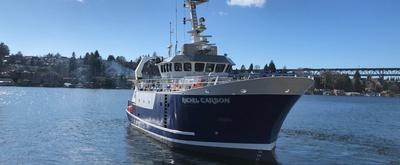
Ocean 492 Course - Fall 2025
Robert Kamphaus · UW
UW Oceanography Dept. Ocean 492 Research Apprentices Student Cruise for Fall Quarter 2025.
Oct 13 – Oct 15, 2025 · 2 d
San Juan Island and Strait of Juan de Fuca
Robert Kamphaus · UW
UW Oceanography Dept. Ocean 492 Research Apprentices Student Cruise for Fall Quarter 2025.
Oct 13 – Oct 15, 2025 · 2 d
San Juan Island and Strait of Juan de Fuca
F.G. Walton Smith · UMIAMI
Mariana Bernardi Bif · UMIAMI
This award will fund the University of Miami to continue a consensus reference material (CRM) program in support of consistent, high-quality measurements of DOC by the international ocean chemistry community. With the continuation of this work, the US and international communities will create with confidence consistent measurements of a major marine carbon reservoir, thereby advancing society’s ability to assess changes in the marine carbon cycle and the role of the ocean in climate change. With continued strong international efforts to investigate the marine carbon cycle, the existing CRM program provides the necessary benchmark for globally comparable marine DOC measurements. Water from the deep Florida Strait (~42 mol/kg DOC) will be collected, ampoulated, and distributed to the US and international community. Since the program's launch, ~228,000 vials of reference waters have been distributed to ~240 US and international laboratories in 45 nations, currently at a rate of ~27,000 vials/year. With renewal of the reference material program for 3 years of support, distribution of deep ocean water containing biologically refractory dissolved organic carbon and low carbon reference water will continue to aid the analytical work of the DOM community.
Oct 13, 2025 · 1 d
Florida Strait east of Key Biscayne, Florida
Atlantic Explorer · BIOS
Nicholas R. Bates · BIOS
One of the longest open-ocean hydrographic stations in the world is maintained at the Hydrostation S site (formerly known as the Panulirus site) located ~25 km southeast of Bermuda in the North Atlantic Ocean. This program of repeat biweekly hydrographic observations began in 1954 (by Hank Stommel) and now, in its seventh decade, has proved to be the catalyst for numerous studies of ocean physics, biological processes and biogeochemistry. Hydrostation S continues to be recognized as one of the most important sustained ocean time–series. The renewal of the Hydrostation S program is proposed herein, extending this invaluable time–series of ocean hydrography to almost 70 years. The upper ocean warming trend has strengthened (about +1.4° C since the 1970's; ~+0.8°C in last decade) with significant salinification (+0.16). Deeper waters such as the Labrador Sea Water has cooled by a few tenths of a degree and freshened with a marked decadal oscillation. The signature of deoxygenation has been observed at Hydrostation S in the upper ocean (about 4 µmoles kg -1 decade -1 decrease in dissolved oxygen) as well as the oxygen minimum zone (~2.5 µmoles kg -1 decade -1 ). Hydrostation S also supports the longest global ocean CO 2 and acidification time-series (from 1983 to present) The major objective of the proposal is to continue Hydrostation S into the eighth decade with numerous questions related to warming and cooling, salinification and freshening, deoxygenation and insights on biogeochemical changes over time. This program constitutes frequent water column sampling of temperature, salinity, and dissolved oxygen (and indirectly, sampling of important ocean carbon time–series) of the North Atlantic subtropical gyre at the Hydrostation S site. Such work is complementary to other sustained observations such as the Bermuda Atlantic Time–series Study (BATS) and Ocean Flux Program (OFP). We propose to carry out a similar sampling format that has been followed for the past 68 years. As for the past ten years, we would continue to conduct two CTD profiles to better capture the deep–water variability while maintaining all the previous discrete depths. The first CTD cast will profile to full ocean depth (3,300–3,500 m) while the second CTD cast will profile to 500 m (to allow for instrumentation not rated for full ocean depth such as a PAR sensor). One indirect objective will be to continue to collaboratively evaluate a BIOS-based glider program with Hydrostation S data as critically important ground truthing data. The existing glider program has challenging issue, and the aim of this effort is to use robust and highly accurate Hydrostation S data to test the capability of emerging technologies over the next five to ten years.
Atlantic Explorer · BIOS
Nicholas R. Bates · BIOS
Long-term observations over several decades are a powerful tool for investigating ocean physics, biology, and chemistry, and the response of the oceans to environmental change. The Bermuda Atlantic Time-Series Study, known as BATS, has been running continuously since 1988. The research goals of the BATS program are: (1) to improve our understanding of the time-varying components of the ocean carbon cycle and the cycles of related nutrient elements such as nitrogen, phosphorus, and silicon; and, (2) to identify the relevant physical, chemical and ecosystem properties responsible for this variability. In addition, the BATS program has strong and diverse broader impacts, contributing to the field of ocean sciences by providing high quality ocean observations and data for seagoing scientists and modelers, and a framework through which researchers can conceive and test hypotheses. This award will support the operations of the BATS program for five more years. The primary BATS research themes are as follows: (1) Quantify the role of ocean-atmosphere coupling and climate variability on air-sea exchange of CO2, and carbon export to the ocean interior; (2) Document trends and the controls on the interannual to decadal scale variability in carbon and nutrient cycles to their coupling in the surface and deep ocean via the Redfield Ratio paradigm; (3) Quantify the response of planktonic community structure and function, and impact on biogeochemical cycles to variability in surface fluxes and dynamical processes; (4) Facilitate development, calibration and validation of next generation oceanographic sensors, tools and technologies; and, (5) Generate a dataset that can be utilized by empiricists, modelers and students. This research integrates ocean physics, chemistry and biology into a framework for understanding oceanic processes and ocean change in the North Atlantic subtropical gyre. The existing 29 years of BATS data provide robust constraints on seasonal and interannual variability, the response of the Sargasso Sea ecosystem to natural climate variability, and signal detection of potential ocean changes. This project would extend the BATS program through years 31-35 to address a series of ten interlinked questions through integrated research approaches and a multitude of collaborative efforts. In addition to the themes above, and embedded into the ten questions and approaches, the BATS team will focus on, for example, coupling of particle production and biogeochemistry; revisiting the complexities of the biological carbon pump; oxygen decline; and changes in the hydrography, physics, ocean carbon cycle and biogeochemistry of the Sargasso Sea. The highest quality data observation and collection will be maintained and used to address these questions. Importantly, a wide range of collaborations at the BATS site, spanning the physical and biogeochemical disciplines, will aid these broad goals. Strong links to community stakeholders, and close collaboration (including methods intercomparisons and personnel exchanges) with the Hawaii Ocean Time-series are proposed. This work will extend the research findings of the project into educational and training opportunities within and beyond the oceanographic community, including training and mentorship of both undergraduate and graduate students.
Pelican · LUMCON
Jacob Fredrickson · Fugro GEOS Inc
Wavescan buoy mooring recovery, service, and redeployment for end client bp. Buoys measure wave, winds, currents, and other meteorological data. Data is transmitted to erddap and distributed.
Oct 12 – Oct 17, 2025 · 5 d
GoM
Samer Naif · GaTech
This project will carry out a joint seismic and electromagnetic investigation that is designed to specifically address critical questions associated with quantifying melt distribution in the oceanic mantle. The experiment spans ~500x500 km of the Cocos Plate, centered on a sharp boundary in bathymetry that corresponds to a fracture zone (FZ) in the Guatemala Basin. The FZ has a 200–400 m depth offset that is too large to be attributed to subsidence from the 1–2 million years difference in plate age. Because intraplate volcanism and mantle melts have only been documented south of the FZ and the step in bathymetry across the FZ does not correspond with a step in the free-air gravity anomaly, this suggests the FZ also marks a sharp boundary in both the northern extent of magmatism and of melts in the mantle. Yet insufficient geophysical and geochemical data are available to confirm this hypothesis. We will collect ocean-bottom seismic and magnetotelluric data to image the seismic velocity and electrical resistivity of the lithosphere and asthenosphere in order to (1) determine the spatial and depth extent of mantle melts and (2) characterize the geophysical signature of melt-bearing mantle. We will also collect underway data to fill in data gaps and to identify sites suitable for dredging selected seamounts on both sides of the FZ to (1) determine whether the seamounts north of the FZ were also erupted intraplate and (2) constrain the provenance of the seamounts.
Oct 11 – Nov 6, 2025 · 26 d
Guatemala Basin
Jessica Warren · UDel
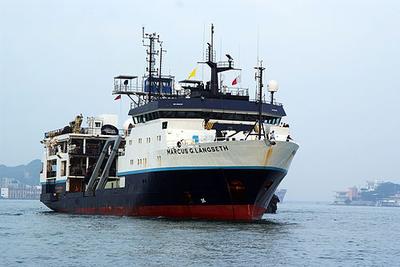
This collaborative project is to explore the structure, seismicity, rheology, and magmatism within the slow-slipping Chain Transform Fault in the equatorial Atlantic. The formation of localized zones of deformation is a key attribute of plate tectonics. Oceanic transform faults are ideal laboratories for studying the mechanisms of localized deformation due to their relatively uniform composition and predictable motion. Many aspects of strain accommodation remain poorly understood, including (1) the extent to which cracking and seawater-driven reactions cause fault weakening deep into the fault, (2) the role of serpentine and other phyllosilicates in accommodating aseismic creep, and (3) the importance of melt infiltration and weakening within the fault zone. While existing samples of transform faults provide constraints on strain weakening mechanisms, very little sampling has been done in concert with the collection of structural and seismicity data to directly link fault behavior to rheology. An interdisciplinary field program to study the structure, composition, and seismicity of the Chain Transform Fault will be conducted through two research cruises. The first cruise, aboard the R/V Langseth, will collect multi-channel seismics to image sub-surface fault structures and the extent of magmatism in the fault domain. An ocean bottom seismometer array will be deployed during the cruise to determine the depth extent of microseismicity and the relationship between fault structures and seismicity. The second cruise will occur one year later to recover the OBS array. This cruise will dredge the fault zone to determine the composition and rheology of the fault and conduct surveys using AUV Sentry to identify the surface expression of the fault.
Oct 11 – Nov 12, 2025 · 32 d
Equatorial Atlantic at 1.5S and 15W.
Clark Alexander · SkIO
Ship time dedicated to facilitate experiential learning for UGA and USG graduate and undergraduate students.
Oct 11 – Oct 12, 2025 · 1 d
South Atlantic Bight - USA
Kelly Dorgan · DISL
Naval and engineering applications in the deep sea require an improved, integrative understanding of the seabed that includes short-term changes driven by biological and hydrodynamic processes, as well as tools for remote sensing of seabed properties. Our interdisciplinary team proposes to test the overarching hypothesis that organic matter input to the deep sea drives biological processes that modify geotechnical and geoacoustic properties of the surface layer of sediments. In testing this hypothesis, we will explore the spatial and temporal variability and relationships among these properties within a highly productive region of the deep sea, the central California slope. This region experiences seasonal and interannual variability in organic matter and sediment deposition to the seabed and spatial variability in the infaunal community driven by oxic conditions and organic matter input. We plan to combine seasonal sampling of geological, geotechnical, geoacoustic, biological, and biogeochemical properties along a spatial gradient with high temporal resolution sampling of the bottom boundary layer and seabed surface. Our results will provide insight on the patterns of seabed properties and the mechanisms driving those patterns and will improve our ability to predict and remotely detect changes in deep sea sediments.
Oct 10 – Oct 16, 2025 · 6 d
Central CA slope
Hugh R. Sharp · UDel
John D. Kessler · Rochester
The goal of this project is to first identify and then quantify the variables exerting the most influence on the kinetics of aerobic methane oxidation (MOx). This will be accomplished through systemic investigations of MOx in the laboratory and in the field (Great Lakes and US Atlantic Margin) and how it is influenced by changes in physical and chemical variables. While rates of MOx are measured relatively routinely by several research groups with this analytical expertise, the inter-laboratory comparability of results remains poor. This largely prohibits the integration and upscaling of these measurements for the regional and global quantification of the magnitude of this CH4 sink. Despite this considerable shortcoming, local studies have proven extremely valuable at displaying the variable potential for MOx to be a microbial biofilter with the ability to diminish oceanic emissions of this greenhouse gas to the atmosphere. The results of the investigations proposed here will lead to a fundamental understanding of the dominant physical and chemical controls on MOx kinetics, enabling protocols to be developed for greater inter-laboratory comparability of future measurements of MOx. In addition, the fundamental understanding uncovered here will aid in the regional and global extrapolation of MOx rates so that the influences exerted on seawater chemistry and atmospheric greenhouse gas budgets can be more precisely constrained.
Oct 9 – Oct 13, 2025 · 4 d
Any coastal US waters at a latitude approximately that of Delaware or Chesapeake Bays, not influenced by river plumes.
Blue Heron · UMN
Richard Ricketts · UMN
These cruises utilize funding provided by the University of Minnesota. Chief Scientists will be completing seed research cruises or using their ship time to take graduate and undergraduate students on the research vessel Blue Heron.
Oct 9, 2025 · 1 d
Western Lake Superior
Blue Heron · UMN
Richard Ricketts · UMN
These cruises utilize funding provided by the University of Minnesota. Chief Scientists will be completing seed research cruises or using their ship time to take graduate and undergraduate students on the research vessel Blue Heron.
Oct 7, 2025 · 1 d
Western Lake Superior
F.G. Walton Smith · UMIAMI
Mark Stephens · FIU
In this project we are developing a new sampling method for extracting Beryllium-7 from seawater. Be-7 is a naturally occurring radionuclide that is formed in the atmosphere and deposited to the surface ocean via rainfall and aerosol deposition. It is useful as a tracer of processes in the upper ocean including aerosol deposition, mixing processes, and upwelling. Due to low concentrations, large volumes of seawater are required for Be-7 analysis. Be-7 is typically extracted from 400-700 L of seawater onto ferric hydroxide coated fibers (ferric hydroxide absorbs beryllium). Our aim is to simplify the sampling and extraction processes by using common drop-in filters and an in situ pumping system. This cruise will provide a side-by-side comparison of the old versus the new method in waters having a wide range of particle loads. We will sample along three transects from the coastal waters out to the open ocean off South Florida and the Florida Keys. The transects will provide information on Be-7 / particle absorption in the nearshore environment that may be applicable to other chemical species such as pollutants and trace metals.
Oct 7 – Oct 9, 2025 · 2 d
South Florida
Pelican · LUMCON
Chris Martens · UNC
The project will test key hypotheses about deep-sea methane dynamics including determining if there are significant lags in microbial responses after exposure to elevated methane concentrations, determining the relationships of AMOR to methane and DIN concentrations and investigating the response times and magnitude of methanotrophs to spatial and temporal variability in methane concentration. Successful collection of in situ AMOR and associated microbial community data will prove important for modeling ocean methane dynamics over a range of oceanographic conditions including seep-enriched bottom waters and accidental hydrocarbon releases.
Oct 7 – Oct 9, 2025 · 3 d
GC185
F.G. Walton Smith · UMIAMI
Jim Happell · UMIAMI
Oct 5, 2025 · 1 d
Off Miami
Atlantic Explorer · BIOS
Nicholas R. Bates · BIOS
One of the longest open-ocean hydrographic stations in the world is maintained at the Hydrostation S site (formerly known as the Panulirus site) located ~25 km southeast of Bermuda in the North Atlantic Ocean. This program of repeat biweekly hydrographic observations began in 1954 (by Hank Stommel) and now, in its seventh decade, has proved to be the catalyst for numerous studies of ocean physics, biological processes and biogeochemistry. Hydrostation S continues to be recognized as one of the most important sustained ocean time–series. The renewal of the Hydrostation S program is proposed herein, extending this invaluable time–series of ocean hydrography to almost 70 years. The upper ocean warming trend has strengthened (about +1.4° C since the 1970's; ~+0.8°C in last decade) with significant salinification (+0.16). Deeper waters such as the Labrador Sea Water has cooled by a few tenths of a degree and freshened with a marked decadal oscillation. The signature of deoxygenation has been observed at Hydrostation S in the upper ocean (about 4 µmoles kg -1 decade -1 decrease in dissolved oxygen) as well as the oxygen minimum zone (~2.5 µmoles kg -1 decade -1 ). Hydrostation S also supports the longest global ocean CO 2 and acidification time-series (from 1983 to present) The major objective of the proposal is to continue Hydrostation S into the eighth decade with numerous questions related to warming and cooling, salinification and freshening, deoxygenation and insights on biogeochemical changes over time. This program constitutes frequent water column sampling of temperature, salinity, and dissolved oxygen (and indirectly, sampling of important ocean carbon time–series) of the North Atlantic subtropical gyre at the Hydrostation S site. Such work is complementary to other sustained observations such as the Bermuda Atlantic Time–series Study (BATS) and Ocean Flux Program (OFP). We propose to carry out a similar sampling format that has been followed for the past 68 years. As for the past ten years, we would continue to conduct two CTD profiles to better capture the deep–water variability while maintaining all the previous discrete depths. The first CTD cast will profile to full ocean depth (3,300–3,500 m) while the second CTD cast will profile to 500 m (to allow for instrumentation not rated for full ocean depth such as a PAR sensor). One indirect objective will be to continue to collaboratively evaluate a BIOS-based glider program with Hydrostation S data as critically important ground truthing data. The existing glider program has challenging issue, and the aim of this effort is to use robust and highly accurate Hydrostation S data to test the capability of emerging technologies over the next five to ten years.
Oct 4, 2025 · 1 d
Appxoimately 25 nm south east of the island of Bermuda
Blue Heron · UMN
Richard Ricketts · UMN
These cruises utilize funding provided by the University of Minnesota. Chief Scientists will be completing seed research cruises or using their ship time to take graduate and undergraduate students on the research vessel Blue Heron.
Oct 2, 2025 · 1 d
Western Lake Superior
Blue Heron · UMN
Richard Ricketts · UMN
These cruises utilize funding provided by the University of Minnesota. Chief Scientists will be completing seed research cruises or using their ship time to take graduate and undergraduate students on the research vessel Blue Heron.
Sep 30, 2025 · 1 d
Western Lake Superior
Blue Heron · UMN
Richard Ricketts · UMN
These cruises utilize funding provided by the University of Minnesota. Chief Scientists will be completing seed research cruises or using their ship time to take graduate and undergraduate students on the research vessel Blue Heron.
Sep 29, 2025 · 1 d
Western Lake Superior
Pelican · LUMCON
Yi Wang · Tulane
We plan to collect new sediment cores from the northern Gulf of Mexico dead zone, with a focus on the dissolved oxygen gradient based on the annual shelf-wide dead zone survey ( http://www.gulfhypoxia.net ). Two sets of sediment cores will be collected on the eastern section of the dead zone (dominated by the Mississippi River influence) and the central section of the dead zone (dominated by the Atchafalaya River influence) to investigate likely different local oxygen responses under different river dynamics. With the new coring material, we aim to study the following research questions: 1. How has the northern GOM dead zone (intensity and frequencies) evolved on interannual to centennial timescales in the Common Era (last 2000 years)? 2. What is driving dissolved oxygen variations in the dead zone (e.g., productivity, ocean circulation, and/or stratification)? 3. How will the northern GOM dead zone respond to future climate change and river dynamics considering both natural and anthropogenic forcings (e.g., land use, Mississippi River delta evolution, and eutrophication) on a long term (e.g., multi-decadal to centennial timescales)?
Sep 27 – Sep 29, 2025 · 2 d
Gulf of Mexico shelf
Hannah Delapp · SIO
Sep 27 – Sep 29, 2025 · 2 d
F.G. Walton Smith · UMIAMI
Jim Happell · UMIAMI
Sep 27 – Sep 28, 2025 · 1 d
Off Miami
Kerry Strom · UNOLS
Sep 25 – Sep 30, 2025 · 5 d
Blue Heron · UMN
Richard Ricketts · UMN
These cruises utilize funding provided by the University of Minnesota. Chief Scientists will be completing seed research cruises or using their ship time to take graduate and undergraduate students on the research vessel Blue Heron.
Sep 25, 2025 · 1 d
Western Lake Superior
Clark Alexander · SkIO
Ship time dedicated to facilitate experiential learning for UGA and USG graduate and undergraduate students.
Sep 24, 2025 · 1 d
South Atlantic Bight - USA