Outreach
Dave Bernstein · NV5
May 13 – Jun 10, 2025 · 28 d
Dave Bernstein · NV5
May 13 – Jun 10, 2025 · 28 d
Blue Heron · UMN
Richard Ricketts · UMN
Work to sample lake waters derived from spring storms
May 13 – May 14, 2025 · 1 d
Western Lake Superior
Anela Choy · SIO
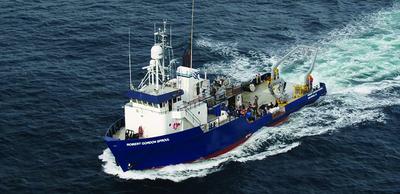
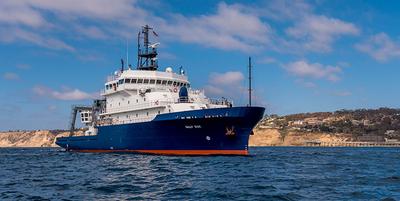
SIO 145 (Field Methods in Biological Oceanography) is a 6-credit lab course for SIO Marine Biology undergraduates. These day cruises aboard R/V Sproul will offer students a hands-on opportunity to work at sea and gain a better understanding of how to use oceanographic sampling equipment and conduct oceanographic field research. In addition, cruises on the Sproul will provide students with an opportunity to collect data and samples that are needed to develop quarter-long lab projects. The goals of the cruise are to (1) demonstrate the different types of instrumentation used to study biological oceanography, including a CTD, Isaacs-Kidd Midwater Trawl, and plankton tows, (2) generate hydrographic data illustrating the oceanographic conditions of our sampling location(s) (e.g., thermocline, oxygen minimum zone), (3) visualize and recover zooplankton and micronekton characteristic of the southern California Current Ecosystem, (4) examine zooplankton and micronekton community composition, and (5) provide at-sea experience to students along with detailed explanations of ship operations and facilities. Work will be conducted in and around the San Diego Trough.
May 12 – May 13, 2025 · 1 d
San Diego Trough
F.G. Walton Smith · UMIAMI
Ian Smith · NOAA
AOML SFP regional surveys over the southwest Florida shelf and the Florida Keys reef tract have been routinely performed via the University of Miami's R/V F. G. Walton Smith on a bimonthly basis. Sampling methodologies similar to those utilized on AOML SFP bay surveys (discrete sampling and flow-through measurements) have been employed on these regional research cruises.
May 10 – May 16, 2025 · 6 d
Miami, Keys reef tract , and West Florida Shelf
Pelican · LUMCON
Jacob Fredrickson · Fugro GEOS Inc
Mooring recovery, service, and redeployment for a Fugro Wavescan Buoy. A spare buoy will be brought along and swapped out with the one currently in the field. Buoys measure wind, waves, and currents. Data is transmitted to erddap and distributed.
May 8 – May 13, 2025 · 5 d
GoM
Kevin Kavanagh · UNOLS
24 hrs. of Jason engineering time to piggy-back on the Hydrothermal vent shrimp vision project - SME 23/2804 on Armstrong in May '25. Preferably to take place before operations for the start of the primary project.
Tamara Frank · Nova
Decapod shrimp in the family Alvinocarididae are some of the most abundant mobile fauna at hydrothermal vents, occurring in massive swarms at Pacific, Indian and Atlantic vent sites. Originally described as eyeless, vent shrimp are now known to undergo dramatic transformations in eye morphology with some species having massive fused eyes on their backs (dorsal eyes), which may be correlated to their feeding preferences. Previous studies have demonstrated that some vent shrimp species with dorsal eyes rely primarily on carbon provided by epibiotic bacteria, while others with fused anterior eyes are predators/scavengers, and suggested that there may be a correlation between eye structure and feeding modality. Due to the different local habitats where these shrimp are found in (water column for post-larval, on black smoker sides for the species that graze on bacterial mats, out in the periphery for species that rely on predation) the eye morphology and visual pigments may also be adapted for finding the correct habitat. However, all the structural studies that have been undertaken on the benthic adults to date suggest that they are blind or the eyes are degenerating. These results are contradicted by studies demonstrating that the pelagic post-larvae/juveniles with stalked eyes appear to be visually competent. It is unlikely that the metamorphosis from a normal stalked eyes (post-larvae) to the huge dorsal eyes (adults) results in a degenerated eye. As all earlier studies utilized adult shrimp that had been collected under bright submersible lights, it is likely that degeneration” resulted from significant photoreceptor destruction caused by too much light. An additional challenge of vent shrimp visual ecology is that the eyes were considered degenerate due to lack of enough ambient light to make the metabolic costs of vision worthwhile. However, there may be several sources of sufficient ambient light produced by both abiotic triboluminescence/chemiluminescence as well as biological bioluminescence. Although several studies suggest bioluminescence does not exist at these vent sites, incorrect methodology may have resulted in this conclusion. Using molecular, physiological, and structural methods the PIs have developed over decades to study vision and bioluminescence in deep-sea crustaceans, the visual capabilities of vent shrimp (postlarvae, juvenile and adults) will be tested against hypotheses related to both feeding modality and habitat selection. These measurements will be coupled with a systematic survey of pelagic and benthic luminescence at the vents to determine if these are viable visual stimul
Robert Kamphaus · UW
UW Oceanography Dept. Ocean 201 Student Cruise for May 2025.
May 6 – May 9, 2025 · 3 d
Puget Sound
Nathan Bacheler · NOAA
SEFIS is a fishery-independent research group that surveys reef fish using traps and video from Cape Hatteras, NC, to St. Lucie Inlet, FL, from 15-115 m deep.
May 6 – May 15, 2025 · 9 d
Southeast US Atlantic continental shelf between NC and the east coast of FL.
Hugh R. Sharp · UDel
Chris Martens · UNC
The project will test key hypotheses about deep-sea methane dynamics including determining if there are significant lags in microbial responses after exposure to elevated methane concentrations, determining the relationships of AMOR to methane and DIN concentrations and investigating the response times and magnitude of methanotrophs to spatial and temporal variability in methane concentration. Successful collection of in situ AMOR and associated microbial community data will prove important for modeling ocean methane dynamics over a range of oceanographic conditions including seep-enriched bottom waters and accidental hydrocarbon releases.
May 6 – May 9, 2025 · 3 d
Washington and Baltimore canyon area
F.G. Walton Smith · UMIAMI
Lisa Beal · UMIAMI
The UM Keymester cruise aboard RV Walton Smith allows junior and senior level undergraduates majoring in Oceanography to design and execute their own day-long experiment to find and measure the Gulf Stream front using shipboard and towed instrumentation.
May 6, 2025 · 1 d
Miami
Blue Heron · UMN
Richard Ricketts · UMN
Sediment trap and McLane pumping work for microplastics
May 6 – May 7, 2025 · 2 d
Western Lake Superior
Endeavor · URI
Susanne Menden-Deuer · URI
We request ship time on the R/V Endeavor in Spring or Summer 2025 to evaluate the safety and efficacy of a proposed marine carbon dioxide removal technique (mCDR) referred to as ‘Alkalinity Enhancement’. While effective from a physical and chemical stand point, it is unclear to what degree the manipulation affects the health and physiology of marine plankton, the base of the food web and engines of global biogeochemical cycles. Our work leverages a 6-year time series which established the baseline structure and function of planktonic food web in coastal Rhode Island (Fig. 1) through the established North East Shelf Long Term Ecological Research site(NES-LTER). Specifically, we will be conducting feeding and carbonate chemistry experiments along a shore to shelf transect (yellow highlight in Figure 1) to concurrently examine seawater chemistry and biological processes. This work is being done as a field trial of an existing ARPA-e (DoD) pilot grant Wang and Menden-Deuer have and that we wish to expand into a larger effort with the National Science Foundation.
May 5 – May 9, 2025 · 4 d
We need to find plankton at sufficient density. Our first choice is the NES-LTER transec second George's Bank
F.G. Walton Smith · UMIAMI
Dennis Hansell · UMIAMI
Dissolved organic carbon (DOC) in the world ocean is part of the global carbon cycle that interacts with the planetary climatic system through its connection with atmospheric carbon dioxide. Keeping track of this DOC requires the cooperative effort of many marine laboratories worldwide. Making sure that all of these laboratories are making accurate DOC measurements requires that each one have access to a standardized sample of seawater for which the DOC concentration is set by international consensus. This award will fund the University of Miami to continue a consensus reference material (CRM) program that was first developed in 1998 in support of consistent, high quality measurements of dissolved organic carbon by the international ocean chemistry community. With continuation of this work, the US and international communities will create with confidence consistent measurements of a major marine carbon reservoir, thereby advancing society’s ability to assess changes in the marine carbon cycle and the role of the ocean in climate change.
May 5, 2025 · 1 d
Florida Strait east of Key Biscayne, Florida
Atlantic Explorer · BIOS
Christopher Roman · URI
The mesopelagic region of the ocean, between 200 and 1500 meters deep, is home to a complex mixture of physical processes, biological environments and animal communities that interact over a range of temporal and spatial scales. The mesopelagic remains poorly sampled due to the inherent limitations and asynchrony of measurements collected with ship-based instruments, acoustic surveys, remotely operated and towed vehicle systems. This project will develop a novel autonomous robotic instrument to collect physical, visual and acoustic data that will provide concurrent environmental, abundance, taxonomy and size structure data for animals ranging from 100 microns to 10 centimeters in size. The suite of sensors, coupled with a non-disruptive propulsion system and the operational flexibility of the new system will address critical knowledge gaps in our understanding of the ecology of the ocean's mid-water zone. The vehicle will be tested on several cruises in the North Atlantic. The researchers will leverage the ongoing Bermuda Atlantic Time Series (BATS) datasets for cross-comparison and validation.
Atlantic Explorer · BIOS
Nicholas R. Bates · BIOS
One of the longest open-ocean hydrographic stations in the world is maintained at the Hydrostation S site (formerly known as the Panulirus site) located ~25 km southeast of Bermuda in the North Atlantic Ocean. This program of repeat biweekly hydrographic observations began in 1954 (by Hank Stommel) and now, in its seventh decade, has proved to be the catalyst for numerous studies of ocean physics, biological processes and biogeochemistry. Hydrostation S continues to be recognized as one of the most important sustained ocean time–series. The renewal of the Hydrostation S program is proposed herein, extending this invaluable time–series of ocean hydrography to almost 70 years. The upper ocean warming trend has strengthened (about +1.4° C since the 1970's; ~+0.8°C in last decade) with significant salinification (+0.16). Deeper waters such as the Labrador Sea Water has cooled by a few tenths of a degree and freshened with a marked decadal oscillation. The signature of deoxygenation has been observed at Hydrostation S in the upper ocean (about 4 µmoles kg -1 decade -1 decrease in dissolved oxygen) as well as the oxygen minimum zone (~2.5 µmoles kg -1 decade -1 ). Hydrostation S also supports the longest global ocean CO 2 and acidification time-series (from 1983 to present) The major objective of the proposal is to continue Hydrostation S into the eighth decade with numerous questions related to warming and cooling, salinification and freshening, deoxygenation and insights on biogeochemical changes over time. This program constitutes frequent water column sampling of temperature, salinity, and dissolved oxygen (and indirectly, sampling of important ocean carbon time–series) of the North Atlantic subtropical gyre at the Hydrostation S site. Such work is complementary to other sustained observations such as the Bermuda Atlantic Time–series Study (BATS) and Ocean Flux Program (OFP). We propose to carry out a similar sampling format that has been followed for the past 68 years. As for the past ten years, we would continue to conduct two CTD profiles to better capture the deep–water variability while maintaining all the previous discrete depths. The first CTD cast will profile to full ocean depth (3,300–3,500 m) while the second CTD cast will profile to 500 m (to allow for instrumentation not rated for full ocean depth such as a PAR sensor). One indirect objective will be to continue to collaboratively evaluate a BIOS-based glider program with Hydrostation S data as critically important ground truthing data. The existing glider program has challenging issue, and the aim of this effort is to use robust and highly accurate Hydrostation S data to test the capability of emerging technologies over the next five to ten years.
Atlantic Explorer · BIOS
Nicholas R. Bates · BIOS
Long-term observations over several decades are a powerful tool for investigating ocean physics, biology, and chemistry, and the response of the oceans to environmental change. The Bermuda Atlantic Time-Series Study, known as BATS, has been running continuously since 1988. The research goals of the BATS program are: (1) to improve our understanding of the time-varying components of the ocean carbon cycle and the cycles of related nutrient elements such as nitrogen, phosphorus, and silicon; and, (2) to identify the relevant physical, chemical and ecosystem properties responsible for this variability. In addition, the BATS program has strong and diverse broader impacts, contributing to the field of ocean sciences by providing high quality ocean observations and data for seagoing scientists and modelers, and a framework through which researchers can conceive and test hypotheses. This award will support the operations of the BATS program for five more years. The primary BATS research themes are as follows: (1) Quantify the role of ocean-atmosphere coupling and climate variability on air-sea exchange of CO2, and carbon export to the ocean interior; (2) Document trends and the controls on the interannual to decadal scale variability in carbon and nutrient cycles to their coupling in the surface and deep ocean via the Redfield Ratio paradigm; (3) Quantify the response of planktonic community structure and function, and impact on biogeochemical cycles to variability in surface fluxes and dynamical processes; (4) Facilitate development, calibration and validation of next generation oceanographic sensors, tools and technologies; and, (5) Generate a dataset that can be utilized by empiricists, modelers and students. This research integrates ocean physics, chemistry and biology into a framework for understanding oceanic processes and ocean change in the North Atlantic subtropical gyre. The existing 29 years of BATS data provide robust constraints on seasonal and interannual variability, the response of the Sargasso Sea ecosystem to natural climate variability, and signal detection of potential ocean changes. This project would extend the BATS program through years 31-35 to address a series of ten interlinked questions through integrated research approaches and a multitude of collaborative efforts. In addition to the themes above, and embedded into the ten questions and approaches, the BATS team will focus on, for example, coupling of particle production and biogeochemistry; revisiting the complexities of the biological carbon pump; oxygen decline; and changes in the hydrography, physics, ocean carbon cycle and biogeochemistry of the Sargasso Sea. The highest quality data observation and collection will be maintained and used to address these questions. Importantly, a wide range of collaborations at the BATS site, spanning the physical and biogeochemical disciplines, will aid these broad goals. Strong links to community stakeholders, and close collaboration (including methods intercomparisons and personnel exchanges) with the Hawaii Ocean Time-series are proposed. This work will extend the research findings of the project into educational and training opportunities within and beyond the oceanographic community, including training and mentorship of both undergraduate and graduate students.
Sue Chen · NRL
The Northern Indian Ocean (NIO), including Bay of Bengal, Maldives, and Sri Lanka EEZ, is a critical moisture source for the southwest monsoon, which influences the health and livelihoods of the billions of people inhabiting South Asia. The role of coincident evolution of the atmospheric Boundary Layer (ABL) and air-sea exchange and ocean dynamics in the maintenance and collapse of the NIO mini warm pool is still an open question although previous studies have pointed toward the importance of salinity-stratified barrier layers—a remnant signature of lateral stirring between the Arabian Sea and Bay of Bengal waters. The proposed research effort will provide a new modeling and observation framework for resolving coupled model biases in the region. Fieldwork and modeling will be designed to address the following questions: What processes control the maintenance and dissipation of the NIO warm pool? How does variation in warm pool strength and stability in the ABL modulate local air-sea fluxes? What processes are misrepresented in coupled models leading to short-term to sub-seasonal to climate time scales moisture & precipitation dry biases in forecasts? Our international partner is with India, Sri Lanka, and Maldives for this air-sea interaction program and the joint program is called EKAMSAT.
May 3 – Jun 19, 2025 · 47 d
Our focus will be in both international waters in the BoB and the West of Maldives, and Maldives and Sri Lanka EEZs. Bay of Bengal international water (11-14N 85-87E), South-southwest of Siri Lanka EE
Amit Tandon · UMassD
The Northern Indian Ocean (NIO), including Bay of Bengal, Maldives, and Sri Lanka EEZ, is a critical moisture source for the southwest monsoon, which influences the health and livelihoods of the billions of people inhabiting South Asia. The role of coincident evolution of the atmospheric Boundary Layer (ABL) and air-sea exchange and ocean dynamics in the maintenance and collapse of the NIO mini warm pool is still an open question although previous studies have pointed toward the importance of salinity-stratified barrier layers—a remnant signature of lateral stirring between the Arabian Sea and Bay of Bengal waters. The proposed research effort will provide a new modeling and observation framework for resolving coupled model biases in the region. Fieldwork and modeling will be designed to address the following questions: What processes control the maintenance and dissipation of the NIO warm pool? How does variation in warm pool strength and stability in the ABL modulate local air-sea fluxes? What processes are misrepresented in coupled models leading to short-term to sub-seasonal to climate time scales moisture & precipitation dry biases in forecasts? Our international partner is with India, Sri Lanka, and Maldives for this air-sea interaction program and the joint program is called EKAMSAT.
May 3 – Jun 19, 2025 · 47 d
Our focus will be in both international waters in the BoB and the West of Maldives, and Maldives and Sri Lanka EEZs. Bay of Bengal international water (11-14N 85-87E), South-southwest of Siri Lanka EE
Robert Kamphaus · UW
UW Tacoma Field Course - TGEOS 445 Estuarine Field Studies - Spring Quarter 2025. Students learn about Puget Sound and how to do oceanographic field work by sampling water properties using a CTD (temperature, salinity, density, dissolved oxygen, fluorescence, and transmissivity) and collecting discrete samples and analyzing them for chlorophyll, dissolved oxygen and nutrients, as well as phytoplankton. In addition, we periodically collect van veen sediment samples, horizontal plastics surface net tows and an occasional vertical zooplankton net tow (if ship facilities allow). All students rotate and learn all methods and write up field reports weekly as a research team. The final project consists of building a course website providing on overview with data and interpretation for all areas the team studied. Each pair of students are responsible for summarizing what we found in a particular area of Puget Sound.
May 2 – May 4, 2025 · 1 d
Puget Sound
Charles Langmuir · Harvard
This is the request for the SENTRY component to the other TSECTOR cruise request.
Apr 30 – May 11, 2025 · 11 d
Cleft segment of Juan de Fuca ridge
Atlantic Explorer · BIOS
Nicholas R. Bates · BIOS
One of the longest open-ocean hydrographic stations in the world is maintained at the Hydrostation S site (formerly known as the Panulirus site) located ~25 km southeast of Bermuda in the North Atlantic Ocean. This program of repeat biweekly hydrographic observations began in 1954 (by Hank Stommel) and now, in its seventh decade, has proved to be the catalyst for numerous studies of ocean physics, biological processes and biogeochemistry. Hydrostation S continues to be recognized as one of the most important sustained ocean time–series. The renewal of the Hydrostation S program is proposed herein, extending this invaluable time–series of ocean hydrography to almost 70 years. The upper ocean warming trend has strengthened (about +1.4° C since the 1970's; ~+0.8°C in last decade) with significant salinification (+0.16). Deeper waters such as the Labrador Sea Water has cooled by a few tenths of a degree and freshened with a marked decadal oscillation. The signature of deoxygenation has been observed at Hydrostation S in the upper ocean (about 4 µmoles kg -1 decade -1 decrease in dissolved oxygen) as well as the oxygen minimum zone (~2.5 µmoles kg -1 decade -1 ). Hydrostation S also supports the longest global ocean CO 2 and acidification time-series (from 1983 to present) The major objective of the proposal is to continue Hydrostation S into the eighth decade with numerous questions related to warming and cooling, salinification and freshening, deoxygenation and insights on biogeochemical changes over time. This program constitutes frequent water column sampling of temperature, salinity, and dissolved oxygen (and indirectly, sampling of important ocean carbon time–series) of the North Atlantic subtropical gyre at the Hydrostation S site. Such work is complementary to other sustained observations such as the Bermuda Atlantic Time–series Study (BATS) and Ocean Flux Program (OFP). We propose to carry out a similar sampling format that has been followed for the past 68 years. As for the past ten years, we would continue to conduct two CTD profiles to better capture the deep–water variability while maintaining all the previous discrete depths. The first CTD cast will profile to full ocean depth (3,300–3,500 m) while the second CTD cast will profile to 500 m (to allow for instrumentation not rated for full ocean depth such as a PAR sensor). One indirect objective will be to continue to collaboratively evaluate a BIOS-based glider program with Hydrostation S data as critically important ground truthing data. The existing glider program has challenging issue, and the aim of this effort is to use robust and highly accurate Hydrostation S data to test the capability of emerging technologies over the next five to ten years.
Apr 30, 2025 · 1 d
Appxoimately 25 nm south east of the island of Bermuda
Blue Heron · UMN
Hussain Abdulla · TAMU
Photochemical reactions are affected not only by the DOM reactants but also by key inorganic species (such as carbonate, halogen radicals, nitrate, and nitrite). Therefore we propose to investigate DOM photochemistry in two different aquatic systems with differing salinities and nitrate and nitrite levels, but similar concentration ranges of dissolved organic carbon and chromophoric dissolved organic matter, and similar pH ranges. Using these two transects from highly allochthonous to autochthonous DOM, which cover a wide range of DOM quantity and quality, we propose to study the photochemical transformations of DOM carboxyl groups. We will investigate how the phototransformations of these carboxyl groups vary along the two environmental-effect axes of salinity and DOM source.
Apr 29 – May 1, 2025 · 2 d
Lake Superior
Pelican · LUMCON
Jacob Fredrickson · Fugro GEOS Inc
Fugro buoy adrift, near Turritella platform (Shell Stones Wavescan buoy). This cruise will be to recover the buoy and hopefully redeploy if time allows.
Apr 29 – May 2, 2025 · 3 d
GoA
Clark Alexander · SkIO
Ship time dedicated to facilitate experiential learning for UGA and USG graduate and undergraduate students.
Apr 28 – Apr 30, 2025 · 2 d
South Atlantic Bight - USA
Russ Hopcroft · UAF
The NGA is a highly resilient ecosystem, due to the intense levels of environmental variability experienced by the biological community. We define resilience as recovery of key emergent properties (a diatom-dominated spring bloom; hot spots of high summer production; high biomass of large, lipid-rich copepods; high rates of particle export to depth; efficient transfer of production to upper trophic levels) following disturbance. These properties arise from the interplay of physical and chemical properties together with the genetic repertoire of the ecosystem’s component species, and in turn are key to the maintenance of high productivity at upper trophic levels, including commercially harvested groundfish (e.g. black cod, pollock, rockfish), seabirds, and marine mammals. Our approach to evaluating resilience includes: Examining the recovery (or lack thereof) of emergent properties following disturbance (e.g., marine heatwaves); Distinguishing food web pathways that are more versus less sensitive to disturbance; Tying observations of lower trophic level responses to their consequences for higher trophic levels under different (in time and space) conditions; Examining the occurrence and consequences of strategies, such as nutritional plasticity and species redundancy, thought to promote resilience. Assessing the availability of various iron and macronutrient sources
Apr 27 – May 13, 2025 · 16 d
Northern Coastal Gulf of Alaska
Hannah Delapp · SIO
Apr 25 – Apr 28, 2025 · 3 d
Heidi Sosik · WHOI
NES-LTER cross-shelf transect cruises are conducted between Martha’s Vineyard and the continental shelf break directly south. The overarching goal of the NES-LTER is to understand and predict how planktonic food webs change through space and time in response to changes in the physical environment, and how those changes impact ecosystem productivity, including of higher trophic levels. Observations and models are focused on processes and mechanisms that structure pelagic food webs, trophic transformations, and productivity, as well as the key interactions and feedbacks that modulate relationships among them. NES-LTER transect process cruises are focused on characterizing cross-shelf distributions of physical properties, nutrients, production rates, and plankton. Approximately 11 stations will be occupied in waters depths typically less than 200 m, but up to ~1600 m. Operations will include underway sampling of biological and chemical properties with science-provided instruments, CTD/rosette casts, net tows, on-deck incubations, and deployment of a towed vehicle.
Apr 24 – Apr 29, 2025 · 5 d
New England Shelf