VesselConnect
  • Completed

    OFP time-series 26/1

    Rut Pedrosa Pamies · MBL

    Since 1978, the Oceanic Flux Program (OFP) has been continuously measuring particle fluxes in the deep Sargasso Sea, with a >90% temporal coverage of the 3200 m flux over its 45 years. The OFP is the longest-running time-series of its kind and has generated an exceptional record of temporal variability in the "biological pump", a term loosely applied here to material transfer from the surface to deep ocean resulting from upper ocean biological and physical processes. Two overarching goals drive core activities funded under the OFP grant. The first is to extend the time-series by collecting new samples of the highest quality, while ensuring they have a comprehensive oceanographic context. The second is to elucidate the processes that drive oceanic particle flux through comparative studies of flux magnitude and composition with concurrent observations of external forcing (e.g., synoptic scale meteorology, climate patterns), surface water physics and biology (e.g., mesoscale features, blooms), and interior processes (e.g., biological particle aggregation/disaggregation, elemental scavenging, authigenic mineralization).

    Apr 17 – Apr 23, 2026 · 6 d

    NA06 - SW of Bermuda (exact location is known by ship operator)
  • Completed

    SIO 145 Choy

    Anela Choy · SIO

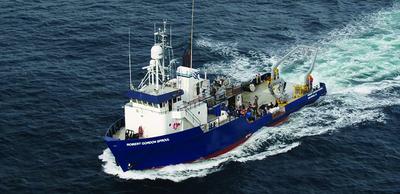
    SIO 145 (Field Methods inBiological Oceanography) is a 6-credit lab course for SIO Marine Biology undergraduates. These day cruises aboard R/V Sproul will offer students a hands-on opportunity to work at sea and gain abetter understanding of how to use oceanographic sampling equipment and conduct oceanographic field research. In addition, cruises on the Sproul will provide students with an opportunity to collect data and samples that are needed to develop quarter-long lab projects. The goals of the cruise are to (1) demonstrate the different types of instrumentation used to study biological oceanography, including a CTD, Isaacs-Kidd Midwater Trawl, and plankton tows, (2) generate hydrographic data illustrating the oceanographic conditions of our sampling location(s) (e.g., thermocline, oxygen minimum zone), (3) visualize and recover zooplankton and micronekton characteristic of the southern California Current Ecosystem, (4) examine zooplankton and micronekton community composition, and (5) provide at-sea experience to students along with detailed explanations of ship operations and facilities. Work will be conducted in and around the San Diego Trough.

    Apr 15 – Apr 16, 2026 · 1 d

    San Diego Trough

  • Completed

    Pelican · LUMCON

    Blind Faith Water Sampling

    Eric Aronchick · WHOI

    Perform seasonal, full water column CTD sampling + DO + PSD analysis and water collection, at a single offshore location with a depth of approximately 6,500 feet. A total of four quarterly cruises will be undertaken between August 2025 and May 2026. Onboard lab analysis of water samples will be measured and recorded. Water samples will be collected and brought back to shore for more intensive lab testing and chemical analysis.

    Apr 14 – Apr 17, 2026 · 2 d

    US GoM, Approx. 130 nm SE of Cocodrie, LA

  • Completed

    WOAC-2026-Spring

    Jan Newton · UW

    Oceans, estuaries and coastal habitats are changing quickly, driven by both natural processes and human activities. The Washington Ocean Acidification Center (WOAC) was established by the state legislature to advance research and monitoring of ocean acidification and its biological effects in Washington waters. One facet of that research is the WOAC cruises. We go out three times a year, April, July, and September, to monitor ocean acidification and its affect on biology. These cruises are part of a long term time Ocean Acidification time series.

    Apr 13 – Apr 18, 2026 · 4 d

    Puget Sound

  • Completed

    Savannah · SkIO

    INST

    Clark Alexander · SkIO

    Ship time dedicated to facilitate experiential learning for UGA and USG graduate and undergraduate students.

    Apr 11, 2026 · 1 d

    South Atlantic Bight - USA

  • Completed

    Ocean 220 Course - 2026

    Robert Kamphaus · UW

    The student cruise for the Ocean 220 Course in Spring 2026

    Apr 6 – Apr 10, 2026 · 4 d

    Pacific NW

  • Completed

    BATS 2026 - 6of12

    Nicholas R. Bates · BIOS

    Long-term observations over several decades are a powerful tool for investigating ocean physics, biology, and chemistry, and the response of the oceans to environmental change. The Bermuda Atlantic Time-Series Study, known as BATS, has been running continuously since 1988. The research goals of the BATS program are: (1) to improve our understanding of the time-varying components of the ocean carbon cycle and the cycles of related nutrient elements such as nitrogen, phosphorus, and silicon; and, (2) to identify the relevant physical, chemical and ecosystem properties responsible for this variability. In addition, the BATS program has strong and diverse broader impacts, contributing to the field of ocean sciences by providing high quality ocean observations and data for seagoing scientists and modelers, and a framework through which researchers can conceive and test hypotheses. This award will support operations of the BATS program for five more years. This research integrates ocean physics, chemistry and biology into a framework for understanding oceanic processes and ocean change in the North Atlantic subtropical gyre. The existing years of BATS data provide robust constraints on seasonal and interannual variability, the response of the Sargasso Sea ecosystem to natural climate variability, and signal detection of potential ocean changes.

    Apr 6 – Apr 10, 2026 · 4 d

    Atlantic

  • Completed

    CSP

    Mark Merrifield · SIO

    We request one day of ship time on the R/V Sproul to provide student instruction at sea for students in the Masters of Advanced Studies Climate Science and Policy (MAS CSP) Program. CSP seeks to train the next generation of leaders in climate change mitigation and adaptation. The one-year program provides a comprehensive overview of the scientific basis for climate change, including a detailed description of the ocean's role in the climate system. A one-day cruise in April/May 2026 would provide an invaluable opportunity to learn firsthand how oceanographic measurements are made, and to connect concepts learned in the classroom with the fieldwork that drives scientific advances. A cruise is proposed in local waters to demonstrate how hydrographic measurements are made. The CTD casts will include a PAR, fluorometer, and O2 sensor. Trawls will be conducted using a small-mesh plankton net for phytoplankton and other protists, a large-mesh net for zooplankton, and an otter trawl for an assortment of organisms. Participants will include 26 CSP students and 3 members of the MAS CSP Leadership Team.

    Apr 4 – Apr 5, 2026 · 1 d

    San Diego Bay Offshore

  • Completed

    TN-451 Transit Cruise

    Gregory Higgins · UW

    Apr 4 – Apr 14, 2026 · 11 d

  • Completed

    Savannah · SkIO

    INST

    Clark Alexander · SkIO

    Ship time dedicated to facilitate experiential learning for UGA and USG graduate and undergraduate students.

    Apr 3 – Apr 4, 2026 · 1 d

    South Atlantic Bight - USA

  • Completed

    Pelican · LUMCON

    MD RTMM SV Recovery 2026

    Eric Aronchick · WHOI

    Recover compound mooring with 3 m surface buoy with redeployment planned for later on in April 2026.

    Apr 2 – Apr 4, 2026 · 2 d

    US GoM, Approx. 120 nm S of Cocodrie, LA

  • Completed

    Sally Ride · SIO

    CA Seabed 2

    Kelly Dorgan · DISL

    Our interdisciplinary team proposes to test the overarching hypothesis that organic matter input to the deep sea drives biological processes that modify geotechnical and geoacoustic properties of the surface layer of sediments. In testing this hypothesis, we will explore the spatial and temporal variability and relationships among these properties within a highly productive region of the deep sea, the central California slope. This region experiences seasonal and interannual variability in organic matter and sediment deposition to the seabed and spatial variability in the infaunal community driven by oxic conditions and organic matter input. We plan to combine seasonal sampling of geological, geotechnical, geoacoustic, biological, and biogeochemical properties along a spatial gradient with high temporal resolution sampling of the bottom boundary layer and seabed surface. Our results will provide insight on the patterns of seabed properties and the mechanisms driving those patterns and will improve our ability to predict and remotely detect changes in deep sea sediments.

    Apr 2 – Apr 16, 2026 · 14 d

    Central California coast

  • Completed

    BATS 2026 - 5of12

    Nicholas R. Bates · BIOS

    Long-term observations over several decades are a powerful tool for investigating ocean physics, biology, and chemistry, and the response of the oceans to environmental change. The Bermuda Atlantic Time-Series Study, known as BATS, has been running continuously since 1988. The research goals of the BATS program are: (1) to improve our understanding of the time-varying components of the ocean carbon cycle and the cycles of related nutrient elements such as nitrogen, phosphorus, and silicon; and, (2) to identify the relevant physical, chemical and ecosystem properties responsible for this variability. In addition, the BATS program has strong and diverse broader impacts, contributing to the field of ocean sciences by providing high quality ocean observations and data for seagoing scientists and modelers, and a framework through which researchers can conceive and test hypotheses. This award will support operations of the BATS program for five more years. This research integrates ocean physics, chemistry and biology into a framework for understanding oceanic processes and ocean change in the North Atlantic subtropical gyre. The existing years of BATS data provide robust constraints on seasonal and interannual variability, the response of the Sargasso Sea ecosystem to natural climate variability, and signal detection of potential ocean changes.

    Mar 30 – Apr 1, 2026 · 2 d

    Atlantic

    Sails with 1 other project

  • Completed

    Hydro S - 2026 7of24

    Nicholas R. Bates · BIOS

    One of the longest open-ocean hydrographic stations in the world is maintained at the Hydrostation S site (formerly known as the Panulirus site) located ~25 km southeast of Bermuda in the North Atlantic Ocean. This program of repeat biweekly hydrographic observations began in 1954 (by Hank Stommel) and now, in its seventh decade, has proved to be the catalyst for numerous studies of ocean physics, biological processes and biogeochemistry. Hydrostation S continues to be recognized as one of the most important sustained ocean time–series. The renewal of the Hydrostation S program is proposed herein, extending this invaluable time–series of ocean hydrography to almost 70 years. The upper ocean warming trend has strengthened (about +1.4° C since the 1970's; ~+0.8°C in last decade) with significant salinification (+0.16). Deeper waters such as the Labrador Sea Water has cooled by a few tenths of a degree and freshened with a marked decadal oscillation. The signature of deoxygenation has been observed at Hydrostation S in the upper ocean (about 4 µmoles kg -1 decade -1 decrease in dissolved oxygen) as well as the oxygen minimum zone (~2.5 µmoles kg -1 decade -1 ). Hydrostation S also supports the longest global ocean CO 2 and acidification time-series (from 1983 to present)

    Mar 30 – Apr 1, 2026 · 2 d

    Atlantic

    Sails with 1 other project

  • Completed

    HOT9 25

    angelicque white · UH

    Systematic long-term (greater than a few decades in length) time-series observations of aquatic and terrestrial environments have led to a more comprehensive understanding of the natural ecosystem variability and have enabled an assessment of human impacts on ecosystem dynamics. Because of their ability to store and transport large amounts of heat and to absorb carbon dioxide from the atmosphere, the world's oceans play a critical role in modulating environmental conditions for the sustained well-being of both land-based and marine organisms including humans. Despite their recognized scientific and societal importance, long-term records of key ocean processes are rare. In 1988, the Hawaii Ocean Time-series (HOT) program, near Hawaii was established. For over three decades, teams of scientists based at the University of Hawaii have made critical measurements of the 'state of our sea.' These long-term observations have established a baseline against which future states can be compared. The ship-based HOT program complements other diverse ocean observation programs including remote-sensing via satellites, moored buoys, profiling floats, and autonomous underwater vehicles. All HOT program data are publicly available and are frequently used by researchers and policy makers around the world.

    Mar 29 – Apr 2, 2026 · 4 d

    Station ALOHA (22.75N, 158W)

  • Completed

    Sikuliaq · UAF

    Transit Cruise

    Doug Baird · UAF

    Mar 28 – Apr 23, 2026 · 26 d

  • Completed

    UMiami Student Cruises 2026 - 3 of 5

    Jim Happell · UMIAMI

    Mar 22, 2026 · 1 d

    Off Miami

  • Completed

    Sr. Thesis Cruise 2026

    Robert Kamphaus · UW

    In this 3-quarter long series of courses (OCEAN 443, 444 and 445), students are closely mentored by a faculty team to design, execute and communicate an original research project on a topic of their own choosing. This option usually includes senior cruise on our research vessel, R/V Thompson somewhere in the world's ocean. The Bachelor's of Science requires these courses. The Bachelor's of Arts does not.

    Mar 22 – Mar 30, 2026 · 9 d

    Western Pacific

  • Completed

    Sally Ride · SIO

    OSU Student Cruise

    Miguel Goni · OSU

    As in previous years, OSU's Student Oceanographic Cruise's objectives include training students on a variety of oceanographic procedures and equipment, including CTD-rosette, acoustic instrumentation for current and bathymetric measurements, nets for recover plankton samples, as well as sediment sampling using multi-core gravity coring equipment. Because of the size of the 2024 class, we expect to have two legs to the cruise. At this point we have flexibility on the embarkation/disembarkation ports and on the ship as long as it can accommodate 22-24 individuals as part of the science crew for each leg. We do not have flexibility on the dates, which need to coincide with OSU's spring break. Here is a draft of the schedule I have put together for the OSU Student Cruise: 3/20/2026 Friday MOB Day/Leg 1 3/21/2026 Saturday Leg 1 - Science day 3/22/2026 Sunday Leg 1 - Science day 3/23/2026 Monday Leg 1- Science day 3/24/2026 Tuesday Leg 1 - Science day 3/25/2026 Wednesday DEMOB Leg 1 ; MOB Leg2 3/26/2026 Thursday Leg 2 - Science day 3/27/2026 Friday Leg 2 - Science day 3/28/2026 Saturday Leg 2 - Science day 3/29/2026 Sunday Leg 2 - Science day 3/30/2026 Monday DEMOB Leg 2

    Mar 21 – Mar 29, 2026 · 8 d

    Southern California

  • Completed

    RIOT Shakedown

    Jesse Cusack · OSU

    The overriding science goal of the Researching Interior Ocean Trajectories DRI is to improve our understanding of interior submesoscale currents (iSMC). This is an engineering test cruise. We plan to test a variety of autonomous platforms that we will then use in intensive observational campaign in July 2026.

    Mar 17 – Mar 30, 2026 · 13 d

    California Channel Islands

  • Completed

    2026 Keymester

    Lisa Beal · UMIAMI

    The UM Keymester cruise aboard RV Walton Smith allows junior and senior level undergraduates majoring in Oceanography to design and execute their own day-long experiment to find and measure the Gulf Stream front using shipboard and towed instrumentation.

    Mar 17, 2026 · 1 d

    Miami

  • Completed

    GO-SHIP A16S

    Leticia Barbero Munoz · UMIAMI

    This cruise is part of the decadal re-occupation of select hydrographic transects in the Atlantic Ocean to determine natural and man-made changes in chemical and physical properties in the ocean under auspices of the international program Global Ocean Ship-based Hydrographic Investigations Program GO-SHIP (www.go-ship.org). The focus of this particular cruise is to determine the changes in anthropogenic CO2, distributions and fluxes in the South Atlantic ocean since the last occupation in 2014 as part of the GO-SHIP program. Decadal variations of CO2 tracers, oxygen, and temperature distributions are strongly influenced by climate change and natural processes. This research is co-sponsored by the USA agencies NOAA and NSF. Clearance to conduct research in Argentinian and UK EEZ waters will be requested.

    Mar 10 – May 1, 2026 · 52 d

    South Atlantic

  • Completed

    ICONIC - 2 of 5

    Kristen Buck · OSU

    Our joint NSF-NERC collaborative research project will integrate field observations from the Bermuda Atlantic Time-series Study (BATS) and Cape Verde Ocean Observatory (CVOO) study regions with targeted experimental studies and a state-of-the-art ocean biogeochemical model to constrain the processes that modulate interactions of iron with dissolved and particulate organic matter, and advance our ability to model the global iron cycle and the vertical export of iron and carbon in the upper ocean. We will collect seasonally resolved water column (upper 3,500 m) datasets from BATS during five cruises, shared with the monthly BATS program, spanning a full annual cycle. In late spring (cruise 3 of 5), we will augment the work at BATS with additional water column sampling along the way to, and at, the Cape Verde Ocean Observatory in the eastern North Atlantic, which provides a natural laboratory for contrasting iron speciation and subsurface oxygen conditions with the BATS region. Laboratory-based and shipboard incubation experiments will target the role that specific pools of organic ligands, dissolved organic carbon, and detrital particulate organic carbon play in water-column iron cycling. The resulting data, together with ancillary data provided by the BATS program, will be used to inform the biogeochemical model, thereby advancing our ability to model the global ocean cycling of iron and carbon, and better predict their sensitivity to environmental changes.

    Mar 8 – Mar 14, 2026 · 6 d

    North Atlantic near Bermuda

    Sails with 2 other projects

  • Completed

    BATS 2026 - 4of12

    Nicholas R. Bates · BIOS

    Long-term observations over several decades are a powerful tool for investigating ocean physics, biology, and chemistry, and the response of the oceans to environmental change. The Bermuda Atlantic Time-Series Study, known as BATS, has been running continuously since 1988. The research goals of the BATS program are: (1) to improve our understanding of the time-varying components of the ocean carbon cycle and the cycles of related nutrient elements such as nitrogen, phosphorus, and silicon; and, (2) to identify the relevant physical, chemical and ecosystem properties responsible for this variability. In addition, the BATS program has strong and diverse broader impacts, contributing to the field of ocean sciences by providing high quality ocean observations and data for seagoing scientists and modelers, and a framework through which researchers can conceive and test hypotheses. This award will support operations of the BATS program for five more years. This research integrates ocean physics, chemistry and biology into a framework for understanding oceanic processes and ocean change in the North Atlantic subtropical gyre. The existing years of BATS data provide robust constraints on seasonal and interannual variability, the response of the Sargasso Sea ecosystem to natural climate variability, and signal detection of potential ocean changes.

    Mar 8 – Mar 14, 2026 · 6 d

    North Atlantic near Bermuda

    Sails with 2 other projects

  • Completed

    Hydro S - 2026 9of24

    Nicholas R. Bates · BIOS

    One of the longest open-ocean hydrographic stations in the world is maintained at the Hydrostation S site (formerly known as the Panulirus site) located ~25 km southeast of Bermuda in the North Atlantic Ocean. This program of repeat biweekly hydrographic observations began in 1954 (by Hank Stommel) and now, in its seventh decade, has proved to be the catalyst for numerous studies of ocean physics, biological processes and biogeochemistry. Hydrostation S continues to be recognized as one of the most important sustained ocean time–series. The renewal of the Hydrostation S program is proposed herein, extending this invaluable time–series of ocean hydrography to almost 70 years. The upper ocean warming trend has strengthened (about +1.4° C since the 1970's; ~+0.8°C in last decade) with significant salinification (+0.16). Deeper waters such as the Labrador Sea Water has cooled by a few tenths of a degree and freshened with a marked decadal oscillation. The signature of deoxygenation has been observed at Hydrostation S in the upper ocean (about 4 µmoles kg -1 decade -1 decrease in dissolved oxygen) as well as the oxygen minimum zone (~2.5 µmoles kg -1 decade -1 ). Hydrostation S also supports the longest global ocean CO 2 and acidification time-series (from 1983 to present)

    Mar 8 – Mar 14, 2026 · 6 d

    North Atlantic near Bermuda

    Sails with 2 other projects

  • Completed

    Sally Ride · SIO

    POP:ART

    Lihini Aluwihare · SIO

    This proposal requests ship time aboard the R/V Roger Revelle or R/V Sally Ride to perform a detailed characterization of the metabolomic and microbial succession on particles as they transit the euphotic zone of the California Current Ecosystem (CCE). This expedition will visit two sampling sites in the CCE: one coastal site within the CalCOFI sampling grid characterized by upwelling features and high levels of productivity. The second site will be located offshore in low-productivity oligotrophic waters. At each site, a drifting sediment trap array will be deployed and various shipboard operations will be conducted, including CTD casts, McLean Pump deployments, and snowcatcher deployments. Samples for sinking POM, suspended POM and dissolved organic matter will be collected for metabolomic and microbial community composition analysis. By combining nontargeted metabolomic techniques with metagenomic and metatranscriptomic analyses, we will link changes in particle composition to changes in the microbial community and microbial activity on the sinking material. This work will provide novel insights into the evolution of sinking particles and the mechanisms that control particle remineralization in the upper ocean.

    Mar 7 – Mar 15, 2026 · 8 d

    California Current Ecosystem

  • Completed

    Savannah · SkIO

    Edisto2025

    Jennifer Kraus · NOAA

    This cruise is an expedition sponsored by the Coral Propagation Techniques (CPT) project to support coral propagation and restoration activities as directed by the NRDA PDARP under the Mesophotic and Deep Benthic Communities portfolio (MDBC). In 2021, colonies of mesophotic coral species Swiftia exserta were collected and transported to aquaria in Charleston, SC. These corals were grown out and are now ready to be outplanted back to their original locations in and around the Edisto Reef MPA. The Mohawk ROV (UNCW) will be used in addition to an over-the-side elevator to drop these corals to the seafloor. The ROV may also be used to collect other tissue samples in the area to support other studies (e.g. genetics, microbiology, trophodynamics).

    Mar 4 – Mar 7, 2026 · 3 d

    Edisto Reef

NewerPage 7 of 55Older