VesselConnect
  • Completed

    Pelican · LUMCON

    TRW Antenna

    D R. Watts · URI

    We have in the Gulf an array of moored Current and Pressure Recording Inverted Echo Sounders (CPIES) and Sonardyne Origin-65's, which combine bottom-mounted upward-looking Acoustic Doppler Current Profilers (ADCP) and PIES. The array is located along the probable trajectories that pulses follow of strong deep currents associated with Topographic Rossby Waves (TRWs), enroute to Sigsbee Escarpment, where they pose an unseen hazard to industry operations, not reliably detectable from surface observations. The observations and data from this bottom instrumentation can be harvested by Uncrewed Surface Vessels, at times adaptively chosen to produce useful warnings that a burst of strong currents will arrive along Sigsbee Escarpment. This week (late March, 2025) during a data harvest we learned that the battery of one Origin-65 is nearly dead, and consequently we need to go out to replace and hopefully recover that instrument.

    Apr 24 – Apr 25, 2025 · 2 d

    Deep Gulf about 160 NMi SSE of Cocodrie

  • Completed

    glacier-microFloats-puget-sound-2025

    Trevor Harrison · UW

    We plan to deploy microFloats - a new, buoyancy-controlled underwater float - around Three Tree Point, in Puget Sound, WA. The primary objective of the field campaign is an engineering validation of the microFloats and acoustic localization system, in support of a broader effort investigating glacier-ocean interactions in LeConte Bay, AK. Prior to the full field experiment at LeConte, we seek to validate the system upgrades in an accessible location with flow dynamics that will clearly demonstrate the new capabilities. Three Tree Point, a 1-km scale headland in south Puget Sound, has an associated subsurface ridge angling down into the main channel. As tidal flows are accelerated past the headland, the topography produces flow separation and eddies. The scale and features of the site provide an ideal opportunity to validate the Lagrangian and isopycnal control strategies. While the focus of the work is instrumentation verification, the anticipated data set is expected to have scientific interest as well.

    Apr 24 – Apr 28, 2025 · 5 d

    Puget Sound

  • Completed

    Blue Heron · UMN

    UMN cruise 2025 - Sharp

    Richard Ricketts · UMN

    These cruises utilize funding provided by the University of Minnesota. Chief Scientists will be completing seed research cruises or using their ship time to take graduate and undergraduate students on the research vessel Blue Heron.

    Apr 22, 2025 · 1 d

    Western Lake Superior

  • Completed

    Sargasso Mercury

    Robert Mason · U.Conn

    Air-sea exchange is the major source for, and sink for, ocean mercury (Hg) although the details of these processes are still poorly understood. The proposed research is designed to extend and enhance observations made in the North Atlantic on prior cruises as well as reinforce findings from the studies under GEOTRACES in the Pacific and Arctic Oceans. The techniques to be used on the cruises have been refined on these prior endeavors. The research project is aimed at measuring the air-sea exchange of mercury in the ocean and atmosphere in and around Bermuda. Samples will also be collected at the Bermuda atmospheric station and on the research cruises on the RV Atlantic Explorer. Some equipment will also be deployed on the regular BATS cruises on the Atlantic Explorer but these are not part of the current request. The support of BIOS has been obtained to enable the collections at the atmospheric station and for the sampling on the BATS cruises and these are not part of the current request. Samples will eb collected in air and water continuously while the ship is moving as well as at specific stations where the upper water column will eb sampled. it is expected that the majority of teh time will eb spent with the ship underway.

    Apr 22 – Apr 27, 2025 · 5 d

    North Atlantic northwest of Bermuda

  • Completed

    ONR U/W Demonstration

    Thomas McILroy · JHU APL

    The focus of this project is to support USN autonomous systems R&D.

    Apr 20 – May 8, 2025 · 18 d

    Southern California OPAREA (Catalina Basin to San Diego Trough)

  • Completed

    SIO 176 Spring 2025

    Sophia Merrifield · SIO

    This cruise will focus on measuring the outflow plume from San Diego Bay through a series of CTD stations, VMP tow-yos, ADCP transects, and surface drifters. The purpose of this is to give students in SIO 176 the opportunity to experience how measurements are collected aboard a research vessel and test/deploy sensors that they have either built or programed. The students will play an active role in designing the field experiment, choosing the sampling stations and measurements as part of their project.

    Apr 18, 2025 · 1 d

    San Diego Bay exterior and offshore Coronodo Island

  • Completed

    Tampa to WHOI Transit

    Hannah Delapp · SIO

    Apr 18 – Apr 29, 2025 · 11 d

    USWC

  • Completed

    WOAC-2025-Spring

    Jan Newton · UW

    Oceans, estuaries and coastal habitats are changing quickly, driven by both natural processes and human activities. The Washington Ocean Acidification Center (WOAC) was established by the state legislature to advance research and monitoring of ocean acidification and its biological effects in Washington waters. One facet of that research is the WOAC cruises. We go out three times a year, April, July, and September, to monitor ocean acidification and its affect on biology. These cruises are part of a long term time Ocean Acidification time series.

    Apr 14 – Apr 19, 2025 · 5 d

    Puget Sound

  • Completed

    Pelican · LUMCON

    MD RTMM SV 2025

    Eric Aronchick · WHOI

    Full length compound mooring deployed in the GoM to measure oceanographic currents from surface to nearbed. Surface buoy monitors and records wind speed/direction and wave parameters as well.

    Apr 12 – Apr 14, 2025 · 2 d

    US GoM, Approx. 120 nm S of Cocodrie, LA

  • Completed

    Blue Heron · UMN

    DARPA Neutrino

    Richard Ricketts · UMN

    Placement of a neutrino detector in Western Lake Superior

    Apr 11, 2025 · 1 d

    Western Lake Superior

  • Completed

    Particle cameras

    Alexander Bochdansky · ODU

    A horizontally installed camera system records sinking velocities, sizes, and features of particles in a sediment trap attached to the Oceanic Flux Program mooring array. The recorded particles are being characterized using 1) classic image analysis, taking various shape factors into account; 2) opacity of individual particles; and 3) image classification with supervised and unsupervised deep learning using convolutional neural networks. A second identical camera surveys the particle inventory at the same station and time in the water column to integrate flux estimates over the existing and undisturbed particle pool. Niskin bottle samples and microscopic examination of particles augment the interpretation of image data. The results of this project contribute to the overarching goal of achieving higher predictive power for carbon flux models based on optical particle surveys.

    Apr 11 – Apr 17, 2025 · 6 d

    OFP and BATS

    Sails with 1 other project

  • Completed

    OFP time-series

    Rut Pedrosa Pamies · MBL

    Since 1978, the Oceanic Flux Program (OFP) has been continuously measuring particle fluxes in the deep Sargasso Sea, with a >90% temporal coverage of the 3200 m flux over its 45 years. The OFP is the longest-running time-series of its kind and has generated an exceptional record of temporal variability in the "biological pump", a term loosely applied here to material transfer from the surface to deep ocean resulting from upper ocean biological and physical processes. Two overarching goals drive core activities funded under the OFP grant. The first is to extend the time-series by collecting new samples of the highest quality, while ensuring they have a comprehensive oceanographic context. The second is to elucidate the processes that drive oceanic particle flux through comparative studies of flux magnitude and composition with concurrent observations of external forcing (e.g., synoptic scale meteorology, climate patterns), surface water physics and biology (e.g., mesoscale features, blooms), and interior processes (e.g., biological particle aggregation/disaggregation, elemental scavenging, authigenic mineralization). As the OFP heads into the future, increasingly sophisticated OFP mooring instrumentation (ADCP current profiling and backscatter (a zooplankton proxy), MicroCAT T, S, O2 measurements) and advances in digital imaging and analytical tools (chemical and genomic) to probe the recovered flux materials continue to reveal novel, fundamental information about the oceanic particle flux and its controls.

    Apr 11 – Apr 17, 2025 · 6 d

    OFP and BATS

    Sails with 1 other project

  • Completed

    Sikuliaq · UAF

    Transit Cruise

    Doug Baird · UAF

    Apr 10 – Apr 20, 2025 · 10 d

  • Completed

    Sally Ride · SIO

    DARC Microbes

    Anne Dekas · Stanford

    : This project investigates the genetic potential and activity of uncultured microorganisms in the meso- and bathypelagic oceanographic layers (200 to 4,000 m water depth) to characterize deep-sea microbiology and address a discrepancy in the marine carbon cycle. Using high-pressure sampling and incubation vessels, metagenomics, metatranscriptomics, and stable-isotope experiments coupled to single-cell isotope analyses via nanoSIMS, we will (1) quantify microbial anabolic activity in general and chemoautotrophy, mixotrophy, and heterotrophy specifically at bulk and single-cell levels, (2) characterize the diversity and distribution of genes and transcripts involved in chemoautotrophy and heterotrophy, (3) identify novel chemoautotrophs and mixotrophs and quantify their contribution to carbon cycling, and (4) investigate the ability of a major chemoautotrophic deep-sea lineage, the Marine Group I Thaumarchaeota, to utilize organic matter. The overarching hypothesis is that (1) deep-sea microorganisms are more active than currently appreciated, (2) that the organic carbon required to support this activity is provided – at least in part – by higher rates of endogenous inorganic carbon fixation, and (3) that this fixation is performed by more phylogenetically and metabolically diverse chemoautotrophs/mixotrophs than currently known. This work has the potential to reveal novel functions in uncultured microbes and change our understanding of marine carbon cycling. Data will be available through BCO-DMO (Project #868163).

    Apr 8 – Apr 21, 2025 · 13 d

    NE Pacific. A ~600 km line extending perpendicularly from San Francisco

  • Completed

    Ocean 220 Course - 2025

    Robert Kamphaus · UW

    The student cruise for the Ocean 220 Course in Spring 2025

    Apr 7 – Apr 11, 2025 · 4 d

    Pacific NW

  • Completed

    Turbulence in La Jolla Canyon (TLC)

    Matthew Alford · SIO

    The project's goal is to measure turbulence in La Jolla Canyon in order to understand internal wave breaking processes. The results will shed light on the near-bottom structure of ocean turbulence, which has implications for the ocean's general circulation.

    Apr 7 – Apr 14, 2025 · 6 d

    La Jolla Canyon

  • Completed

    Sally Ride · SIO

    Transit Cruise

    Hannah Delapp · SIO

    Apr 4 – Apr 6, 2025 · 2 d

  • Completed

    Atlantis · WHOI

    9N EPR Aromatic Carbon

    Andrew Wozniak · UDel

    OVERVIEW: Oceanic dissolved organic carbon (DOC) is one of the largest reduced carbon (C) pools on Earth. The majority of this DOC is housed in the deep ocean, where its net removal is extremely slow. The oldest, and presumably most refractory, molecular components of oceanic DOC are condensed aromatic compounds. The origin of these refractory aromatic molecules in the deep ocean is unknown, but recent discoveries of (nano)particulate graphite in venting fluids and marine-like isotopic signature of condensed aromatics in oceanic bottom waters suggests a hydrothermal source warrants further consideration. The proposed research builds upon this previous work by asking: Do hydrothermal vent systems control the formation and distribution of the refractory aromatic C that persists in the deep ocean? To answer this question, samples will be collected from hydrothermal vent fields along the well-studied East Pacific Rise (EPR) 9°N segment to target three main objectives: 1) quantify and characterize aromatic C and inorganic geochemistry along a hydrothermal continuum from a range of focused and diffuse fluid temperatures, 2) determine whether thermally altered marine organic matter is the main source of refractory aromatic C emitted by hydrothermal vents, 3) provide a preliminary model of the hydrothermal fluxes, dispersal, and fate of particulate and dissolved refractory aromatic C in the deep Eastern Pacific Ocean that can be validated and refined with future work. Results produced will significantly advance the understanding of slowly cycling aromatic C pools in the abyssal ocean and its sediments, which controls the sequestration of C on short and geologic timescales. INTELLECTUAL MERIT: The deep oceans are the final frontier in the Earth system and their role in global C cycling is still debated. The proposed research will examine the formation and fate of hydrothermal aromatic C within the global ocean C cycle framework. The significance of these findings will extend beyond the chemical oceanography community and be fruitful for marine geologists seeking to understand the impact of hydrothermal vent fields on the abyssal ocean. By measuring hydrothermal aromatic C fluxes, results of this work will also inform those studying the subsurface biosphere and assist in constraining fluxes between the deep and surface Earth C reservoirs. Using multiple analytical proxies to quantify and characterize graphite and soot-type molecules emitted across a broad geochemical range of venting fluids will allow for the determination of which hydrothermal conditions are favorable for the production of refractory aromatic C. By studying organic-inorganic interactions, novel datasets for elucidating linked biogeochemical processes will be produced. Complementary isotopic and molecular measurements will reveal whether hydrothermal aromatic C is sourced from the thermal alteration of preexisting marine organic matter, challenging the previously-held assumption of a mantle-derived CO 2 source. Assessment of off-axis water and sediment transects will confirm whether condensed aromatic C that persists in the deep ocean and its sediments is hydrothermal in origin.

    Apr 3 – May 8, 2025 · 35 d

    9-10 North East Pacific Rise

  • Completed

    Turbulence testing

    Matthew Alford · SIO

    We will be testing new equipment being developed under a DURIP award: the epsi-Wirewalker, the epsi-deep-Solo autonomous float, and the travel time espi fish profiler.

    Apr 3 – Apr 5, 2025 · 1 d

    San Diego trough

  • Completed

    BATS 2025 - BATS Bloom 2

    Nicholas R. Bates · BIOS

    Long-term observations over several decades are a powerful tool for investigating ocean physics, biology, and chemistry, and the response of the oceans to environmental change. The Bermuda Atlantic Time-Series Study, known as BATS, has been running continuously since 1988. The research goals of the BATS program are: (1) to improve our understanding of the time-varying components of the ocean carbon cycle and the cycles of related nutrient elements such as nitrogen, phosphorus, and silicon; and, (2) to identify the relevant physical, chemical and ecosystem properties responsible for this variability. In addition, the BATS program has strong and diverse broader impacts, contributing to the field of ocean sciences by providing high quality ocean observations and data for seagoing scientists and modelers, and a framework through which researchers can conceive and test hypotheses. This award will support the operations of the BATS program for five more years. The primary BATS research themes are as follows: (1) Quantify the role of ocean-atmosphere coupling and climate variability on air-sea exchange of CO2, and carbon export to the ocean interior; (2) Document trends and the controls on the interannual to decadal scale variability in carbon and nutrient cycles to their coupling in the surface and deep ocean via the Redfield Ratio paradigm; (3) Quantify the response of planktonic community structure and function, and impact on biogeochemical cycles to variability in surface fluxes and dynamical processes; (4) Facilitate development, calibration and validation of next generation oceanographic sensors, tools and technologies; and, (5) Generate a dataset that can be utilized by empiricists, modelers and students. This research integrates ocean physics, chemistry and biology into a framework for understanding oceanic processes and ocean change in the North Atlantic subtropical gyre. The existing 29 years of BATS data provide robust constraints on seasonal and interannual variability, the response of the Sargasso Sea ecosystem to natural climate variability, and signal detection of potential ocean changes. This project would extend the BATS program through years 31-35 to address a series of ten interlinked questions through integrated research approaches and a multitude of collaborative efforts. In addition to the themes above, and embedded into the ten questions and approaches, the BATS team will focus on, for example, coupling of particle production and biogeochemistry; revisiting the complexities of the biological carbon pump; oxygen decline; and changes in the hydrography, physics, ocean carbon cycle and biogeochemistry of the Sargasso Sea. The highest quality data observation and collection will be maintained and used to address these questions. Importantly, a wide range of collaborations at the BATS site, spanning the physical and biogeochemical disciplines, will aid these broad goals. Strong links to community stakeholders, and close collaboration (including methods intercomparisons and personnel exchanges) with the Hawaii Ocean Time-series are proposed. This work will extend the research findings of the project into educational and training opportunities within and beyond the oceanographic community, including training and mentorship of both undergraduate and graduate students.

    Apr 3 – Apr 6, 2025 · 3 d

    Appxoimately 25 nm south east of the island of Bermuda

    Sails with 1 other project
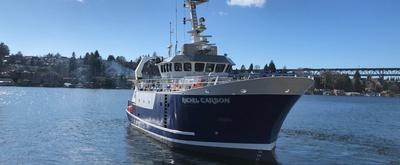
  • Completed

    Hydro S - 2025 8of24

    Nicholas R. Bates · BIOS

    One of the longest open-ocean hydrographic stations in the world is maintained at the Hydrostation S site (formerly known as the Panulirus site) located ~25 km southeast of Bermuda in the North Atlantic Ocean. This program of repeat biweekly hydrographic observations began in 1954 (by Hank Stommel) and now, in its seventh decade, has proved to be the catalyst for numerous studies of ocean physics, biological processes and biogeochemistry. Hydrostation S continues to be recognized as one of the most important sustained ocean time–series. The renewal of the Hydrostation S program is proposed herein, extending this invaluable time–series of ocean hydrography to almost 70 years. The upper ocean warming trend has strengthened (about +1.4° C since the 1970's; ~+0.8°C in last decade) with significant salinification (+0.16). Deeper waters such as the Labrador Sea Water has cooled by a few tenths of a degree and freshened with a marked decadal oscillation. The signature of deoxygenation has been observed at Hydrostation S in the upper ocean (about 4 µmoles kg -1 decade -1 decrease in dissolved oxygen) as well as the oxygen minimum zone (~2.5 µmoles kg -1 decade -1 ). Hydrostation S also supports the longest global ocean CO 2 and acidification time-series (from 1983 to present) The major objective of the proposal is to continue Hydrostation S into the eighth decade with numerous questions related to warming and cooling, salinification and freshening, deoxygenation and insights on biogeochemical changes over time. This program constitutes frequent water column sampling of temperature, salinity, and dissolved oxygen (and indirectly, sampling of important ocean carbon time–series) of the North Atlantic subtropical gyre at the Hydrostation S site. Such work is complementary to other sustained observations such as the Bermuda Atlantic Time–series Study (BATS) and Ocean Flux Program (OFP). We propose to carry out a similar sampling format that has been followed for the past 68 years. As for the past ten years, we would continue to conduct two CTD profiles to better capture the deep–water variability while maintaining all the previous discrete depths. The first CTD cast will profile to full ocean depth (3,300–3,500 m) while the second CTD cast will profile to 500 m (to allow for instrumentation not rated for full ocean depth such as a PAR sensor). One indirect objective will be to continue to collaboratively evaluate a BIOS-based glider program with Hydrostation S data as critically important ground truthing data. The existing glider program has challenging issue, and the aim of this effort is to use robust and highly accurate Hydrostation S data to test the capability of emerging technologies over the next five to ten years.

    Apr 3 – Apr 6, 2025 · 3 d

    Appxoimately 25 nm south east of the island of Bermuda

    Sails with 1 other project
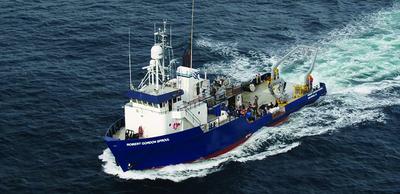
  • Completed

    Sikuliaq · UAF

    Jason engineering - Sikuliaq

    Kevin Kavanagh · UNOLS

    24 hrs. of Jason engineering time to piggy-back on the ALOHA Cabled Observatory Service - 2024 project - SME 22/1574 in March '25. Preferably to take place before operations for the start of the primary project.

    Mar 30 – Apr 5, 2025 · 6 d

    Station ALOHA 22d 45m N, 158d 0m W

    Sails with 2 other projects

  • Completed

    Sikuliaq · UAF

    DWS 3

    Jeff Book · NRL

    Deep water instrument tests and experiments.

    Mar 30 – Apr 5, 2025 · 6 d

    Station ALOHA 22d 45m N, 158d 0m W

    Sails with 2 other projects

  • Completed

    Sikuliaq · UAF

    ALOHA Cabled Observatory Service - 2024

    Jim Potemra · UH

    The major goals of the project are: Maintain the ALOHA Cabled Observatory (ACO) in an operational mode, including the core set of measurements; Provide community and public access to the data and the system; Present results to the community and public via publications, conferences, seminars, etc.; and Attract other users to the site to take full advantage of the system and other science at Station ALOHA.

    Mar 30 – Apr 5, 2025 · 6 d

    Station ALOHA 22d 45m N, 158d 0m W

    Sails with 2 other projects

  • Completed

    OOI-Pioneer Spring 2025

    Deidra Emrich · WHOI

    First major infrastructure deployment at the Mid-Atlantic Bight, off of North Carolina, for the Pioneer Array of the National Science Foundation’s Ocean Observatories Initiative (OOI). The Pioneer MAB Array includes a network of moorings and autonomous robotic vehicles to monitor the waters of the continental shelf, slope, and the shelf break front where nutrients and other properties are exchanged between the coast and deep ocean. Data from the Pioneer Array will provide new insights into coastal ocean processes such as shelf/slope nutrient exchange, air-sea property exchange, carbon cycling, and ocean acidification that are important to the North Carolina shelf and to continental ecosystems world wide. For further information, see http://www.oceanobservatories.org

    Mar 28 – Apr 20, 2025 · 23 d

    Approximately 35-50 nm east of Nags Head, NC

  • Completed

    Pelican · LUMCON

    MuST TRL7 Dry Tortugas Spring 2025

    Nicolas Michel-Hart · UW-APL

    The objective of this project is to further demonstrate the performance of a system that uses a MultiSensor Towbody (MuST) to deploy detection, classification, and geolocation hardware from a surface vessel. The system design was carried out under a SERDP effort MR-2501 . MuST was developed and tested via the ESTCP project MR18-5004 . This project is a three-year effort that includes three field operations. The second and third field efforts will be in operational environments specified by ESTCP and Naval Facilities Engineering Systems Command/United States Army Corps of Engineers. These are anticipated to be carried out in March 2025 and March 2026. The first effort would be a formal demonstration (including demonstration of the overall sensor integration and software package development) in Sequim Bay in September 2023 with the following performance objectives: (1) percent of seeded unexploded ordnances (UXO) detected/correctly classified (Pc) > 0.94, and less than five false alarms within blind test area, (2) geolocation to within 2 meters for 90% of the targets of interest, and (3) completion of all survey lines at each approach angle each day.

    Mar 27 – Apr 10, 2025 · 14 d

    11km south of Dry Tortugas, FL

  • Completed

    OOI-Pioneer-SEPM Recovery

    Deidra Emrich · WHOI

    R/V Atlantic Explorer deviated during their transit from WHOI to Bermuda to recover an adrift OOI Pioneer mooring. The Pioneer Array South East Profiler Mooring (SEPM) had broken free in March. The surface buoy and some riser components had been caught in the Gulf Stream and had set far offshore. The R/V Atlantic Explorer was able to make a 3 day deviation on 27, 28, and 29 March to recover SEPM.

    Mar 25 – Apr 1, 2025 · 7 d

    Atlantic ocean, Transect between Bermuda and Woods Hole

    Sails with 2 other projects

  • Completed

    Hydro S - 2025 11of24

    Nicholas R. Bates · BIOS

    One of the longest open-ocean hydrographic stations in the world is maintained at the Hydrostation S site (formerly known as the Panulirus site) located ~25 km southeast of Bermuda in the North Atlantic Ocean. This program of repeat biweekly hydrographic observations began in 1954 (by Hank Stommel) and now, in its seventh decade, has proved to be the catalyst for numerous studies of ocean physics, biological processes and biogeochemistry. Hydrostation S continues to be recognized as one of the most important sustained ocean time–series. The renewal of the Hydrostation S program is proposed herein, extending this invaluable time–series of ocean hydrography to almost 70 years. The upper ocean warming trend has strengthened (about +1.4° C since the 1970's; ~+0.8°C in last decade) with significant salinification (+0.16). Deeper waters such as the Labrador Sea Water has cooled by a few tenths of a degree and freshened with a marked decadal oscillation. The signature of deoxygenation has been observed at Hydrostation S in the upper ocean (about 4 µmoles kg -1 decade -1 decrease in dissolved oxygen) as well as the oxygen minimum zone (~2.5 µmoles kg -1 decade -1 ). Hydrostation S also supports the longest global ocean CO 2 and acidification time-series (from 1983 to present) The major objective of the proposal is to continue Hydrostation S into the eighth decade with numerous questions related to warming and cooling, salinification and freshening, deoxygenation and insights on biogeochemical changes over time. This program constitutes frequent water column sampling of temperature, salinity, and dissolved oxygen (and indirectly, sampling of important ocean carbon time–series) of the North Atlantic subtropical gyre at the Hydrostation S site. Such work is complementary to other sustained observations such as the Bermuda Atlantic Time–series Study (BATS) and Ocean Flux Program (OFP). We propose to carry out a similar sampling format that has been followed for the past 68 years. As for the past ten years, we would continue to conduct two CTD profiles to better capture the deep–water variability while maintaining all the previous discrete depths. The first CTD cast will profile to full ocean depth (3,300–3,500 m) while the second CTD cast will profile to 500 m (to allow for instrumentation not rated for full ocean depth such as a PAR sensor). One indirect objective will be to continue to collaboratively evaluate a BIOS-based glider program with Hydrostation S data as critically important ground truthing data. The existing glider program has challenging issue, and the aim of this effort is to use robust and highly accurate Hydrostation S data to test the capability of emerging technologies over the next five to ten years.

    Mar 25 – Apr 1, 2025 · 7 d

    Atlantic ocean, Transect between Bermuda and Woods Hole

    Sails with 2 other projects

  • Completed

    Endeavor · URI

    2025 Spring AZMP Hydrographic Mission

    Lindsay Beazley · DFO

    The overall aim of the spring 2025 Atlantic Zone Monitoring Program (AZMP) hydrographic mission led by Fisheries and Oceans Canada (DFO) is to collect physical, optical, chemical, and biological oceanographic observations on the Scotian Shelf and in Gulf of Maine during the spring season. The AZMP was initiated in 1998 with the aim to detect, track, and predict changes in the state and productivity of waters across the northwest Atlantic. Data describing physical hydrographic conditions (e.g., temperature, salinity, dissolved oxygen conditions), phytoplankton and zooplankton abundance and biomass, nutrient and chlorophyll a concentrations, and ocean acidification (e.g., pH and alkalinity) will be collected during the mission and used to evaluate seasonal, inter-annual, and decadal variability in oceanographic conditions in the region. The data and samples collected during this mission will also be used to support a number ancillary research programs and initiatives led by both DFO staff and external partners.

    Mar 24 – Apr 24, 2025 · 31 d

    Atlantic Canada

NewerPage 18 of 55Older