VesselConnect
  • Completed

    NES-LTER - 2023 fall

    Heidi Sosik · WHOI

    The northwest Atlantic is renowned for productive fisheries that depend upon a complex food web of planktonic organisms that provide them energy. In these waters -- as in coastal waters around the globe -- human activities, environmental variability, and decadal-scale change intersect to have diverse effects on the planktonic food web. It is crucial to understand the structure of this web, how it functions, and how it responds to seasonal environmental change, in order to respond appropriately to long-term trends that are accelerating in this region. Our understanding, however, has been limited by a lack of systematic and detailed measurements over a sufficient length of time so that we can observe the responses of these webs to environmental perturbations and uncover the underlying causes and implications. The Northeast US Shelf (NES) Long-Term Ecological Research (LTER) project will provide such observations, analyze them with a variety of models, and improve our ability to predict how planktonic food webs change through space and time, and how those changes impact the productivity of higher trophic levels including commercially important fish. In addition, the NES-LTER project will have multifaceted broader impacts, including collaboration with the National Oceanic and Atmospheric Administration's (NOAA), Northeast Fisheries Science Center to support multispecies, ecosystem-based management on the NES. The project includes an education plan that will provide opportunities to a broad range of learners and a far-reaching public outreach component will be developed through NOAA's international Science-On-a-Sphere network. While patterns of ecosystem change over seasons to decades have already been documented in this region, the key mechanisms linking changes in the physical environment, planktonic food webs, and higher trophic levels remain poorly understood. For this reason, predictive capability is limited and management strategies are largely reactive. To address these needs, the NES-LTER strategy combines observations that provide regional-scale context, process cruises along a high gradient cross-shelf transect, high-frequency time series at inner- and outer-shelf locations, coupled biological-physical food web models, and targeted population models. The research plan is guided by an overarching science question: How is long-term environmental change impacting the pelagic NES ecosystem and, in particular, affecting the relationship between compositional (e.g., species diversity and size structure) and aggregate (e.g., rates of primary production, and transfer of energy to important forage fish species) variability? By capitalizing on high levels of seasonal and interannual variability in the NES, the research will study short-term responses to change in the environment to a) characterize low and high export food webs, b) understand the linkages and transfer of energy from the phytoplankton to pelagic fish, and c) identify the mechanisms that underlie shifts between high and low export communities. Ultimately, mechanistic knowledge will be scaled up to understand and predict the impacts and feedbacks associated with trends in decadal-scale forcing in the ecosystem.

    Oct 11 – Oct 16, 2023 · 5 d

    WH-Pioneer Cross-shelf transect south of Woods Hole, MA to OOI Pioneer Array at the shelf break
  • Completed

    Blue Heron · UMN

    Great Lakes Cyanos 2023 (2022) 1 of 3

    Josef Werne · UPT

    The Great Lakes hold about 20% of the freshwater on Earth and have been increasingly impacted by human activities in recent decades. Lake Erie suffers from large, annually recurring, toxic cyanobacterial blooms in summer, whereas Lake Superior experiences smaller, localized cyanobacterial blooms after storm events. Cyanobacterial blooms have harmful ecological, human health, and economic implications. These blooms are a global phenomenon, observed in lakes and oceans, and can lead to low oxygen conditions and the production of toxins, both of which can be harmful for ecosystems. Understanding how different types of cyanobacteria influence nutrient cycling remains a major knowledge gap. This project aims to provide a deeper understanding of the long-term state of the Great Lakes ecosystem. The research approach combines new and established methods. Project results and implications will be shared with local and regional water interests in partnership with the Pittsburgh Collaboratory for Water Research, Education, and Outreach, the Great Lakes Commission Harmful Algal Blooms Collaborative, and the Lake Erie Area Research Network. Education is a central part of this project and training opportunities target next generation of scientists, including postdoctoral, graduate, and undergraduate students. The students and postdoc will receive state-of-the-art training in the rapidly developing fields of biogeochemistry and geomicrobiology, while working with an interdisciplinary team of scientists.

    Oct 10 – Oct 12, 2023 · 2 d

    Western arm of Lake Superior, between Isle Royale and Apostle Islands

  • Completed

    DOC CRM

    Dennis Hansell · UMIAMI

    Dissolved organic carbon (DOC) in the world ocean is part of the global carbon cycle that interacts with the planetary climatic system through its connection with atmospheric carbon dioxide. Keeping track of this DOC requires the cooperative effort of many marine laboratories worldwide. Making sure that all of these laboratories are making accurate DOC measurements requires that each one have access to a standardized sample of seawater for which the DOC concentration is set by international consensus. This award will fund the University of Miami to continue a consensus reference material (CRM) program that was first developed in 1998 in support of consistent, high quality measurements of dissolved organic carbon by the international ocean chemistry community. With continuation of this work, the US and international communities will create with confidence consistent measurements of a major marine carbon reservoir, thereby advancing society’s ability to assess changes in the marine carbon cycle and the role of the ocean in climate change. With continued strong international efforts to investigate the marine carbon cycle, the existing CRM program provides the necessary benchmark for globally comparable marine DOC measurements. Water from the deep Florida Strait (~42 mol/kg DOC) will be collected, ampoulated, and distributed to the US and international community. Since program launch, ~228,000 vials of reference waters have been distributed to ~240 US and international laboratories in 45 nations, currently at a rate of ~27,000 vials/year. With renewal of the reference material program for an eigth 3-year period of support, distribution of deep ocean water containing biologically refractory dissolved organic carbon and low carbon reference water will continue to aid the analytical work of the DOM community.

    Oct 10, 2023 · 1 d

    Florida Strait east of Key Biscayne, Florida

  • Completed

    OFP time-series Fall 23

    Maureen Conte · BIOS

    This award provides an additional three years of support for the Oceanic Flux Program (OFP). This program was first established in 1978 to measure the export flux of particles from the surface to the deep ocean in the deep Sargasso Sea and represents the longest and most continuous particle flux time-series of its kind. This program and the time-series record will continue to help the oceanographic community to answer questions about the relationship between deep ocean particle flux and climate and biological, physical, and chemical oceanographic processes. In the past, the OFP has provided evidence for coupling between the upper and deep ocean processes linked to seasonal, episodic (e.g., physical and meteorological forcing) and climate patterns. Looking to the future, this program will utilize increasingly advanced instrumentation and analytical tools to address questions about the material that sinks from the surface to deep ocean and its controls. The OFP provides education and training for students from the high school to Ph.D. level and supports early career researchers. The OFP time-series represents a 43-year, nearly continuous record focused on particle fluxes in the deep ocean. With increasingly more data available from the lengthening record, investigators can put observed biogeochemical patterns into perspective to understand the interplay between climate and ocean functioning. The availability of data from complementary nearby Hydrostation S, the Bermuda Atlantic Time-Series (BATS), the Bermuda Testbed Mooring (1994-2007), the Tudor Hill atmospheric tower and other Bermuda sampling programs provide additional opportunities to study upper ocean physics and biogeochemistry coupled with deep ocean biogeochemical processes. The OFP record is becoming long enough to study deep flux linkages with gyre circulation and advective processes. The OFP’s archive is an unparalleled resource for retrospective studies of temporal trends and the biogeochemical consequences of a changing ocean, including future impacts of ocean acidification. As the OFP heads into the future, increasingly sophisticated OFP mooring instrumentation (ADCP current profiling and backscatter; MicroCAT temperature, salinity, and oxygen measurements) and advances in digital imaging and analytical tools (both chemical and genomic) to probe the recovered flux materials continue to reveal novel, fundamental information about the oceanic particle flux and its controls.

    Oct 8 – Oct 13, 2023 · 5 d

    OFP Site Sargasso Sea

  • Completed

    UMiami Student Cruises 2023 - 5of5

    Jim Happell · UMIAMI

    Oct 8, 2023 · 1 d

    Off Miami

  • Completed

    HOT 2023- 6 of 10

    angelicque white · UH

    Systematic long-term (greater than a few decades in length) time-series observations of aquatic and terrestrial environments have led to a more comprehensive understanding of the natural ecosystem variability and have enabled an assessment of human impacts on ecosystem dynamics. Because of their ability to store and transport large amounts of heat and to absorb carbon dioxide from the atmosphere, the world's oceans play a critical role in modulating environmental conditions for the sustained well-being of both land-based and marine organisms including humans. Despite their recognized scientific and societal importance, long-term records of key ocean processes are rare. In 1988, two ocean time-series programs were established: one in the North Atlantic near Bermuda and the other, the Hawaii Ocean Time-series (HOT) program, near Hawaii. For the past three decades, teams of scientists based at the University of Hawaii have made critical measurements of the 'state of our sea.' These long-term observations have established a baseline against which future states can be compared. The ship-based HOT program complements other diverse ocean observation programs including remote-sensing via satellites, moored buoys, profiling floats, and autonomous underwater vehicles. All HOT program data are publicly available and are frequently used by researchers and policy makers around the world.

    Oct 7 – Oct 11, 2023 · 4 d

    Station ALOHA is the long-term study site for the HOT program

  • Completed

    UMiami Student Cruises 2023 - 4of4

    Jim Happell · UMIAMI

    Oct 7, 2023 · 1 d

    Off Miami

  • Completed

    SP23 Newport to San Diego Transit

    Hannah Delapp · SIO

    Oct 6 – Oct 12, 2023 · 5 d

    USWC

  • Completed

    Pelican · LUMCON

    Hypoxia and Mn3 - 2023 Pelican

    Veronique Oldham · URI

    The Earth's flow of energy - from animals, to plants, to microbes - is dictated by electron transfers, namely, moving electrons from one molecule or element to another to gain energy. Photosynthesis is perhaps the most familiar such reaction, where the electrons from carbon dioxide and water are used to make oxygen and sugar. However, before the appearance of oxygen-generating metabolisms, early life metabolism was governed by different electron transfer reactions ? most of these involving metals because of their ability to readily donate and accept electrons. As a result of this early evolution, metals still play a central role in microbial life, as essential elements in enzymes. One such important metal is manganese (Mn), which is particularly good at donating and accepting electrons given that it can be in three different forms in the ocean. One form of Mn is a solid Mn-oxide, which is very reactive and almost as strong an oxidant as oxygen itself. This form of Mn is completely generated by bacteria, but we still know little about how bacteria do this, or why! One good place to understand these Mn reactions is in areas where oxygen is not present, because there, Mn reactions may dominate. The Gulf of Mexico is a region where oxygen concentrations have been decreasing steadily due to over-enrichment of nutrients from anthropogenic sources. This system is ideal for examining Mn reactions under low oxygen conditions, so in this project, how Mn reacts under different levels of oxygen will be determined. Scientists from the University of Rhode Island and Texas A&M University will also specifically target the bacteria that make these solid Mn oxides, to try and understand the mechanism of formation. Finally, the scientists will try to measure where the Mn is coming from and where it is going, to get a better idea of how Mn may undergo a complete reaction cycle. Understanding how metals cycle in the ocean is central to understanding life on Earth, as the inventory of metals has been subject to shifts in chemistry, like changing oxygen conditions, over the Earth?s history. A science communications student, an artist at sea, and a videographer will be incorporated into cruise activities to link the science with public outreach. This project will support three graduate students, undergraduate students, and two early career researchers. This project will focus on recruitment of underrepresented minorities to provide an introduction to STEM research and field work. At present, scientists from the University of Rhode Island and Texas A&M University have developed the chemical techniques to deconvolute manganese redox cycling in marine environments but have yet to thoroughly apply these new methods in diverse environmental systems or to couple manganese speciation and cycling with that of other elements. Here, the scientists propose to fully speciate manganese in the Gulf of Mexico, evaluating the formation, prevalence, and bioavailability of Mn(III)-L compounds and the role of microbes in facilitating Mn(III)-L and Mn oxide formation. In particular, the scientists seek to examine the stability of Mn(III)-L complexes across seasonal, salinity and oxygen gradients and to characterize both terrestrial and biotic Mn(III)-binding ligands. We hypothesize that Mn cycling, particularly in seasonally anoxic and suboxic zones, is intricately but enigmatically linked to the cycling of other redox sensitive species, including nitrogen and organic carbon compounds. This study will study these dynamics in the Gulf of Mexico, which has gradients in (1) productivity on a seasonal cycle, (2) salinity and terrestrial input via its tributaries and (3) a dynamic and seasonal oxygen regime. All of these gradients profoundly impact the redox chemistry of Mn and other elements and thus must be taken into account to create an accurate framework for understanding coupled redox cycling. In conducting this research, not only will we broadly elucidate the marine manganese cycling, we will also highlight previously cryptic chemical dynamics that drive the formation and dissipation of oxygen minimum zones in fragile coastal ecosystems. This award reflects NSF's statutory mission and has been deemed worthy of support through evaluation using the Foundation's intellectual merit and broader impacts review criteria.

    Oct 6 – Oct 20, 2023 · 14 d

    Gulf of Mexico

  • Completed

    Blue Heron · UMN

    UMN cruise 2023

    Richard Ricketts · UMN

    These cruises utilize funding provided by the University of Minnesota. Chief Scientists will be completing seed research cruises or using their ship time to take graduate and undergraduate students on the research vessel Blue Heron.

    Oct 5, 2023 · 1 d

    Western Lake Superior

  • Completed

    Blue Heron · UMN

    UMN cruise 2023

    Richard Ricketts · UMN

    These cruises utilize funding provided by the University of Minnesota. Chief Scientists will be completing seed research cruises or using their ship time to take graduate and undergraduate students on the research vessel Blue Heron.

    Oct 3, 2023 · 1 d

    Western Lake Superior

  • Completed

    Pelican · LUMCON

    Shell Stones WS Buoy 2023 SV

    James Ranson · Fugro GEOS Inc

    Topside service and maintenance for a Fugro Wavescan Buoy. Buoys measure wind, waves, and currents. Data is transmitted to erddap and distributed.

    Oct 3 – Oct 7, 2023 · 4 d

    GoM

  • Completed

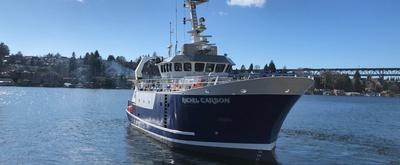
    S-Cycling in ODZs-Carson

    Morgan Raven · UCSB

    Investigation of particulate organic sulfur, its formation within O2-deficient zones, and its impacts on sedimentary organic carbon preservation. We will collect sinking particles (with custom-built float-tethered arrays), suspended particles (with McLane pumps), and sediments (multicores) from three regions of the Mexican shelf and slope. Hydrographic data will be collected across a one-degree grid and complemented with multibeam data for regional context. The cruise would ideally be timed for maximum primary productivity in late spring to early (Northern Hemisphere) summer. Additionally, a short cruise from Washington to Clayoquot Sound, shortly prior to the main cruise, will permit testing of newly commissioned equipment and student training. On that cruise, we will deploy and recover the float-tethered trap arrays and conduct multicoring.

    Oct 2 – Oct 8, 2023 · 6 d

    Vancouver Clayoquot Sound

  • Completed

    Blue Heron · UMN

    UMN cruise 2023

    Richard Ricketts · UMN

    These cruises utilize funding provided by the University of Minnesota. Chief Scientists will be completing seed research cruises or using their ship time to take graduate and undergraduate students on the research vessel Blue Heron.

    Oct 2, 2023 · 1 d

    Western Lake Superior

  • Completed

    Blue Heron · UMN

    UMN cruise 2023

    Richard Ricketts · UMN

    These cruises utilize funding provided by the University of Minnesota. Chief Scientists will be completing seed research cruises or using their ship time to take graduate and undergraduate students on the research vessel Blue Heron.

    Sep 30, 2023 · 1 d

    Western Lake Superior

  • Completed

    UMiami Student Cruises 2023 - 3of4

    Jim Happell · UMIAMI

    Sep 30 – Oct 1, 2023 · 1 d

    Off Miami

  • Completed

    NE Soundscapes

    Christopher Roman · URI

    The New England Seamount (NESM) Pilot Soundscapes Cruise - 2023 is part of the Task Force Ocean Department Research Initiative to study the Atlantis II cluster of the New England Seamount Chain. This cruise shall coordinate with the R/V Neil Armstrong, which shall be collecting complimentary oceanographic measurements near the seamount. The Soundscapes Cruise will conduct simultaneous passive acoustic and biological surveys including ship-based EK60 surveys, towed wire flyer surveys, deployment and recovery of optical-acoustic midwater drifters, moored acoustic array placement and recovery, and targeted MOCNESS trawls. The goals are to characterize the ambient soundscape associated with seamount communities including deep reefs and fish aggregations, and to map the distribution of midwater and pelagic biology around the seamount cluster and in relation to oceanographic features such as eddies.

    Sep 30 – Oct 15, 2023 · 15 d

    NE Seamounts

  • Completed

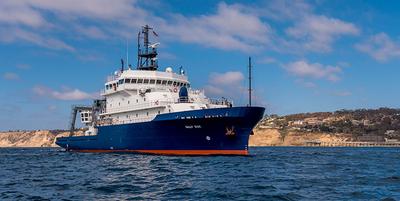
    Sally Ride · SIO

    Sampling planktic foraminifera from dysoxic conditions

    Catherine Davis · NCSU

    The overall goal of this project is to understand the strategies planktic foraminifera use to survive in low-oxygen environments in the pelagic ocean, and if relevant, assess the contribution of planktic foraminifera to nitrogen cycling. To accomplish that goal, the proposed research would test three interrelated hypotheses: (1) OMZ-dwelling planktic foraminifera are capable of performing denitrification; (2) Denitrification is widespread among planktic foraminifera, within and beyond OMZ-affiliated taxa; and (3) Planktic foraminifera capable of nitrate respiration do so regardless of macroenvironmental oxygen concentrations. These hypotheses would be addressed via materials collected on two short research cruises sampling four stations from Monterey Bay to the California Borderlands in two different seasons. Three OMZ-associated species will be targeted (Hastigerinella digitata, Hastigerina parapelagica, Globorotaloides hexagonus) along with one species associated with marine snow (Neogloboquadrina incompta) and one species not associated with low-oxygen conditions (Globigerina bulloides). Metatranscriptomics will be used to gather information on the metabolic capabilities of each species and their symbionts, if present. Shipboard incubations testing for active denitrification under three conditions (anoxic, dysoxic, and normoxic) and analyses of intracellular nitrate content and stable N and O ratios of the foraminiferal intracellular nitrate will be carried out on all five species (H. digitata, H. parapelagica, G. hexagonus and N. incompta) and cellular ultrastructural analysis on the three OMZ-associated species. Additionally, the latitudinal and onshore/offshore populations of the full planktic foraminiferal assemblages will be determined through the water column from ~1200 m to the surface.

    Sep 29 – Oct 5, 2023 · 6 d

    California

  • Completed

    CascadiaCanyons_Turnaround2

    Andrea Ogston · UW

    Submarine canyons are ubiquitous along continental margins, and often thought of as key conduits for the transfer of terrestrial sediment, nutrients and organic material to the deep sea. During sea level highstands, most of this shelf to deep-sea transport occurs on an episodic basis, driven by seabed resuspension in and around the canyon head, associated with large storms, floods, earthquakes and other energetic events that are thought to induce gravity-driven, downslope sediment flows. However, the processes that control canyon flushing and sediment infilling remain poorly understood. To date, most of the direct monitoring of these processes has been focused on large submarine canyon and fjord systems that are highly active during the current sea level highstand. This proposed effort is a collaborative, interdisciplinary effort with the goal of understanding the origin of modern deep-water stratigraphy associated with submarine canyon dynamics. The observational component will deploy two instrumented arrays in canyons of differing morphology (Astoria Canyon and Quinault Canyon) to develop a spatially distributed minute-scale record of water and particulate transport processes over a complete annual cycle. This data would yield the timing and magnitude of canyon transport processes, and help constrain the sedimentary response to oceanographic disturbances. A seasonal seabed surface core survey in the region will examine annual depositional cycles, and allow for the direct testing of seafloor remobilization thresholds along canyon thalwegs. All of these data will then be used as model inputs, providing the constraints for locally-parameterized hydrodynamic modeling of sediment gravity-flow triggering and runout distances.

    Sep 28 – Oct 5, 2023 · 6 d

    Northern Cascadia Margin (Astoria and Quinault Canyons)

  • Completed

    Blue Heron · UMN

    UMN cruise 2023

    Richard Ricketts · UMN

    These cruises utilize funding provided by the University of Minnesota. Chief Scientists will be completing seed research cruises or using their ship time to take graduate and undergraduate students on the research vessel Blue Heron.

    Sep 27, 2023 · 1 d

    Western Lake Superior

  • Completed

    Hydro S - 2023 17of24

    Nicholas R. Bates · BIOS

    One of the longest open-ocean hydrographic stations in the world is maintained at the Hydrostation S site (formerly known as the Panulirus site) located ~25 km southeast of Bermuda in the North Atlantic Ocean. This program of repeat biweekly hydrographic observations began in 1954 (by Hank Stommel) and now, in its seventh decade, has proved to be the catalyst for numerous studies of ocean physics, biological processes and biogeochemistry. Hydrostation S continues to be recognized as one of the most important sustained ocean time–series. The renewal of the Hydrostation S program is proposed herein, extending this invaluable time–series of ocean hydrography to almost 70 years. The upper ocean warming trend has strengthened (about +1.4° C since the 1970's; ~+0.8°C in last decade) with significant salinification (+0.16). Deeper waters such as the Labrador Sea Water has cooled by a few tenths of a degree and freshened with a marked decadal oscillation. The signature of deoxygenation has been observed at Hydrostation S in the upper ocean (about 4 µmoles kg -1 decade -1 decrease in dissolved oxygen) as well as the oxygen minimum zone (~2.5 µmoles kg -1 decade -1 ). Hydrostation S also supports the longest global ocean CO 2 and acidification time-series (from 1983 to present) The major objective of the proposal is to continue Hydrostation S into the eighth decade with numerous questions related to warming and cooling, salinification and freshening, deoxygenation and insights on biogeochemical changes over time. This program constitutes frequent water column sampling of temperature, salinity, and dissolved oxygen (and indirectly, sampling of important ocean carbon time–series) of the North Atlantic subtropical gyre at the Hydrostation S site. Such work is complementary to other sustained observations such as the Bermuda Atlantic Time–series Study (BATS) and Ocean Flux Program (OFP). We propose to carry out a similar sampling format that has been followed for the past 68 years. As for the past ten years, we would continue to conduct two CTD profiles to better capture the deep–water variability while maintaining all the previous discrete depths. The first CTD cast will profile to full ocean depth (3,300–3,500 m) while the second CTD cast will profile to 500 m (to allow for instrumentation not rated for full ocean depth such as a PAR sensor). One indirect objective will be to continue to collaboratively evaluate a BIOS-based glider program with Hydrostation S data as critically important ground truthing data. The existing glider program has challenging issue, and the aim of this effort is to use robust and highly accurate Hydrostation S data to test the capability of emerging technologies over the next five to ten years.

    Sep 27 – Sep 28, 2023 · 1 d

    Appxoimately 25 nm south east of the island of Bermuda

  • Completed

    Blue Heron · UMN

    UMN cruise 2023

    Richard Ricketts · UMN

    These cruises utilize funding provided by the University of Minnesota. Chief Scientists will be completing seed research cruises or using their ship time to take graduate and undergraduate students on the research vessel Blue Heron.

    Sep 26, 2023 · 1 d

    Western Lake Superior

  • Completed

    Savannah · SkIO

    INST

    John Bichy · SkIO

    Ship time dedicated to facilitate experiential learning for UGA and USG graduate and undergraduate students.

    Sep 26 – Sep 27, 2023 · 1 d

    South Atlantic Bight - USA

  • Completed

    27N Survey - 2022- 4of6

    Molly Baringer · NOAA

    The Florida Current is a strong oceanic current flowing northward along the eastern coast of Florida carrying warm tropical waters that eventually feed the Gulf Stream. The Florida Current represents both the western boundary current for the subtropical wind-driven gyre as well as a return pathway for the Thermohaline Overturning Cell, which consists of a slow circulation redistributing the waters of the world ocean based on sinking at the high latitudes and upwelling elsewhere. The Thermohaline Overturning Cell has been documented to have strong impacts on the global climate, and as such variations in the Florida Current, which returns surface waters to the northern North Atlantic, represent an important climate signal to be monitored. Since 1982, NOAA has recognized the importance of long-term monitoring of the Florida Current and it has funded a project, as part of the Western Boundary Time Series project in the Atlantic Ocean, to monitor the transport variations of the current using a submarine cable and snapshot estimates made by shipboard instruments. This webpage presents the results of this study.

    Sep 26 – Sep 27, 2023 · 2 d

    Florida Straits / SE FL

NewerPage 34 of 55Older