PRT
Completed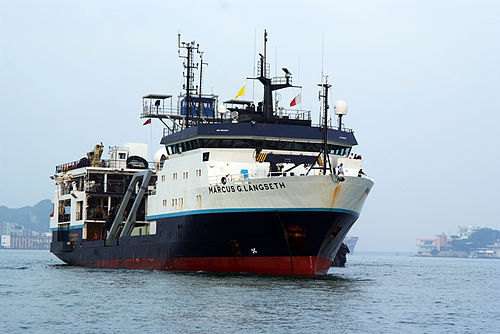
Operating area: 19.5, -66.5
Route: San Juan - Puerto Rico → San Juan - Puerto Rico
Lamont-Doherty Earth Observatory
Project aboard
We propose to conduct an active-source seismic experiment across the Puerto Rico Trench (PRT), its outer rise, and across the island arc, plus a land passive-source experiment. Three wide-angle seismic reflection/refraction transects will be recorded across the PRT by OBS. The central OBS profile will extend to the accretionary prism south of Puerto Rico. Two other OBS profiles will run across the PRT at the eastern and western sections. Seven multichannel seismic (MCS) reflection lines will be collected, two parallel to and inland from the trench, and five parallel to the central OBS profile. An array of nodal land seismometers will be deployed across Puerto Rico. Work similar to that proposed here has never been conducted across the PRT because of the trench’s large water depth. This gap in scientific knowledge persists despite the PRT being part of the U.S. EEZ and the significant geological hazards for the region. To overcome this challenge this project is a collaboration with GEOMAR Helmholtz Centre for Ocean Research, Kiel, Germany. GEOMAR will provide ten (10) deep-water OBSs capable of operating to depths of up to 8,000 m (2 of them up to 9,000 m). We request the use of the 15-km-long MCS steamer of R/V Langseth , 31 short-period OBS instruments from US OBSIC for water depths <6,000 m, and land nodal seismometers from IRIS. Old Atlantic lithosphere subducts obliquely at the PRT under the Caribbean plate at <20 mm/yr. The PRT is associated with anomalous, and hitherto unexplained characteristics, such as the widest trench (below 6,000 m), the strongest negative gravity anomaly on Earth, and anomalous subsidence of the Puerto Rican north coast. Furthermore, the slab may be segmented and possibly torn. The proposed experiment aims at exploring three questions: (1) What is the shallow geometry of the subducting slab and its lateral continuity along the 500-km section of the trench? The expected results will help inform the potential for the PRT to generate a mega-earthquake and mega-tsunami, similar to the 2004 Sumatra earthquake and tsunami, impacting the Caribbean and U.S. Atlantic margins. (2) What is the degree and spatial extent of hydration of the Atlantic lithosphere entering the Puerto Rico Trench? Comparison with other old subduction zones with higher convergence rates and different pre-existing structure and composition will allow quantification of the hydration process. The PRT is also one of the very few locations in the world, where in situ crustal serpentine samples have been analyzed and dated. (3) Does the oceanic bivergent thrust system represent double-sided subduction or a crustal retro-wedge of one-sided subduction? The later structure could be formed in response to compression of the rigid arc crust. This project will acquire a detailed velocity structure of the crust and slab of the entire arc and the seismically active region of Puerto Rico and the Virgin Islands.
People aboard
- Pablo Canales · Principal investigator
Party size: 20
Estimated vacant berths: 15
Equipment
Pooled / portable
- XBT
- Gravimeter
- Ocean Bottom Seismometers - OBSIC
- Ocean Bottom Seismometers - Other
- Magnetometer (towed)
Schedule data from UNOLS Marine Facilities Planning · MFP reference 22/2434 · synced Sep 24, 2026