Nutrient-Plankton System
Completed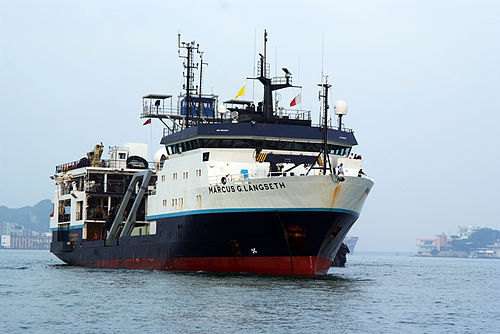
Operating area: Galapagos Archipelago
Route: Puerto Ayora, Isla Santa Cruz (Galápagos) - Ecuador → Puerto Ayora, Isla Santa Cruz (Galápagos) - Ecuador
Lamont-Doherty Earth Observatory
Project aboard
We propose a combined field and laboratory program with a modeling effort to evaluate if different physical modes of nutrient delivery, in close proximity to each other, exert sufficient controls on nutrient availability and influence phytoplankton functional biodiversity and that of their zooplankton grazers. Distinct mechanisms have been identified that enhance nutrient concentrations to the upper ocean, but which are expected to support different rates and time histories of nutrient delivery. We hypothesize that varying physiological traits of phytoplankton nutrient acquisition and storage will conform to these inputs. The proposed study site is the Galápagos Archipelago in the eastern equatorial Pacific Ocean. Measurements collected there by members of our team since 2014 suggest three modes of nutrient delivery are operative (topographic upwelling, island wakes and internal tides), and that phytoplankton communities differentially respond to these modes. For this proposal, intensive shipboard sampling will be augmented by 12-month deployments of a vertical profiler mooring to observe i) an isolated island wake and ii) interaction of the archipelago with the Equatorial Undercurrent (EUC) and upwelling on the western side of the archipelago. Internal tides are believed to have a significant influence on the system and also will be observed. The longer-term observational efforts will generate time series of currents, hydrographic properties including nitrate and chlorophyll a fluorescence and include biweekly water sampling of the region for molecular characterization of the phyto- and zoo-plankton communities. Intensive shipboard surveys will additionally measure a suite of hydrographic and plankton properties, including community composition, primary productivity, nutrient uptake rates and changes in gene expression driven either directly or indirectly by the physical forcing. Laboratory culture studies using phytoplankton isolates obtained from the region will be used to characterize nutrient uptake and storage characteristics to complement the field studies. The result will also inform parameterization of a simple plankton model forced by time series of nutrient delivery representative of the three physical modes at play, used to test if bottom-up control can explain observed distributions and temporal variability. A suite of phytoplankton parameterizations will be investigated, informed by observed species-specific characteristics, to determine which phytoplankton functional traits are favored by which physical mode. The overarching goal of the project is to examine how these specific physical mechanisms influence the functional biodiversity of plankton communities through increasing nutrient inputs into the mixed layer, leading to strong, yet perhaps predictable biological variability in a changing ocean environment.
People aboard
- Harvey Seim · Principal investigator
Party size: 23
Estimated vacant berths: 12
Equipment
Aboard the vessel
- Stern A-Frame
- Underway Seawater System
- Meteorological Data
- ADCP/UHDAS – range < 80m (eg. 300kHz)
- ADCP/UHDAS – range 250-350m (e.g. 150kHz)
- ADCP/UHDAS – range 1000m-1200m (e.g. 38kHz)
- Multibeam - Deep Water (EM122, EM124)
- Biological multi-frequency echosounder - EK80
Pooled / portable
- CTD
- Winch Pool Portable Winch
Science party brings
- Science-provided vans
Schedule data from UNOLS Marine Facilities Planning · operator cruise code NSF/MGL25-08 Seim Sa · MFP reference 23/3215 · synced Sep 24, 2026