FATE OF PRIMARY PRODUCTION IN THE CHUKCHI SEA
Completed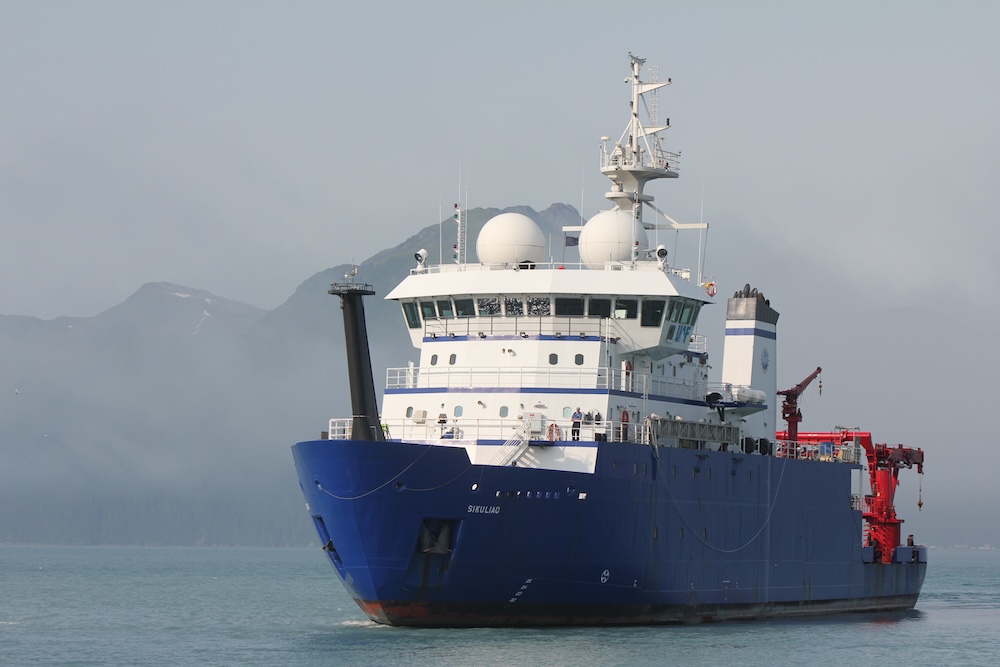
Planned route: 6 segments · ~6 days steaming
Operating area: Alaskan Arctic
Route: Nome (Alaska) - United States → Nome (Alaska) - United States
Project aboard
Single-celled photosynthetic primary producers generate most of the fixed carbon that supports Arctic Ocean food webs and drives numerous biogeochemical cycles. Three main sources of net primary production (NPP) have been identified in the Arctic Ocean that differ primarily in their timing and location within the water column. These include (1) microalgae growing within the sea ice, (2) phytoplankton that bloom in water under the sea ice (UIB), and (3) phytoplankton that bloom in open water, including in the marginal ice zone (MIZ) and at the depth of the subsurface chlorophyll maximum (SCM). Increasing our knowledge of the relative rates of NPP and particle export efficiency from these three systems is critical if we are to understand how continued sea ice loss, and the associated shifts in ice algal and phytoplankton bloom dynamics, will differentially impact benthic and pelagic food webs in shallow seas throughout the Arctic Ocean, including many organisms on which native human populations rely. Thus, the primary objectives of this proposed study are to utilize data obtained from a ship-based field program to the Chukchi Sea to 1) measure rates of NPP associated with the sea ice, UIBs, and open water phytoplankton in both the MIZ and SCM, 2) use sediment traps to characterize and quantify the vertical sinking fluxes of bulk particulate matter from the sea ice, UIBs, and open water phytoplankton blooms, and 3) use our newly developed Hydrodynamic treadmill to determine how sinking speeds of microalgae from all three NPP sources vary by community composition, physiological state, and environmental condition.
People aboard
- Matthew Mills · Principal investigator
- Kevin Arrigo · Chief scientist
Party size: 15
Estimated vacant berths: 9
Equipment
Aboard the vessel
- Dynamic Positioning (DP)
- Underway Seawater System
- pCO2
- Meteorological Data
- ADCP/UHDAS – range < 80m (eg. 300kHz)
- ADCP/UHDAS – range 250-350m (e.g. 150kHz)
Pooled / portable
- CTD
- Sediment Core
- Portable Laboratory Van(s) - NSF Van Pool
Schedule data from UNOLS Marine Facilities Planning · operator cruise code SKQ202310S · MFP reference 22/1495 · synced Sep 24, 2026