Ships and Whales
Completed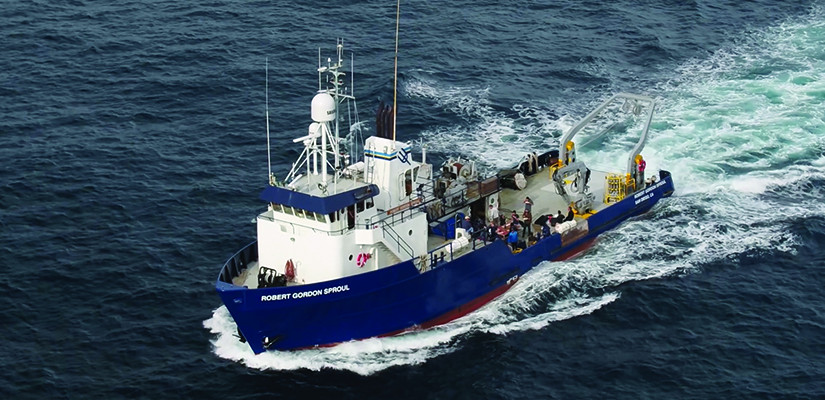
Operating area: Santa Barbara Channel
Route: San Diego (California) - United States → San Diego (California) - United States
Scripps Institution of Oceanography
Project aboard
Low-frequency (< 500 Hz) noise in the ocean is made up of natural abiotic sounds such as wind, biological sounds such as whale song, and anthropogenic noise such as commercial shipping (Hildebrand, 2009; Wenz, 1962). In areas exposed to commercial shipping, ship noise overtakes other sound sources in amplitude and is the dominant source of low-frequency noise. Over the past several decades, increases in the number, gross tonnage, and horsepower of commercial vessels have led to higher ambient sound levels in the ocean (McDonald et al., 2006; Ross, 2005). Sound travels extremely efficiently in the ocean and marine organisms use sound for vital life functions including communication, foraging, and mating (Bass & McKibben, 2003; Simpson et al., 2008; Wartzok & Ketten, 2014). Because of this, increases in anthropogenic noise may have profound impacts on marine organisms (Erbe et al. 2019, Weilgart 2018) . Studies of anthropogenic noise impacts on marine species have identified acoustic communication masking, increased stress hormone levels, decreased reproductive success, behavioral changes, and mortality as direct results of noise generated by ships (Erbe et al., 2019; Weilgart, 2018). The Santa Barbara Channel (SBC) is an ideal region to investigate underwater noise pollution because of the heavily trafficked shipping lanes in the region. The Port of Los Angeles, in particular, is the busiest shipping port in the Western Hemisphere (Zhang et al. 2019), and is facing change as demand for goods and services increase post-pandemic and dock workers move to a 24/7 work schedule. In addition to the economic importance of the SBC, it is also a sensitive ecological region. The endangered Northeastern Pacific blue whale migrates from the Costa Rica dome calving region to an important foraging region in the Santa Barbara Channel (Fiedler et al. 1998). By analyzing how baseline geophysical ocean noise levels (wind-driven noise) compares to the reality of ship noise seen today we will be able to more strategically focus noise reduction management efforts to protect large whales from chronic noise exposure. For this project, we will be taking sediment cores, CTD casts, and recovering long-term acoustic moorings (HARPs) to generate and validate spatiotemporal ship noise maps that will be used in marine spatial planning efforts to protect large whales.
People aboard
- Vanessa ZoBell · Principal investigator
Party size: 5
Estimated vacant berths: 7
Equipment
Aboard the vessel
- Echosounder, 12kHz
- Echosounder, 3.5kHz CHIRP
Pooled / portable
- CTD
- Sediment Core
Schedule data from UNOLS Marine Facilities Planning · operator cruise code SP2221 · MFP reference 22/1758 · synced Sep 24, 2026