Neotrypaea Project2
Completed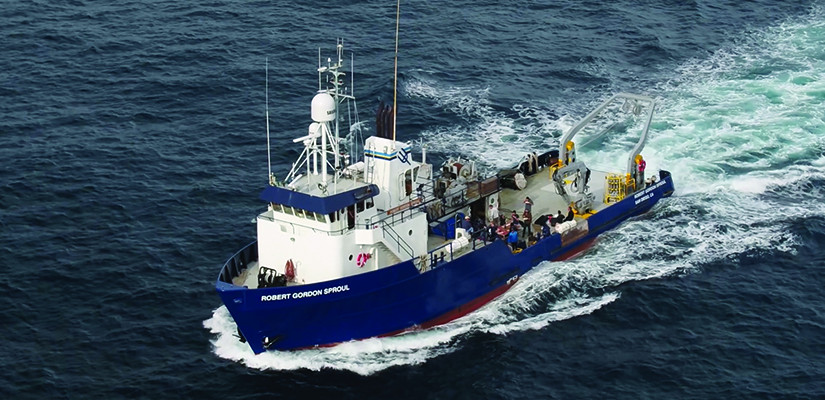
Planned route: 9 segments · ~28 hours steaming · 8 stations
Operating area: OR-WA shelf
Route: Newport (Oregon) - United States → Newport (Oregon) - United States
Scripps Institution of Oceanography
Project aboard
Changing environmental conditions in shelf waters along OR & WA have included increasingly frequent and severe hypoxia events, ocean acidification, and warming. Following the Marine Heat Wave of 2015, we documented an abundant mid-shelf population of the burrowing ghost shrimp, Neotrypaea sp. Neotrypaea were previously known as ecosystem engineers of intertidal estuary mudflats and as an insignificant presence in the open ocean. The abundant Neotrypaea in estuaries continuously rework the sediment via their burrowing activities. Their burrowing is important in mitigating impacts of nutrient loading (natural and anthropogenic), which can exacerbate low oxygen conditions, as well as increasing oxygen cycling due to burrow irrigation. However, enhanced benthic oxygen consumption linked to Neotrypaea sp. beds may further intensify regional hypoxia on the shelf. We will characterize the environmental conditions under which these burrowing shrimp presently occur to base predictions of habitat suitability modeling. We will ground-truth the model predictions via box coring and video lander observations. The benthic samples will track changes in potentially interacting benthic invertebrate communities within the Neotrypaea beds. We will estimate the shrimp’s contribution to benthic oxygen and organic carbon cycling by analyses of aquatic eddy covariance and of core incubations in shelf areas with and without abundant shrimp. Finally, we will determine how these shrimp and the abiotic and biotic impacts of their burrows change the overall productivity of the mid-shelf benthos relative to reference areas. The offshore distributions and impacts of these ecosystem engineers must be characterized as they may stabilize the food supply for higher trophic levels, impact fisheries, and significantly alter seafloor structure and biogeochemistry.
People aboard
- Clare Reimers · Principal investigator
Party size: 9
Estimated vacant berths: 3
Equipment
Aboard the vessel
- Crane
- Stern A-Frame
- Echosounder, 12kHz
- Echosounder, 3.5kHz CHIRP
- ADCP/UHDAS – range < 80m (eg. 300kHz)
Pooled / portable
- CTD
- Sediment Core
- Other Seafloor Sampling Equipment
- Portable Laboratory Van(s) - NSF Van Pool
Schedule data from UNOLS Marine Facilities Planning · operator cruise code SP2219 · MFP reference 22/2122 · synced Sep 24, 2026