Plankton Size Spectra - Fall 2022
Completed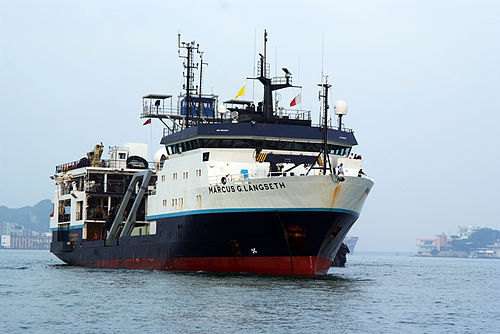
Operating area: Oregon Coast
Route: Newport (Oregon) - United States → Port Angeles (Washington) - United States
Lamont-Doherty Earth Observatory
Project aboard
Marine plankton form the base of most ocean food webs that support valuable fisheries. This highly diverse and complex community is composed of organisms that drift with ocean currents. Planktonic organisms remain understudied: they are difficult to sample given that their sizes span more than six orders of magnitude from less than one micron to meters. Yet, understanding how these communities will respond to climate change, and ultimately how these responses affect valuable fisheries, and therefore food security, is critical. Because many ecological and physiological processes are dictated by relative size, the theory of size spectra (i.e., the relationship between size and organism abundance as it drives ecosystem properties such as food webs) provides a valuable framework for forecasting climate change impacts on marine ecosystems. A deeper understanding of the scope and nature of variability in size spectra under contrasting environmental conditions is needed. The dynamic, highly productive northern California Current off Oregon and Washington in summer and winter seasons produce a patchwork of oceanographic conditions including those associated with hypoxia and ocean acidification. This study is sampling the plankton communities in this region to investigate how gradients of temperature, nutrients, dissolved oxygen, and pH conditions impact size spectra. The coupling of in situ plankton imagery and morphometric data allows quantifying scales of variation in plankton size spectra as well as testing predictions of how changes in environmental conditions (notably, temperature, nutrients, O 2 , pH) correlate with shifts in size spectra and revealing functional consequences to the food web. Plankton size spectra are being compared across environmental conditions by sampling in a habitat with steep environmental gradients and during two contrasting seasons. Planktonic organisms spanning 10 orders of magnitude in biomass are sampled using two complementary high-resolution imaging systems: the In Situ Ichthyoplankton Imaging System (ISIIS) and the Laser In-Situ Scattering and Transmissometry (LISST) particle imager. High-throughput image analysis software is used to generate size distributions together with taxonomic classification. Depth-discrete meso-zooplankton samples are collected in parallel to examine community shifts in carbon and for the calibration of length-to-carbon conversions based on images for use in normalized biomass size spectra. These plankton collections are also being analyzed for diet and reproductive status of gelatinous zooplankton, and diet and daily growth rate of representative larval fishes. These two groups have been historically understudied yet play central roles in ecosystem function. These data are adding to the understanding of how these important organisms at the base of the marine food web are affected by environmental conditions, and how they affect plankton size spectra. This study is foundational to the understanding of marine ecosystems within the context of climate change.
People aboard
- Robert Cowen · Principal investigator
Party size: 20
Estimated vacant berths: 15
Equipment
Aboard the vessel
- Underway Seawater System
- Echosounder, 12kHz
- ADCP/UHDAS – range < 80m (eg. 300kHz)
- ADCP/UHDAS – range 250-350m (e.g. 150kHz)
- Biological multi-frequency echosounder - EK60
- Biological multi-frequency echosounder - EK80
Pooled / portable
- CTD
- Towed or Vertical Net System
- Portable Laboratory Van(s) - NSF Van Pool
- Winch Pool Portable Winch
Schedule data from UNOLS Marine Facilities Planning · MFP reference 21/736 · synced Sep 24, 2026