Impact of Chemical Signaling on bloom BGC
Completed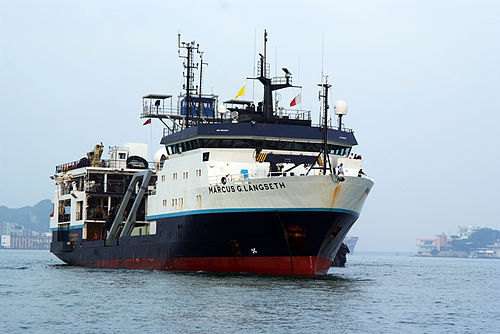
Operating area: California Current Ecosystem
Route: San Diego (California) - United States → San Diego (California) - United States
Project aboard
Here we propose a field expedition with a series of deck-board incubations to assess the effects of oxylipins on community trophic and biogeochemical dynamics, in the California Current Ecosystem (CCE). Oxylipins are a class of lipid derived chemical signals produced by diatoms and other eukaryotic phytoplankton under stressful circumstances such as nutrient limitation, wounding due to grazing, and viral infection. From culture and laboratory-based amendment experiments, we know that oxylipins decrease the grazing rates of microzooplankton (MZP), decrease the reproductive success of copepods, decrease the growth rates of eukaryotic phytoplankton and free-living bacterial isolates, and stimulate diatom and particle associated bacteria. Since oxylipins are produced under stress conditions associated with bloom decline and their bioactivity radiates throughout the food web, we hypothesize that oxylipin chemical signaling impacts the biological and microbial carbon pumps through trophodynamics, allelopathy, and stimulation of particle degradation. The major questions that we will address include: 1) how does the concentration and suite of oxylipins available for signaling change over the course of a bloom? 2) what is the net impact of oxylipin signaling on community dynamics? 3) can we quantify the impact of oxylipins on carbon export and nutrient recycling (N, P, Si) in the system? This work will consist of a three-week cruise that seeks to follow diatom blooms off the Coast of California from the onset of the bloom to their demise while surveying the oxylipins dissolved in the water column, particulate oxylipin concentrations, and the oxylipins associated with sinking particles. We will also conduct a series of deck-board experiments with natural populations to determine the net effect of oxylipin chemical signaling on community dynamics and C, N, P, and Si biogeochemistry.
People aboard
- Bethanie Edwards · Principal investigator
Party size: 10
Estimated vacant berths: 25
Equipment
Aboard the vessel
- Stern A-Frame
- Dynamic Positioning (DP)
- Underway Seawater System
- ADCP/UHDAS – range < 80m (eg. 300kHz)
- ADCP/UHDAS – range 250-350m (e.g. 150kHz)
- Biological multi-frequency echosounder - EK80
Pooled / portable
- CTD
- MOC-1
- Portable Laboratory Van(s) - NSF Van Pool
- Winch Pool Portable Winch
Schedule data from UNOLS Marine Facilities Planning · operator cruise code NSF/MGL25-05 Edwards · MFP reference 22/1479 · synced Sep 24, 2026