EnzStab1
Completed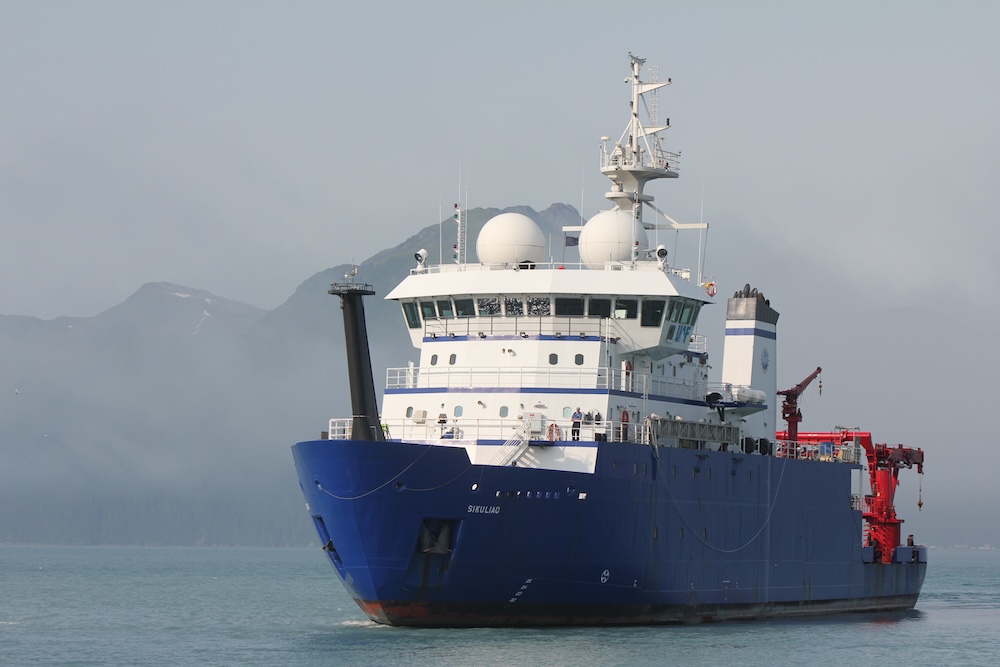
Operating area: GULF OF ALASKA
Route: Seward (Alaska) - United States → Seward (Alaska) - United States
Projects aboard (2)
EnzStab1
Microbes in deep subsurface marine sediments comprise one of the largest and most diverse ecosystems in the planet, rivaling those found in the global ocean and in soils. However, almost nothing is known about the factors that drive community assembly for these organisms. What adaptations allow such a broad range of microbial species to persist in an environment that is severely limited by energy availability? We hypothesize that organisms with more stable enzymes have a major competitive advantage in the deep subsurface. To test this hypothesis, we will perform geochemical measurements, extract DNA for metagenomes and 16S rRNA gene surveys, and perform extracellular enzyme assays on samples from surface and "deep" (up to 30 meters below seafloor) sediments from four sites in the Northern Gulf of Alaska: a fjord, a site within a delta on the continental shelf, a non-deltaic continental shelf site, and a site on the continental slope. These measurements will allow us to test the hypothesis that enzymes in subsurface sediments are more stable than those in surface sediments, and that enzyme stability is a major driver of community assembly in the subsurface.
People aboard
EnzStab1
- Andrew Steen · Principal investigator
Gulf of Alaska benthic Fe-2024
- Andrew Steen · Chief scientist
- Allyson Tessin · Principal investigator
Party size: 6
Estimated vacant berths: 18
Equipment
Aboard the vessel
- Dynamic Positioning (DP)
Pooled / portable
- Sediment Core
- Sediment Core
- CTD
Schedule data from UNOLS Marine Facilities Planning · operator cruise code SKQ202410S · MFP references 22/1729, 23/2893 · synced Sep 30, 2026